Saving: Is a heated airer worth it? Running cost vs tumble dryer
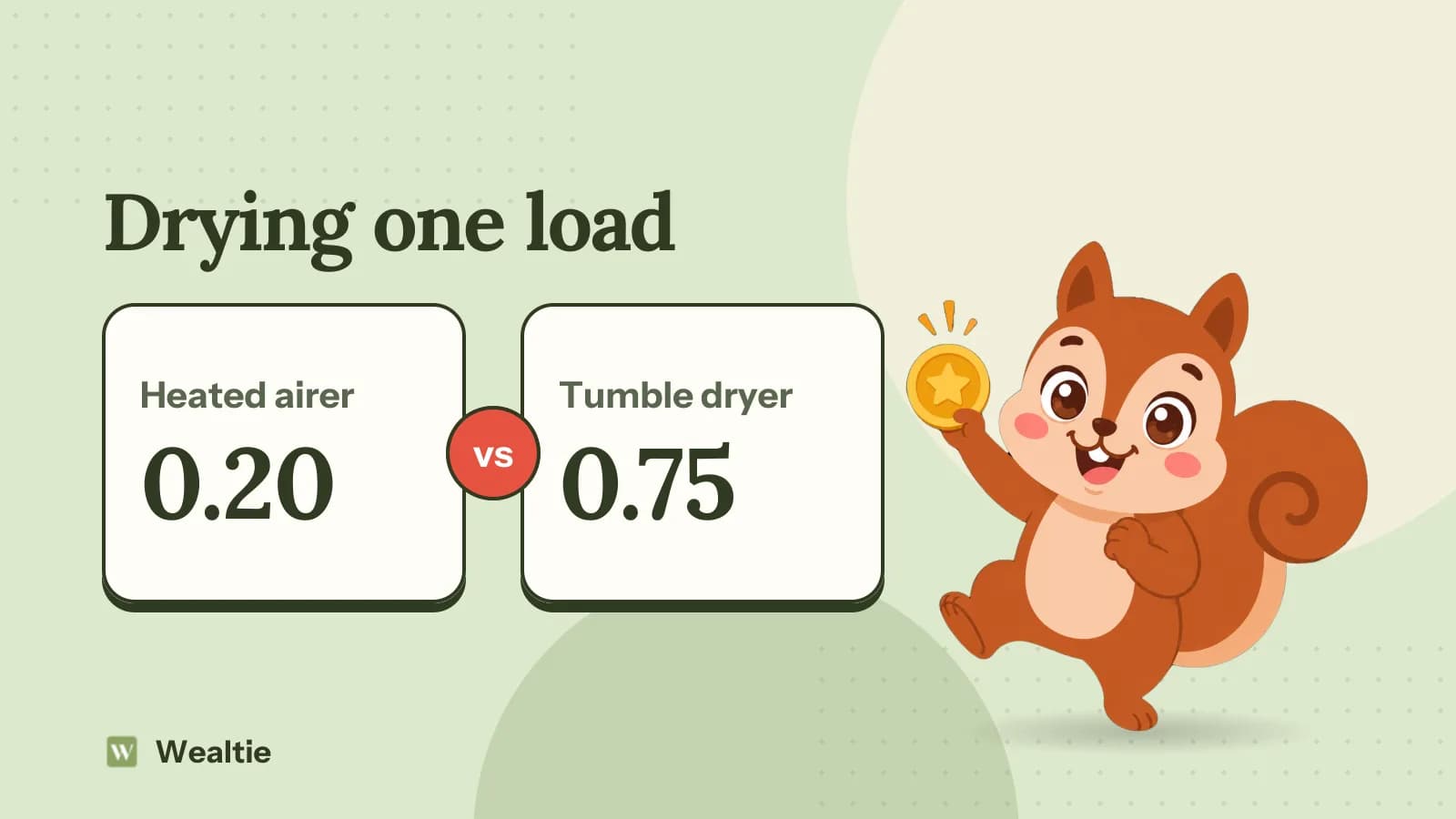
Is a heated airer worth it? It is if you'd otherwise tumble dry most loads, and in a worked example, a heated airer costs about 0.20 a load, against 0.75 for a tumble dryer.
 By Wealtie Team · 3 min read
Key takeaways
- A heated airer is worth it if it replaces most tumble dryer loads.
- It costs much less per load, but takes longer to dry clothes.
- Good airflow and a dehumidifier or open window help clothes dry faster.
- In summer, drying outside costs nothing.
Is a heated airer worth it?
A heated airer is a clothes drying rack with gently heated bars that plug into the mains. It's a popular way to dry washing indoors, especially in winter, without running a tumble dryer. Whether a heated airer is worth it depends on how you dry clothes now. If you use a tumble dryer for most loads, a heated airer can save a lot. If you already dry everything on a normal airer or outside, it adds a cost rather than saving one.
Here's a worked example of a year of drying four loads a week, at an electricity price of 0.30 per unit, in round numbers that work in any currency:
| Drying method | Yearly cost |
|---|---|
| Tumble dryer | 156 |
| Heated airer | 42 |
| Airer without heat | 0 |
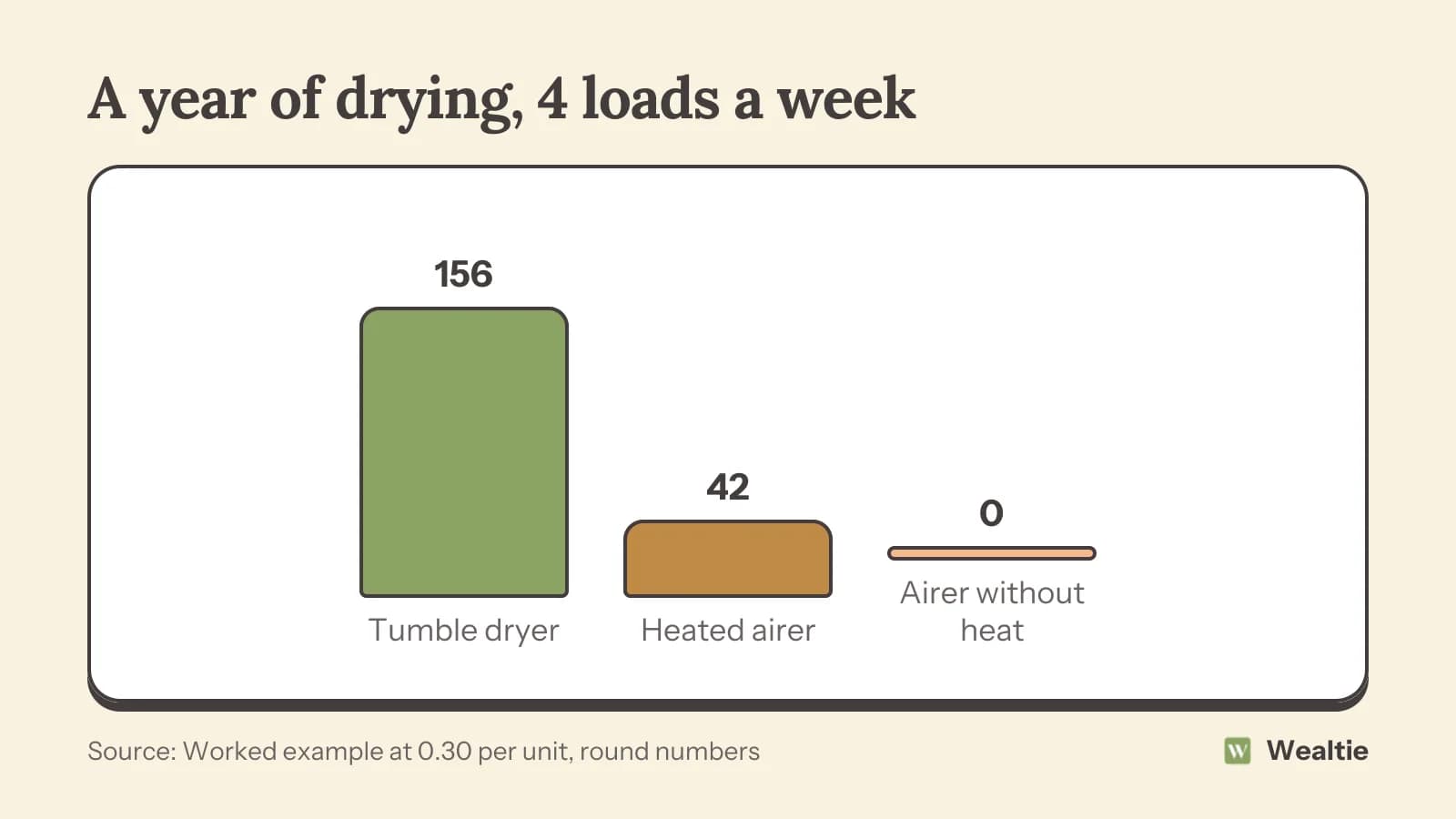
A tumble dryer costs about 0.75 a load, or 156 a year. A heated airer costs around 0.20 a load, or 42 a year. A heated airer costing around 60 would pay for itself in about six months compared with the dryer. Your figures depend on your appliances, how long loads take to dry and your electricity price.
How does a heated airer compare with a tumble dryer?
Running cost
A heated airer uses much less power than a tumble dryer, so each load costs a fraction as much.
Drying time
A tumble dryer dries a load in an hour or two. A heated airer usually takes longer, sometimes several hours, depending on the fabric and the room.
Capacity
Heated airers hold less than a full washing load, so large loads may need spreading out or drying in batches.
Clothes care
Gentle heat is kinder to delicate fabrics than tumble drying, which can shrink or wear some clothes.
Space
A heated airer takes up floor space while drying, while a tumble dryer stays in one place.
How do you dry clothes faster on a heated airer?
Spin clothes well first
Use a high spin speed on your washing machine to remove as much water as possible before drying.
Spread clothes out
Don't overload the airer. Space between items lets air move and moisture escape.
Use a cover
Some airers come with a cover that traps warm air around the clothes, helping them dry faster.
Help moisture escape
Drying indoors releases moisture into the room. Opening a window slightly or running a dehumidifier nearby speeds drying and helps prevent damp. How to save money on heating covers keeping rooms warm efficiently while ventilating.
Turn clothes halfway through
Flipping thicker items like jeans and towels helps them dry evenly.
When might a heated airer not be worth it?
If you already dry clothes outside or on a normal airer, a heated airer adds electricity cost. If you need large loads dried quickly, a tumble dryer may still be more practical. And in a small, poorly ventilated home, drying a lot of washing indoors can increase condensation and damp. How to save money on laundry covers other ways to cut washing and drying costs.
What about drying outside?
When the weather allows, drying outside on a line or rack costs nothing and leaves clothes fresh. Many households use outdoor drying in summer, a heated airer in winter and the tumble dryer only for emergencies, which keeps costs low all year.
Where you put the airer makes a difference. A warm room with some airflow, away from cold external walls, helps clothes dry faster and reduces condensation. Avoid drying in a small, closed room like a bathroom without ventilation, since the moisture has nowhere to go. Some people place the airer near a slightly open window with the door closed, which keeps the moisture out of the rest of the home.
Washing on a schedule helps too. Doing smaller loads more often means each load fits the airer comfortably and dries in a reasonable time, rather than one huge weekend wash that takes days to dry indoors. It also means you're never waiting long for a favourite item.
If you're choosing a heated airer, look at the size, the number of tiers, whether it folds flat for storage and whether a cover is included. A slightly bigger model that holds a full load may save time and money compared with drying in two batches.
Finally, keep the tumble dryer for when you need it, like bedding or a rush, and let the airer handle everyday loads.
How can Wealtie help you track energy savings?
Add your electricity bill as a recurring transaction and log it in a utilities expense category. If you switch from a tumble dryer to a heated airer, comparing bills over a few months shows how much you save. How to save money on your electric bill covers other changes worth trying.
Questions people ask
It's worth it if it replaces most tumble dryer loads. In a worked example, it cost about 0.20 a load, against 0.75 for a tumble dryer.
Yes, much cheaper per load, though it takes longer to dry clothes and holds less.
Usually several hours, depending on the fabric, the room and how well clothes were spun first.
Spin clothes well, spread them out, use a cover, open a window or run a dehumidifier and turn thicker items halfway through.
This article is general information, not financial, tax or legal advice. Your situation is your own; check the numbers that apply to you before you act on them.