Budgeting: Hair removal cost: laser vs waxing vs shaving
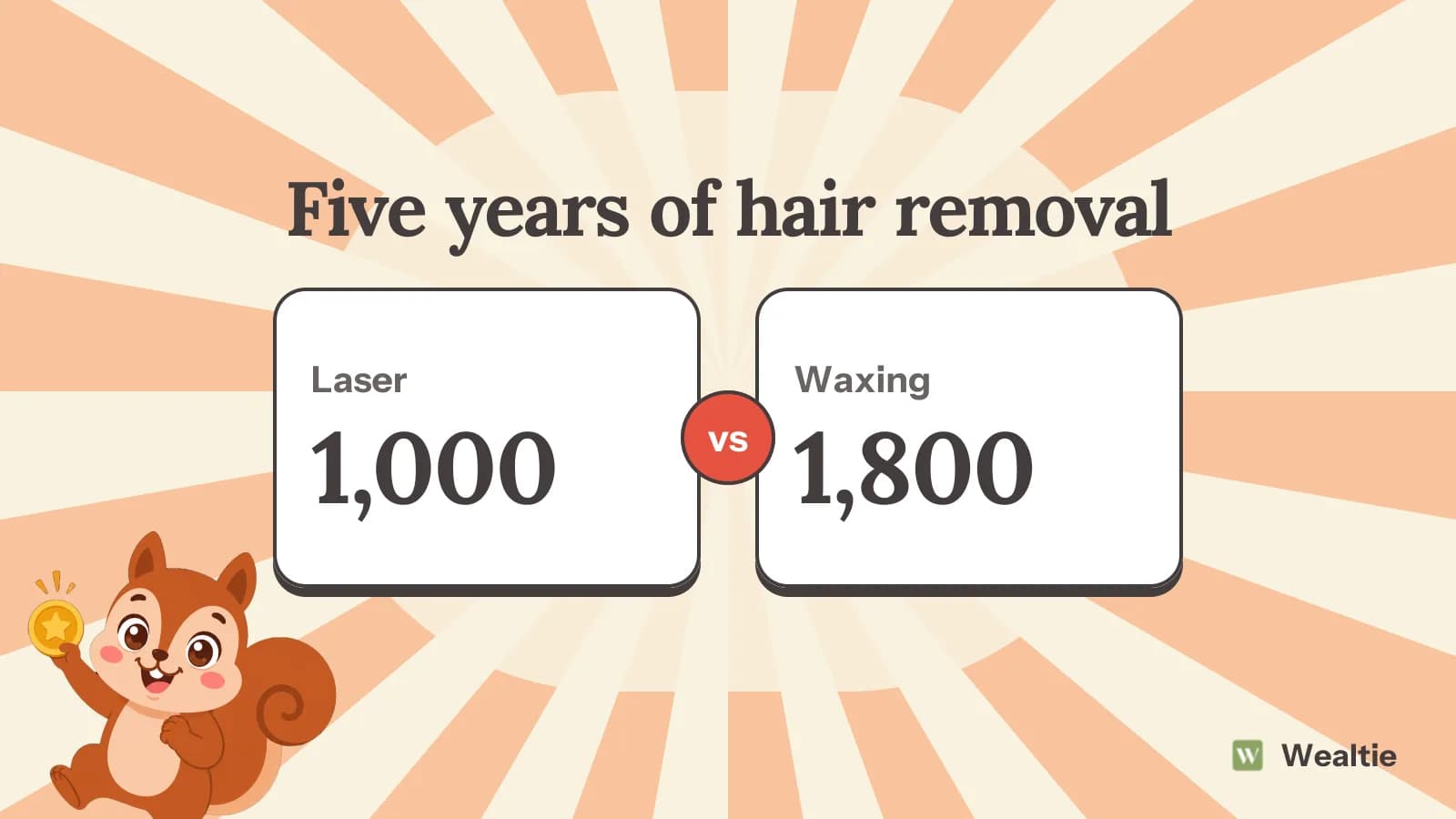
Hair removal cost depends on the method, and laser costs more upfront but can work out cheaper than years of waxing. In a worked example, five years of waxing costs 1,800, against 1,000 for a course of laser.
 By Wealtie Team · 3 min read
Key takeaways
- Hair removal cost depends on the method and how long you keep it up.
- Laser costs more upfront but can be cheaper than years of waxing.
- Shaving is the cheapest but needs doing often.
- Laser results vary, so get a consultation and patch test first.
What does hair removal cost?
Removing unwanted hair is a regular routine for many people, and the costs add up over the years. Shaving is cheap but needs doing often. Waxing lasts longer but means regular salon visits. Laser hair removal reduces hair growth over a course of sessions and costs more upfront. Hair removal cost depends on the method, the area of the body and how long you keep it up.
Here's a worked example for one area over five years, in round numbers that work in any currency:
| Method | Five-year cost |
|---|---|
| Shaving | 300 |
| Laser course plus top-ups | 1,000 |
| Waxing every 5 weeks | 1,800 |
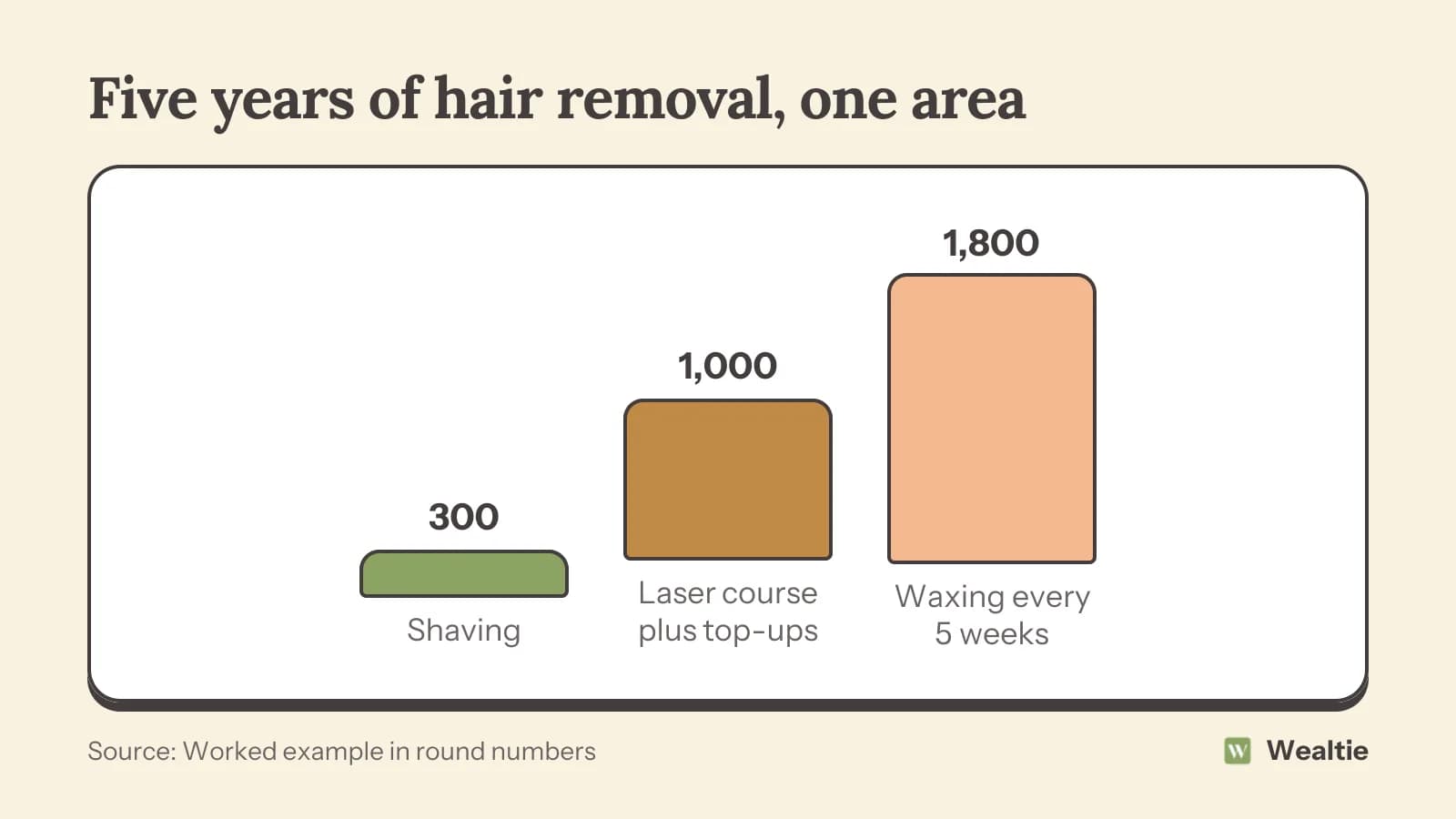
Shaving costs around 60 a year in razors and products. Waxing at around 35 every five weeks costs about 1,800 over five years. A course of eight laser sessions at 100 each, plus occasional top-ups, comes to about 1,000. Over a longer period, laser can save more, since waxing costs continue indefinitely.
How do the methods compare?
Shaving
The cheapest and quickest option, but hair grows back within days.
Waxing
Results last a few weeks, and regrowth can become finer over time. It needs regular appointments or home wax kits.
Epilators and home devices
Epilators pull hair out at the root and cost a one-off amount. Home light-based devices are cheaper than salon laser but often less powerful.
Laser hair removal
Laser targets hair follicles to reduce growth. It usually needs several sessions a few weeks apart, and top-ups may be needed later. Results vary depending on skin and hair type.
Is laser hair removal worth it?
When it can save money
If you'd otherwise wax or have salon treatments for many years, a laser course can pay for itself.
What to check first
Laser works best on certain combinations of skin and hair colour. A consultation and patch test show whether it will work for you. Choose a qualified practitioner at a reputable clinic.
Payment plans
Many clinics offer packages or monthly payments. Check the total cost and terms carefully. Buy now, pay later covers the risks of spreading costs.
Results aren't always permanent
Many people need occasional top-up sessions, so include those in your comparison.
How do you spend less on hair removal?
Buy laser packages
Courses of sessions are usually cheaper than paying for each one separately.
Wax at home
Home wax kits cost less than salon appointments once you've learned how.
Stretch time between appointments
Waiting a little longer between waxing appointments reduces the number of visits each year.
Use cheaper razors and products
Own-brand razors and shaving products work well for many people.
Save ahead for laser
If you plan a laser course, saving monthly first avoids interest on payment plans. A sinking fund keeps the money separate.
How do you decide?
Think about how long you'll keep up hair removal, what you spend now and how much time it takes. Comparing the five-year cost of each method, as in the example, helps you see the real price. How to save money on personal care and cost per use cover other ways to judge regular beauty costs.
Think about which areas matter most. Many people don't need the same method for every part of the body. Laser might make sense for an area you wax often, while shaving is fine for others. Choosing the method area by area can keep the total cost down while saving the most time where it matters.
Time is a cost too. Regular shaving or salon visits take time every week or month, and some people value the time saved by laser as much as the money. Adding up how long you spend on hair removal over a year can help you decide whether a bigger upfront cost is worth it.
If you're considering home laser or light-based devices, read reviews carefully and check they're suitable for your skin and hair type. They're cheaper than clinic treatment but usually take longer to show results, and they don't work for everyone.
Look after your skin whichever method you choose. Irritation, ingrown hairs and burns can lead to extra costs for treatments and products. Following aftercare advice, using sensible products and choosing qualified practitioners keeps your skin healthy.
Finally, compare a few clinics before booking laser. Prices, packages and practitioner experience vary, and a consultation is usually free or low cost.
How can Wealtie help you compare?
Log razors, waxing and treatments in a personal care expense category for a few months, so you know what hair removal costs you now. If you decide on laser, setting a budget for the course keeps the payments on track.
Questions people ask
In a worked example, five years of waxing one area cost about 1,800, a laser course with top-ups 1,000 and shaving 300.
Over many years, it can be. Laser costs more upfront, but waxing costs continue indefinitely.
No. Results depend on skin and hair type. A consultation and patch test show whether it will work for you.
Buy laser packages, wax at home, stretch time between appointments and save ahead instead of using payment plans.
This article is general information, not financial, tax or legal advice. Your situation is your own; check the numbers that apply to you before you act on them.