Multi-currency & travel: How much cash to travel with: a simple sum for any trip
How much cash to travel with depends on where you're going, but two days of spending plus a taxi fare covers most trips. On a daily budget of 80, that's about 200, and you can take out more once you're there.
 By Wealtie Team · 4 min read
Key takeaways
- For most trips, take about two days of spending in cash plus enough for a ride from the airport.
- On a daily budget of 80, that's about 200.
- In places where cards aren't widely accepted, plan to pay more of the trip in cash and find out where ATMs are before you go.
- Split your cash and cards across two places so a single loss doesn't leave you with nothing.
How much cash should you travel with?
About two days of spending, plus enough to get from the airport to where you're staying. That's enough to handle a card that doesn't work on the first night, and small enough that losing it wouldn't wreck the trip.
Here's the sum, in round numbers that work in any currency:
| Line | Amount |
|---|---|
| Daily spending budget | 80 |
| Two days | 160 |
| Airport ride | 40 |
| Cash to take | 200 |
If you haven't got a daily figure yet, how to budget for a trip abroad shows how to get one.
How does the destination change it?
A lot. Some countries run almost entirely on cards and phones, and in others a market, a bus or a family guesthouse will only take cash. Look it up for the specific places you'll be, since a capital city and a small town in the same country can be quite different.
| Where you're going | Share of daily spending in cash | Cash for a 7-day trip on 80 a day |
|---|---|---|
| Mostly cards | Two days' worth in total | About 200 |
| Mixed | About half of each day | About 280 to 320 |
| Mostly cash | Nearly all of it | Up to 560, ideally in two or three withdrawals |
You don't need to carry the whole trip's cash from day one. On a cash-heavy trip, take out enough for a few days at a time, as long as ATMs are easy to reach. If you're heading somewhere with no ATMs at all, like a remote island or a trek, get what you need before you leave the last town that has one.
What else needs cash?
The small stuff that catches you out. Tips in places where they're expected in notes, public toilets, street food, local buses, a market stall, and the odd entrance fee to somewhere that doesn't have a card machine.
Ask for small notes when you can, because large ones can be hard to break. A driver or stall holder won't always have change for the biggest bill an ATM gives you, so buy something small at a shop early on to break it.
How should you carry it?
In more than one place. Keep a day's cash in your wallet and the rest somewhere separate, like an inside pocket or the hotel safe. Keep one card in your wallet and another in a different bag, so a stolen wallet doesn't leave you stuck.
Don't count money out in the open, and take care at ATMs in quiet areas at night. A bank's own machine during the day, ideally inside a branch, is the safest and often the cheapest.
Before you go, write down your bank's emergency number somewhere that's not on your phone. If your wallet and your phone go together, you'll need it.
Check travel insurance as well. Policies often limit how much cash they'll cover, so a large amount of it may not be protected if it's lost.
Should you bring cash from home or get it there?
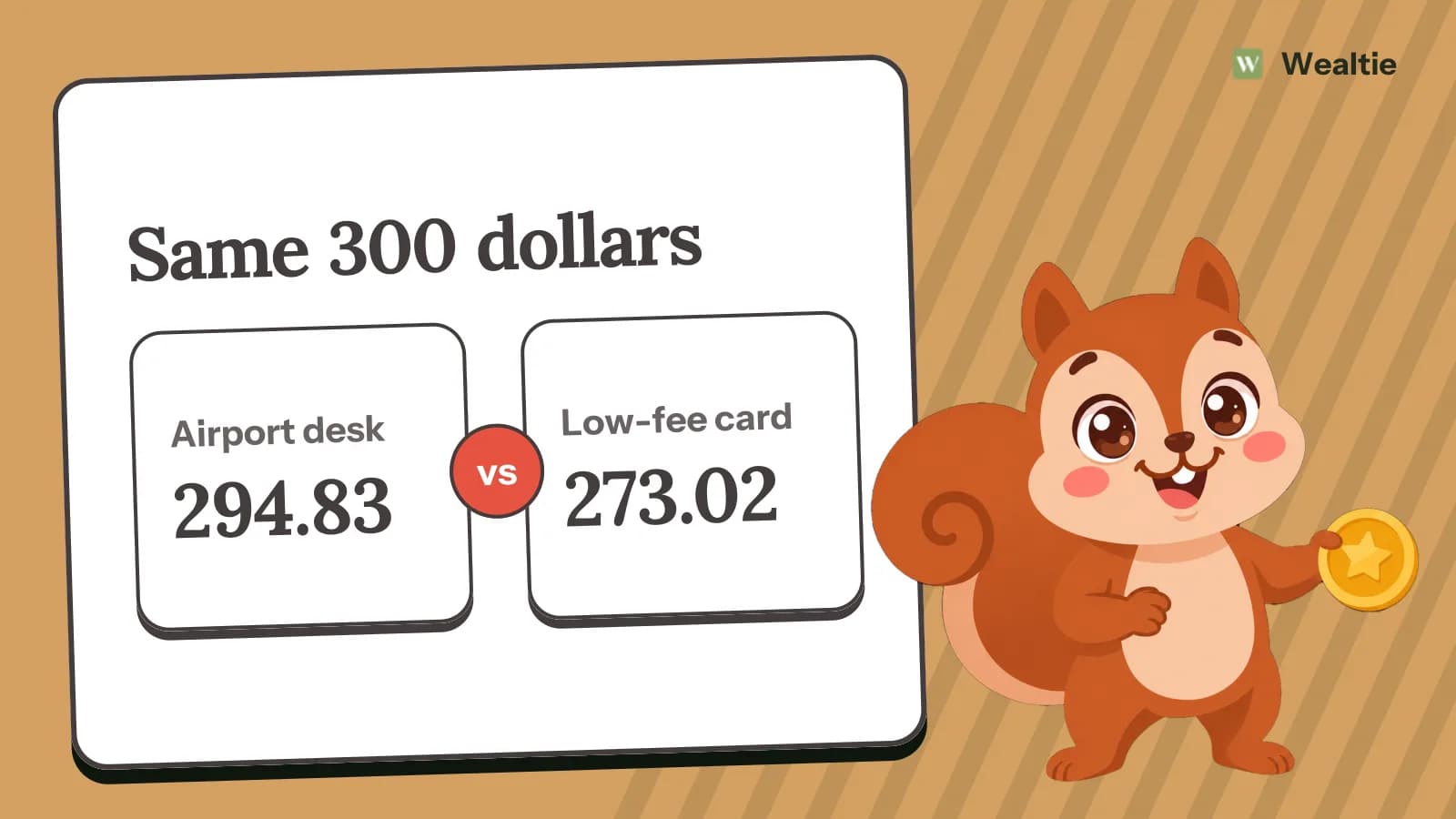
Get most of it there, using a card with low fees, and choose the local currency when the ATM asks. It's usually cheaper than an exchange desk. Foreign transaction fees covers what cards charge, and why you should refuse to be charged in your home currency.
Bring some from home if you'll arrive late, if ATMs at your destination are unreliable, or if you'd feel better with it in your pocket on landing. A small amount will do. Check entry rules as well, because some countries restrict how much of their own currency can be brought in or taken out.
What if you've got cash left at the end?
Spend the coins and small notes at the airport, or keep them for next time if you'll be back. Coins usually can't be changed back, and notes will cost you a second margin if you exchange them at home.
So near the end of the trip, stop withdrawing and let the cash run down. Use the last of it on a coffee, and put the final hotel bill on your card.
How do you stop cash spending from disappearing?
Write it down the same day. Card payments leave a record, and a pile of notes doesn't. By day four, you'll have no idea where the first 200 went.
A note on your phone at the end of each day works. So does logging each purchase as you go, in the currency you paid. Compare what you've spent with your daily budget. If you're well over by day three, you've got time to fix it.
If you're travelling with someone and you've been sharing the costs in cash, splitting travel costs with friends has a system that works.
How do you track cash abroad in Wealtie?
Add your wallet as an account in the local currency and log what you spend from it. Cash counts toward your total in the same way a card does. The multi-currency budget app keeps each account in its own currency and converts totals into a display currency at each day's rate, so you can see the trip in the money you think in. If you've set a monthly limit in your budget tracker, Budget Health shows when your pace is running ahead of it.
Questions people ask
About two days of spending, plus enough for a ride from the airport. On a daily budget of 80, that's about 200, and you can withdraw more at your destination.
Yes, bring a small amount, because a card can fail and some places only take cash. Two days of spending is enough for most trips.
It's riskier than using a card, because lost cash usually can't be replaced and insurance often limits what it covers. Split what you carry across two places and only take what you need.
Spend coins and small notes before you leave, or keep them for your next trip. Exchanging notes back at home costs you a second margin, and coins usually can't be changed.
This article is general information, not financial, tax or legal advice. Your situation is your own; check the numbers that apply to you before you act on them.