Saving: Fridge freezer running cost: old vs new models
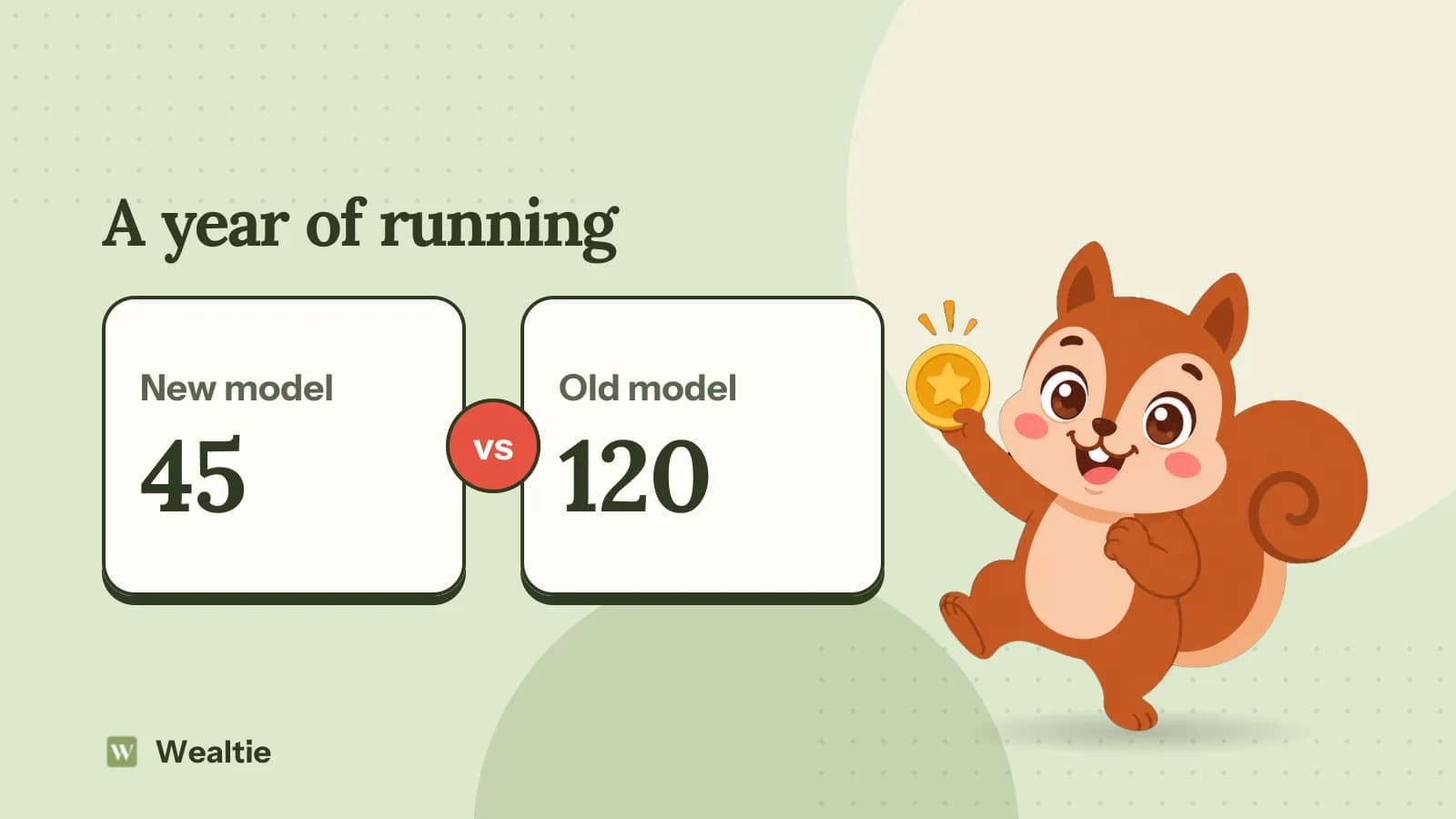
Fridge freezer running cost matters because it runs all day, every day, and older models can use far more electricity than new ones. In a worked example, an old fridge freezer costs 120 a year to run, against 45 for a new efficient one.
 By Wealtie Team · 3 min read
Key takeaways
- Fridge freezer running cost adds up because it runs all day, every day.
- Old models can use much more electricity than new efficient ones.
- Replacing a working fridge rarely pays off quickly, so wait until it needs replacing.
- Simple habits like defrosting and checking seals lower the cost.
What does a fridge freezer cost to run?
A fridge freezer is one of the few appliances that runs all day, every day, all year. That means even a modest power use adds up. Fridge freezer running cost depends on the model's size, age and energy efficiency, how full it is, where it's placed and your electricity price.
Here's a worked example at an electricity price of 0.30 per unit, in round numbers that work in any currency:
| Model | Yearly running cost |
|---|---|
| Old fridge freezer | 120 |
| Average model | 75 |
| New efficient model | 45 |
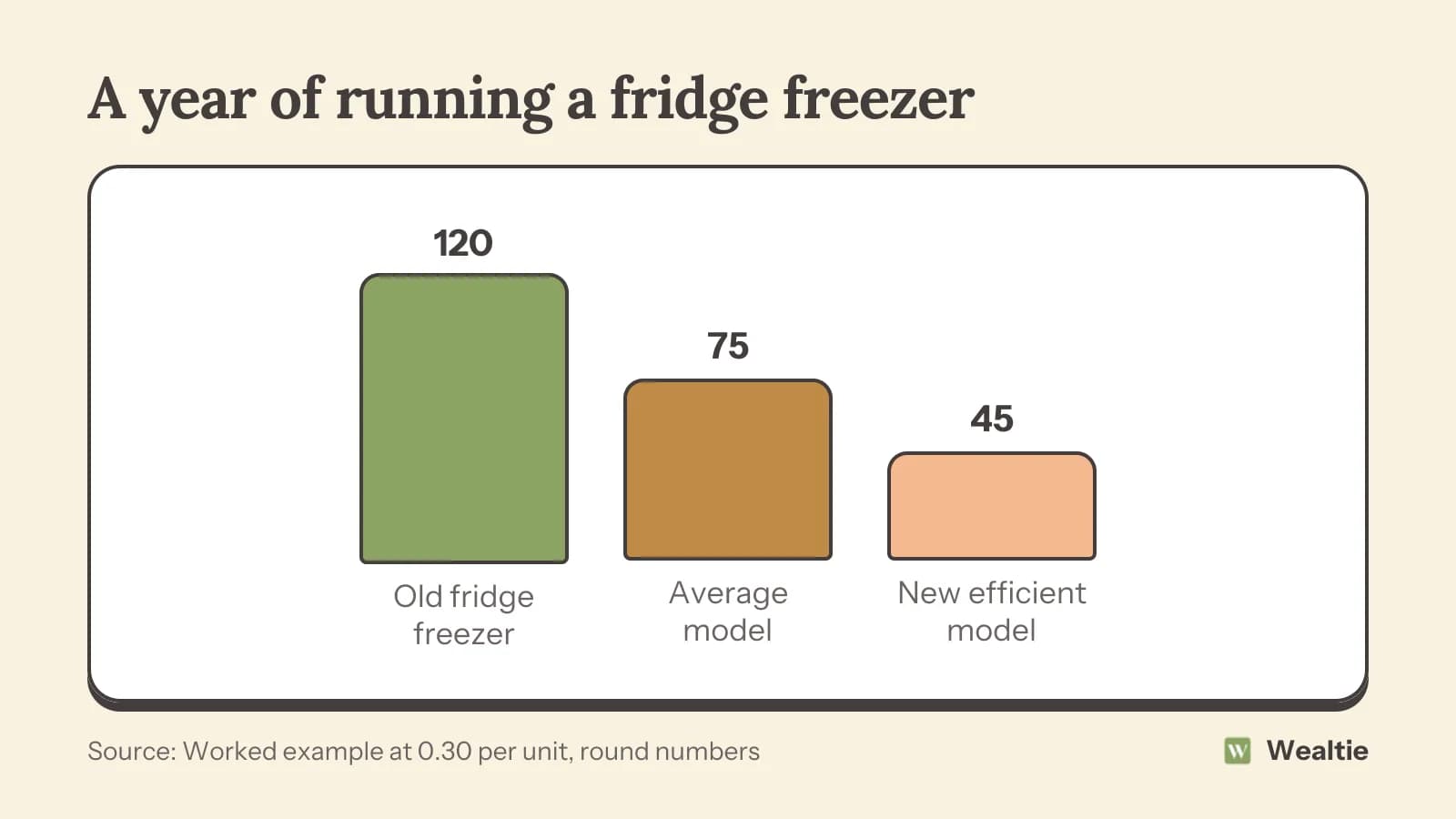
An old fridge freezer might cost around 120 a year to run, while a new efficient one might cost 45. Over ten years, that's 1,200 against 450. Your own figures depend on your model and energy price. The energy label or manual usually shows the yearly energy use, which you can multiply by your electricity price.
Is it worth replacing an old fridge freezer?
The payback can be slow
If a new efficient model costs 500 and saves 75 a year compared with your old one, it takes six or seven years to pay for itself. That's worthwhile if you need a new fridge anyway, but replacing a working one just to save energy is rarely a quick win. Repair or replace covers how to decide.
When replacing makes sense
If your fridge freezer is very old, struggles to stay cold, needs a repair or ices up constantly, a new efficient model may be the better choice. When you do buy, compare yearly energy use on the label, not just the price.
Choose the right size
A bigger fridge than you need costs more to buy and run. Choose a size that fits your household.
How do you cut fridge freezer running costs?
Keep it at the right temperature
Setting a fridge or freezer colder than needed uses more energy. Check the manual for the recommended settings.
Defrost the freezer
Ice build-up makes a freezer work harder. Defrosting when ice gets thick keeps it efficient, unless it's frost-free.
Check the door seals
Worn seals let cold air escape. Close the door on a sheet of paper: if it slides out easily, the seal may need replacing.
Leave space behind it
Fridges need air around the back to release heat. Pushing one tight against the wall or next to an oven makes it work harder.
Let food cool before putting it in
Putting hot food straight in warms the inside and makes the fridge work harder. Let it cool first, while following food safety advice.
Keep it reasonably full
A full freezer stays cold more easily than an empty one, since frozen food helps hold the temperature. Filling gaps with bread or batch-cooked meals works well.
Don't leave the door open
Decide what you need before opening the door, and close it quickly.
How does the fridge help your food budget?
A well-organised fridge and freezer also cut food waste, which often saves more than the electricity costs. Freezing leftovers, bread and batch-cooked meals means less food thrown away. How to reduce food waste and save money covers making the most of what you buy, and how to plan meals on a budget covers using your freezer for weekly cooking.
If you have a second fridge or freezer in a garage or utility room, check whether you need it. Older spare appliances can be some of the most expensive to run, especially if they're half empty or in a cold or very warm space that makes them work harder. Combining food into one appliance and switching off or selling the spare can save more than any small habit change.
When you do replace a fridge freezer, think about how you use it. A family that batch cooks may want more freezer space, while a couple who shop often may prefer a larger fridge. Buying the right shape and size avoids paying to cool space you don't use, and keeps food easier to find, which helps cut waste.
Recycling your old appliance properly matters too. Many retailers collect old fridges when delivering a new one, sometimes for a small fee, and some councils offer collection. Older fridges contain gases that need safe disposal.
Finally, put a note in your calendar to check the door seals and defrost the freezer every few months. It takes minutes and keeps the appliance running as efficiently as possible.
How can Wealtie help you track energy costs?
Add your electricity bill as a recurring transaction and log it in a utilities expense category. If you replace an old fridge freezer, comparing bills over a few months shows how much the new one saves.
Questions people ask
In a worked example at 0.30 per unit, an old model cost about 120 a year and a new efficient one about 45.
Usually only when it needs replacing anyway. A new efficient model can take six or seven years to pay for itself through energy savings.
Set the right temperature, defrost the freezer, check door seals, leave space behind it and let food cool before putting it in.
A full freezer stays cold more easily than an empty one, since frozen food helps hold the temperature.
This article is general information, not financial, tax or legal advice. Your situation is your own; check the numbers that apply to you before you act on them.