Income & freelancing: How to ask for a deposit as a freelancer, and how much
To ask for a deposit as a freelancer, put it in your quote and contract from the start, explain that it secures the client's slot, and invoice it before work begins. In a worked example, a 3,000 project is paid as 900 upfront, 900 midway and 1,200 on delivery.
 By Wealtie Team · 3 min read
Key takeaways
- To ask for a deposit as a freelancer, include it in your quote and contract from the start.
- A deposit protects you from clients who cancel or disappear.
- In a worked example, a 3,000 project is paid in three stages, starting with 900 upfront.
- Start work only once the deposit has arrived.
Why ask for a deposit as a freelancer?
A deposit is part of the fee paid before work starts. It protects you if a client cancels, changes their mind or disappears halfway through a project. It also shows the client is serious and committed. Many freelancers find that clients who pay a deposit are better organised and pay the rest on time. Asking for one is normal in many fields, from design and photography to building and events, so there's no need to feel awkward about it.
For bigger projects, splitting the fee into stages also keeps money coming in while you work, rather than waiting weeks for one large payment at the end. That makes your own budget much easier to manage.
The key is to make the deposit a standard part of how you work, not something you ask for only when you're worried about a client. When it's in every quote, clients see it as a normal term rather than a sign of distrust.
Deposits also help you plan your time. When a client has paid to book a slot, you can turn down other work for those weeks with confidence. Without one, a client who delays or cancels can leave a gap in your schedule that's hard to fill at short notice. The deposit compensates you for that risk and helps keep your income steady from month to month.
How much should a deposit be?
There's no fixed rule, but many freelancers ask for a share of the total, often around a third or a half for projects, and the full fee upfront for small jobs. Here's a worked example of a 3,000 project paid in stages, in round numbers that work in any currency:
| Stage | Payment |
|---|---|
| Deposit before work starts | 900 |
| Midway, after first draft | 900 |
| On delivery | 1,200 |
| Total | 3,000 |
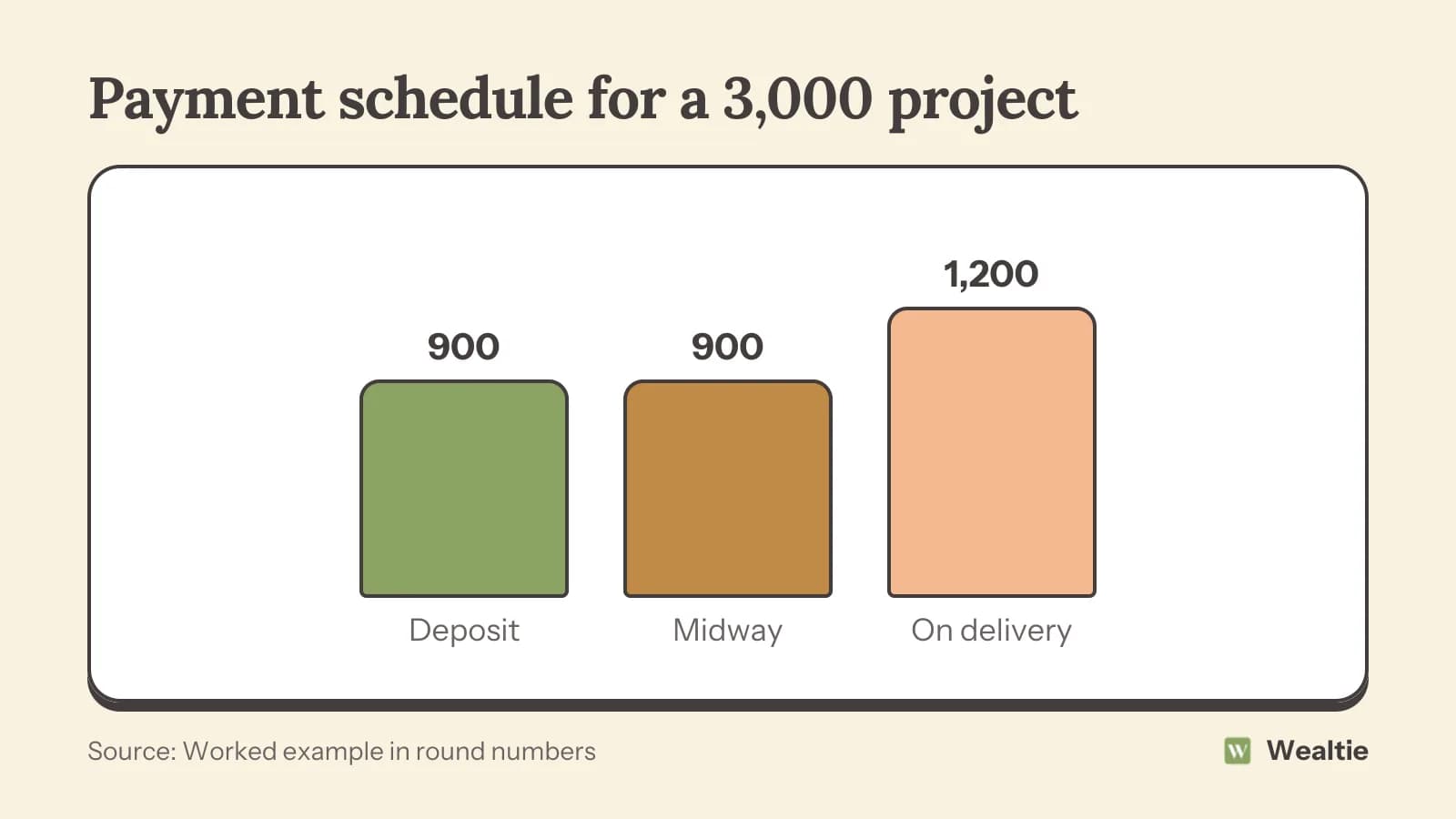
The deposit covers your early time and protects you if the project stops. The midway payment keeps cash coming in, and the final payment is due when the work is delivered.
How do you ask for a deposit?
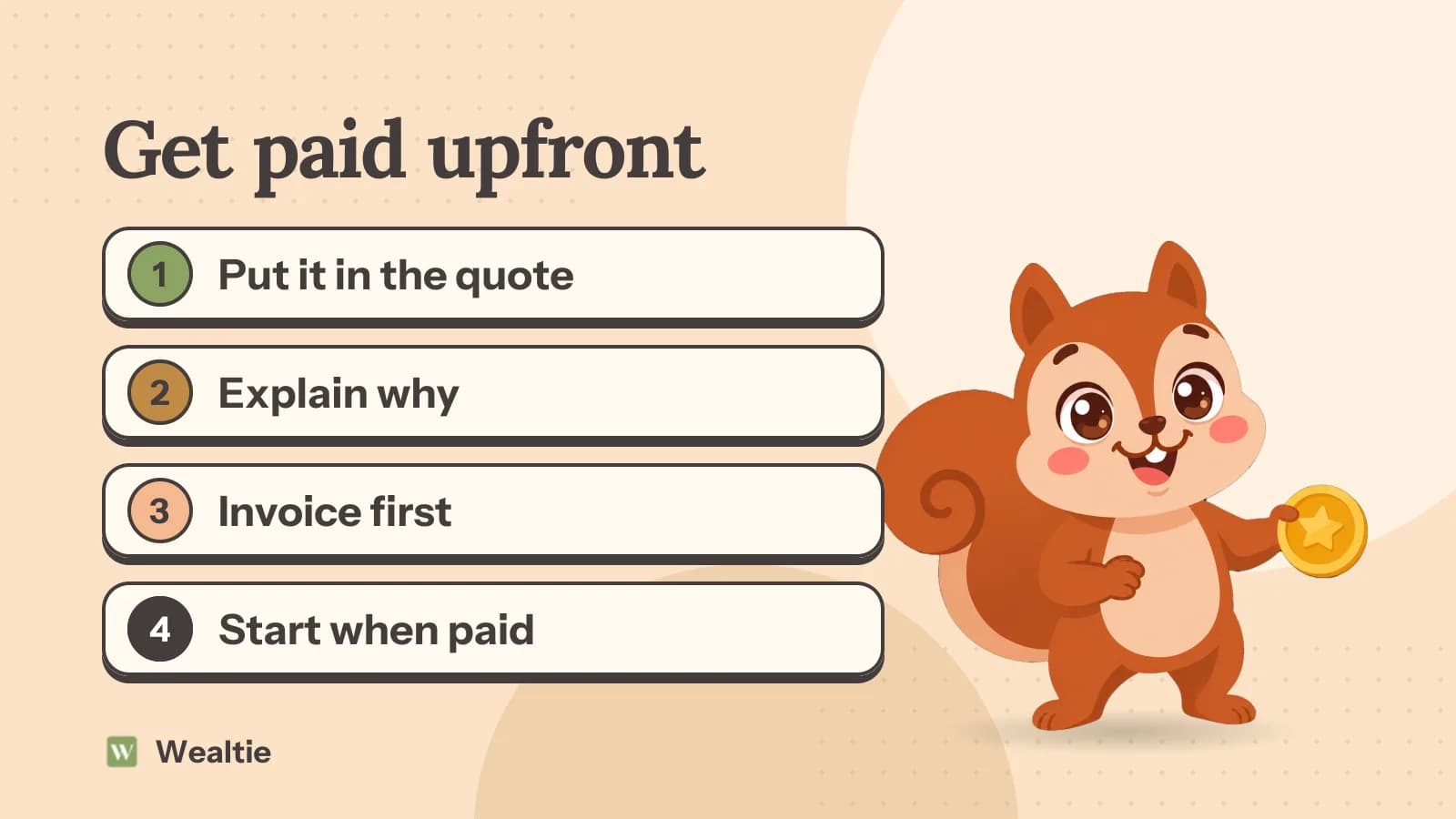
Put it in your quote
Include the deposit and payment schedule in every quote, so the client sees it before agreeing. It's much easier than raising it later.
Write it into your contract
Your contract or terms should say how much the deposit is, when it's due, whether it's refundable and what happens if the client cancels. A clear agreement avoids disputes.
Explain why
A short, friendly line helps: the deposit secures their place in your schedule and covers the time you set aside for their project.
Invoice it straight away
Send the deposit invoice as soon as the client agrees. How to write an invoice covers what to include.
Start when it's paid
Don't begin work until the deposit arrives. It sets the tone for the whole project.
What wording should you use?
Keep it simple and confident. For example: "To book your project, I ask for a deposit of 900, with the rest paid in two stages. Once the deposit is received, I'll confirm your start date." There's no need to apologise or explain at length.
What if a client refuses?
Some clients, especially larger companies, have payment processes that make deposits harder. You might agree to stage payments instead, or a smaller deposit. For new clients with no track record, a deposit matters most. If a client refuses any upfront payment for a big project, think carefully about the risk. What to do when a client pays late covers what happens when payment goes wrong, and freelance client concentration covers spreading your risk across clients.
Refundable or not?
Decide whether the deposit is refundable if the client cancels. Many freelancers keep it to cover their time and the work they turned down. Say so clearly in your terms. Rules on deposits and cancellations vary by country, so check what applies.
Build a buffer anyway
Deposits help, but a cash buffer covers the gaps when projects end or clients pay slowly. How much to save before going freelance covers building one, and how to set your freelance rate covers pricing to cover your costs.
How do you track deposits in Wealtie?
Log each deposit and stage payment in the income tracker, so you can see what's been paid and what's still due. Keep business costs in their own expense categories and set a budget based on income you've received, not invoices you're waiting on.
Questions people ask
Include it in your quote and contract, explain that it secures the client's slot, invoice it straight away and start work once it's paid.
Many ask for around a third or a half for projects, and the full fee upfront for small jobs. In a worked example, 900 of a 3,000 project.
Many freelancers keep the deposit if the client cancels, to cover their time. Say so clearly in your terms.
Offer stage payments or a smaller deposit, and think carefully about the risk if a new client refuses any upfront payment.
This article is general information, not financial, tax or legal advice. Your situation is your own; check the numbers that apply to you before you act on them.