Income & freelancing: Why relying on one client is risky for freelancers
Relying on one client is risky because losing them can remove most of your income overnight. In a worked example, one client pays 2,400 of a 3,000 month, so losing them would cut income to 600, and spreading work across more clients makes your budget far safer.
 By Wealtie Team · 3 min read

Key takeaways
- Relying on one client puts most of your income at risk if they leave or cut back.
- In a worked example, losing the main client would cut a 3,000 month to 600.
- Measure how much each client makes up of your income every few months.
- Build a buffer and grow other clients steadily, even when the main one is busy.
Why is relying on one client risky?
Because your income depends on one decision you don't control. A large client can feel like security: steady work, regular payments and no need to find new business. But clients change budgets, switch suppliers, bring work in-house or go out of business. If one client makes up most of your income, losing them can turn a good month into a crisis overnight.
It's common, especially for freelancers who start with a former employer as their first client. The aim isn't to drop a good client, but to make sure you'd be fine without them.
How do you measure client concentration?
Look at how much each client pays you over the last few months. Here's a worked example of a 3,000 month, in round numbers that work in any currency:
| Client | Income |
|---|---|
| Client A | 2,400 |
| Client B | 400 |
| Client C | 200 |
| Total | 3,000 |
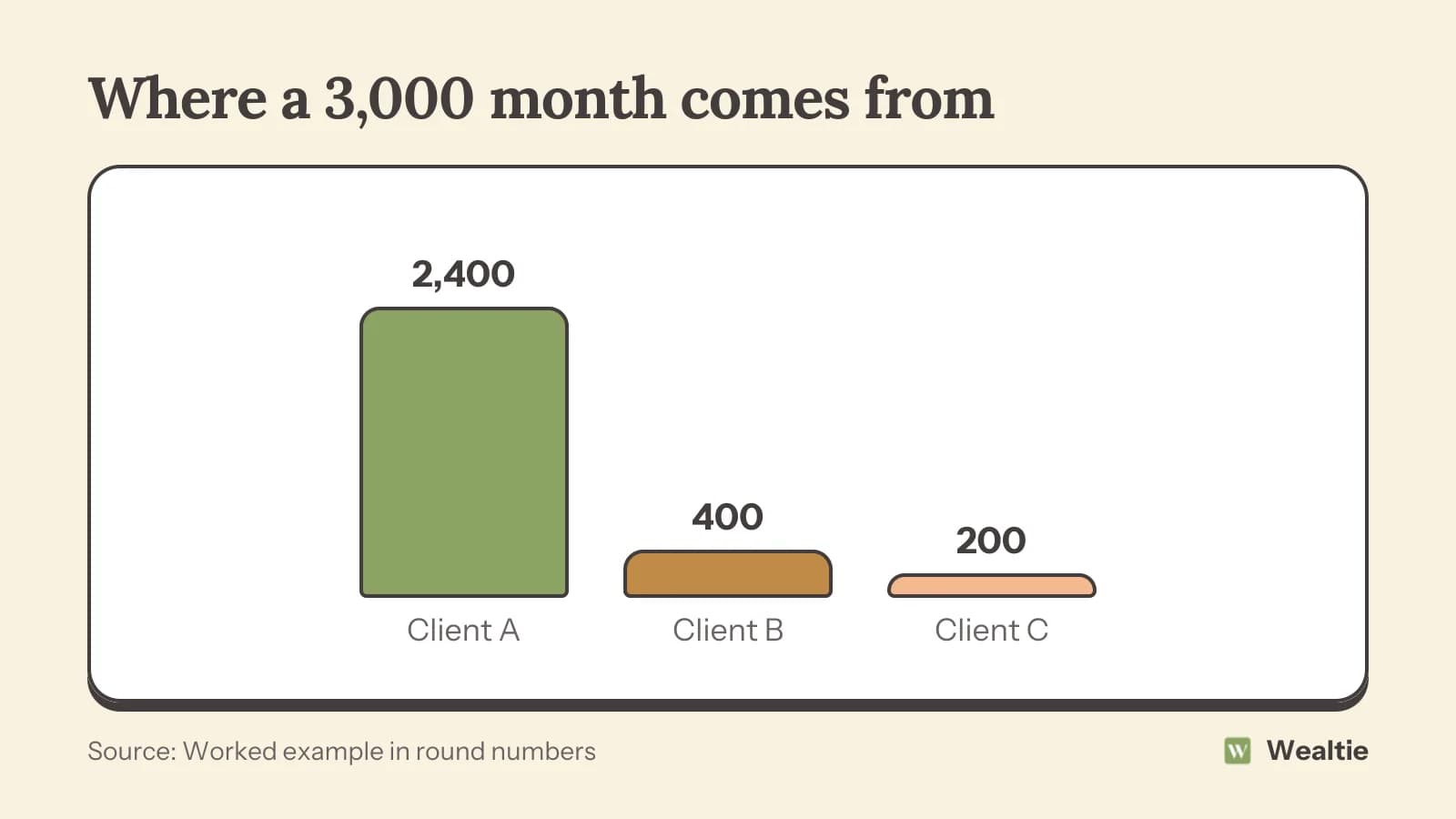
In this example, Client A pays most of the income. If they left, the month would drop to 600. Checking this every few months shows whether your income is becoming more or less dependent on one client. How to measure income stability covers other ways to see how steady your income is.
A simple warning sign
If you'd struggle to pay your bills for two months without one client, you're too dependent on them. That test is easier to apply than any formula, and it's worth asking yourself every quarter.
What are the risks beyond losing income?
There are a few others:
- Weaker negotiating position. It's harder to raise rates or push back on unreasonable requests when you can't afford to lose the client.
- Late payments hurt more. If your main client pays late, your whole month is affected. What to do when a client pays late covers that problem.
- Less variety. Working for one client can limit your skills and portfolio.
- Employment status questions. In some countries, working mostly for one client can raise questions about whether you're self-employed in the eyes of the law. Check the rules where you live.
How do you spread your income?
Grow other clients steadily, even when your main client keeps you busy. Some ways to do it:
- Set aside a few hours each week for finding new work, whatever your workload.
- Ask happy clients for referrals and testimonials.
- Offer smaller, regular services, like retainers, to past clients.
- Keep your portfolio and online profiles up to date.
- Look for clients in different industries, so one sector's downturn doesn't hit them all.
It's much easier to find new clients while you're still earning than after you've lost your main one. Tracking where each new client came from shows which channels are worth your time.
Saying no to more from the big client
If your main client offers more work, think about whether it increases your dependence. Sometimes accepting it is right, but sometimes keeping time free for other clients is the safer choice.
How do you build a safety buffer?
Save enough to cover a few months of costs. In a worked example, if your monthly costs are 1,800, a three-month buffer is 5,400. That gives you time to find new work if your main client leaves, without panic or taking on poorly paid jobs out of necessity. The more one client makes up your income, the bigger your buffer should be. Building it slowly, from a share of each payment, makes it manageable.
What should you do if your main client leaves?
Act quickly and calmly. Cut non-essential spending, contact past clients and your network, and use your buffer to cover essentials while you rebuild. It can also be a chance to raise your rates with new clients. Ask the departing client for a testimonial or referral, since they often leave for reasons that have nothing to do with your work. How to budget with seasonal income has tips for managing lean months.
How do you plan for a healthier client mix?
Set a goal, like no single client making up more than about half your income, and work towards it over a year. Review it every quarter. As your client base grows, your income becomes steadier and your position stronger. How to set your freelance rate can help you price new work well as you grow.
How do you track income by client in Wealtie?
Log payments from each client in the income tracker, using a separate income category for each main client, so you can see how much each one contributes. Pro adds income analytics to compare clients and months. Your expense categories show your costs, so you know how big your buffer needs to be.
Questions people ask
Losing them can remove most of your income overnight, and it weakens your position on rates and terms.
Add up what each client pays over a few months. If one makes up most of it, you're heavily dependent.
Set aside time each week to find new work, ask for referrals, offer retainers and look for clients in different industries.
Enough to cover a few months of costs. In a worked example, three months at 1,800 is 5,400.
This article is general information, not financial, tax or legal advice. Your situation is your own; check the numbers that apply to you before you act on them.