Saving: Free things to do at the weekend
Free things to do at the weekend are easy to find once you look: parks, museums, walks, community events and time with friends at home. In a worked example, swapping two paid outings a month for free ones saves about 100 a month without losing the fun.
 By Wealtie Team · 3 min read
Key takeaways
- Free things to do at the weekend include parks, museums, walks, events and time at home with friends.
- In a worked example, swapping two paid outings a month for free ones saves about 100.
- Planning ahead stops weekends defaulting to shopping or eating out.
- Keep one paid treat a month so weekends feel special.
Free things to do at the weekend
More than most people expect. Many towns and cities have parks, free museums, markets and events every weekend, and the countryside offers walks and views that cost nothing. Weekends often default to spending: shopping, eating out, the cinema or a trip somewhere. These are fun, but they add up. Free things to do at the weekend can be just as enjoyable, and mixing them in keeps your budget healthy while your weekends stay full.
Here's a worked example of monthly weekend spending, in round numbers that work in any currency:
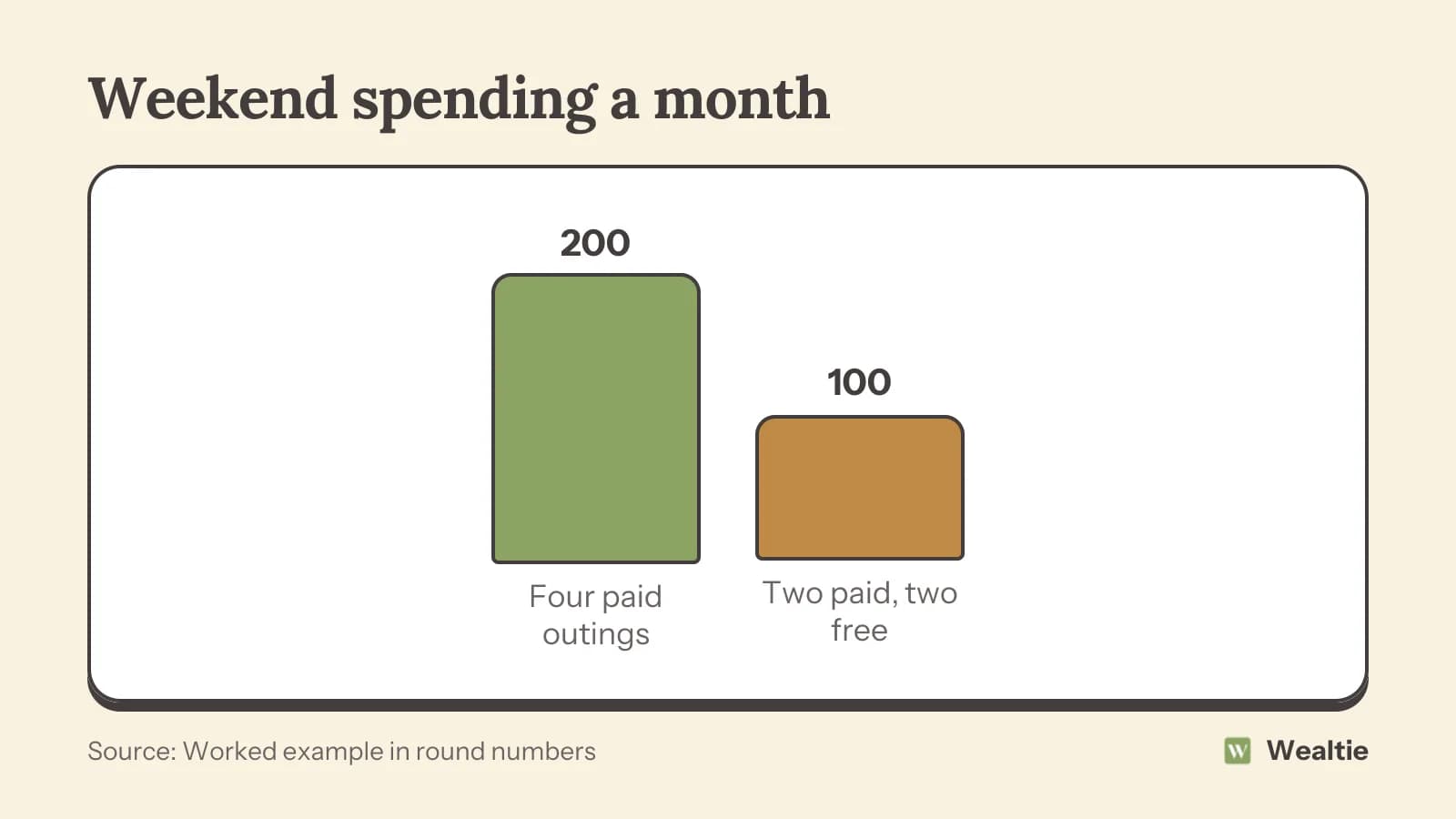
In this example, four paid outings at about 50 each cost 200 a month. Swapping two for free activities halves that, saving about 100 a month. Your own savings depend on what you usually do. Looking back at last month's weekends, and noting which ones you enjoyed most, often shows that the best ones weren't the most expensive.
What free outdoor activities are there?
- Walks and hikes in parks, forests, hills or along rivers
- Beaches and lakes, for a day of relaxing
- Cycling on quiet roads or trails
- Picnics with food from home
- Outdoor workouts, like free weekly timed runs or park exercise groups
- Stargazing, away from city lights
Being outside costs nothing and is good for mood and health. Checking local walking routes or nature reserves often reveals places you've never been. A flask of tea and some snacks turn a walk into a proper outing.
What free cultural activities are there?
- Free museums and galleries, which many cities offer
- Libraries, for books, films, events and exhibitions
- Free festivals, markets and street events
- Free concerts or talks, often at universities or community centres
- Historic towns and buildings to explore on foot
Local council and community websites often list free events. Signing up to their newsletters means you hear about things before they happen.
What free social activities are there?
- Game nights with friends, using games you already own
- Potluck dinners, where everyone brings a dish
- Film nights at home
- Volunteering together, which helps others and feels good
- A walk and a chat instead of meeting for drinks
How to say no to spending with friends helps if friends' plans tend to cost more than you'd like. Suggesting a free plan yourself is often welcome, since friends may be watching their spending too.
What can you do at home?
- Cook a new recipe or bake something special
- Start a creative project, like drawing, writing or music
- Learn something new with free online courses
- Have a home spa evening
- Tackle a garden or home project you've been putting off
- Read a library book or listen to a podcast
A lazy weekend at home can be restful too. Not every weekend needs an outing.
Seasonal free activities
Each season brings free things to do: blackberry picking and leaf walks in autumn, frosty walks and festive lights in winter, blossom and gardens in spring and beaches and outdoor events in summer. Planning around the season keeps weekends varied without spending.
How do you plan weekends without spending?
Plan ahead. Weekends without a plan often drift towards shopping or takeaways. Spending a few minutes on Thursday choosing what you'll do, and checking free events nearby, makes it easy. Keep a list of free ideas on your phone for when you need inspiration. Adding to it whenever you hear about something new means you'll never run out.
Keep a treat
Free weekends don't mean no treats at all. Keeping one paid outing a month, like a meal out or a cinema trip, makes weekends feel special and stops free plans feeling like a sacrifice. How to save money on entertainment has ways to make paid outings cheaper too.
What if you live in an expensive city?
Cities often have more free options, not fewer: parks, museums, markets and events. How to budget in an expensive city has more tips, and the staycation budget covers making time off at home feel like a break.
Planning a free weekend ahead also helps. If you know on Friday what you'll do on Saturday, you're less likely to drift into a shopping centre or a café out of boredom. Local council websites, libraries and community noticeboards list free events every week, from walks and talks to markets and open days.
How do you track weekend spending in Wealtie?
Give leisure and going out their own line in your expense categories, so you can see what weekends cost. A monthly limit in the budget tracker, with Budget Health, shows whether you're on pace, and comparing months shows how free weekends add up.
Questions people ask
Walks, parks, beaches, free museums, libraries, festivals, game nights, potluck dinners and home projects.
In a worked example, swapping two paid outings a month for free ones saves about 100.
Check local council, library and community websites, and local social media groups.
Choose activities ahead, keep a list of free ideas and plan one paid treat a month.
This article is general information, not financial, tax or legal advice. Your situation is your own; check the numbers that apply to you before you act on them.