Money as a couple: Financial infidelity: what it is and how to rebuild trust
Financial infidelity is hiding money matters from a partner, like secret spending, debts or accounts. It's more common than many people think, and couples can recover with honesty, a clear picture of the finances and a budget both people agree to.
 By Wealtie Team · 3 min read
Key takeaways
- Financial infidelity is hiding spending, debts or accounts from a partner.
- Recovering starts with an honest conversation and a full picture of the finances.
- In a worked example, a hidden 3,000 card balance is cleared in 20 months at 150 a month.
- Regular money check-ins and agreed limits help rebuild trust.
What is financial infidelity?
Financial infidelity is hiding money matters from a partner you share finances or a life with. It can include secret spending, a hidden credit card or loan, a private account, lying about how much something cost, or keeping debts quiet. Sometimes it starts small, like hiding a few purchases, and grows over time.
It's often less about the money itself and more about trust. Finding out can hurt, even when the amount is small. It can also leave the other partner exposed, for example if a hidden debt affects a joint mortgage application.
Why does it happen?
People hide money matters for many reasons: shame about debt, fear of a partner's reaction, different attitudes to spending, a wish for independence, or habits from before the relationship. Sometimes it's linked to emotional spending or gambling. Understanding the reason doesn't excuse the secrecy, but it helps couples find a way forward. Often, the partner who hid things was worried about letting the other down, rather than trying to deceive.
When it's about control
Financial infidelity is different from financial abuse, where one partner controls the other's access to money, monitors every purchase or runs up debts in their name. If you feel controlled or unsafe, contact a support service for help.
What should you do if you find out?
Take a breath before reacting. A calm conversation, when you've both had time to think, usually goes better than an argument in the moment. Focus on understanding what happened and what needs to change. Ask for the full picture, not just what you've already found. Writing down questions beforehand can help keep the conversation focused rather than emotional.
If you're the one who's been hiding something, telling your partner yourself, before they find out, is usually the better path. It's hard, but it's the first step to rebuilding trust. Coming with a full list and a suggested plan shows you're taking it seriously.
How do you get a full picture?
Sit down together and list everything: accounts, cards, loans, savings, regular payments and any debts. Look at recent statements together. It can feel uncomfortable, but a complete picture is the only base for a plan. Checking your credit reports together can also show any accounts you didn't know about. Financial red flags in a relationship covers warning signs worth talking about.
How do you make a plan to fix it?
If there's hidden debt, make a repayment plan together. Here's a worked example of clearing a hidden 3,000 card balance at 150 a month, in round numbers that work in any currency:
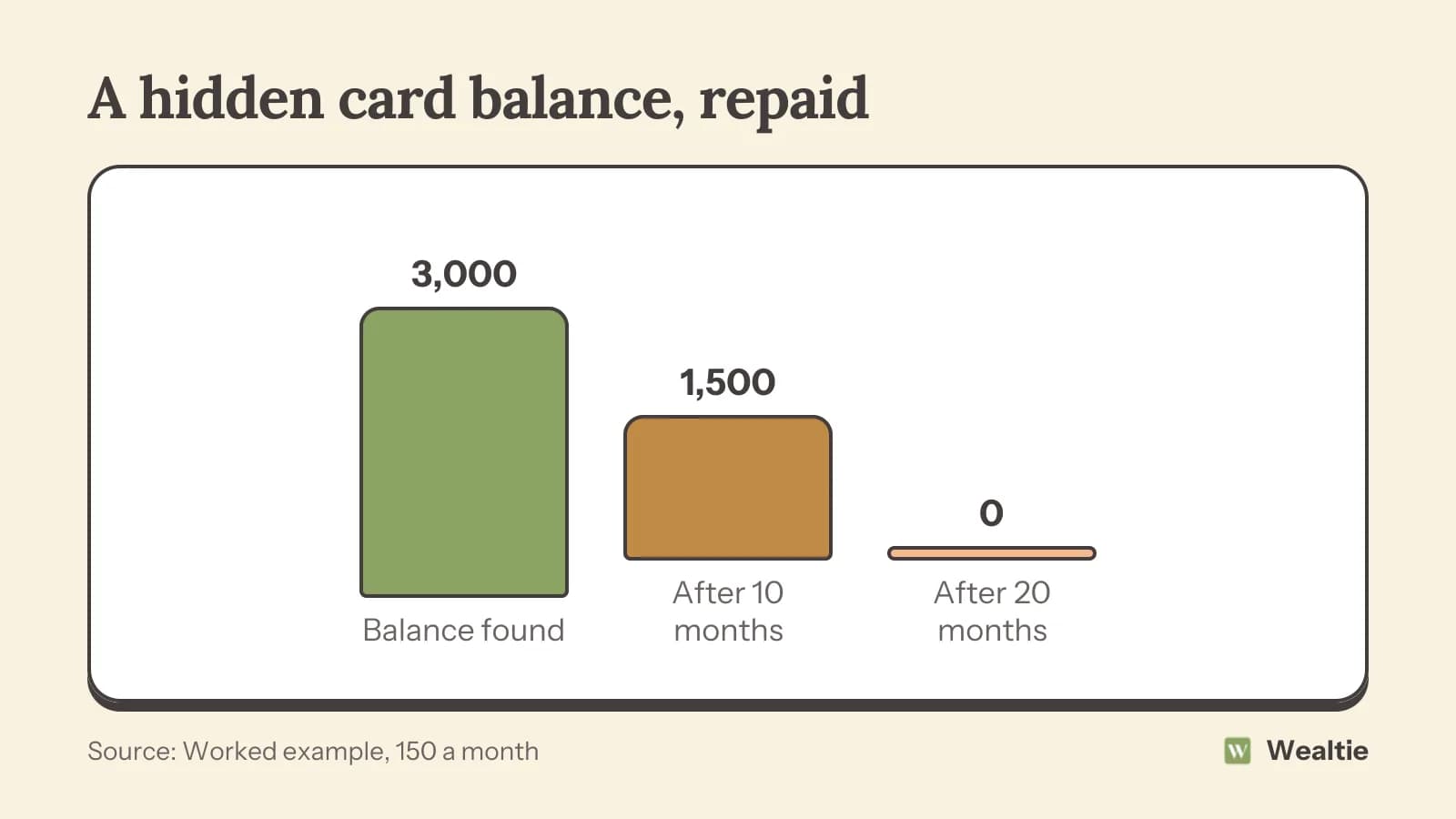
After ten months, the balance has halved, and after twenty months it's cleared. Seeing progress together helps rebuild trust. If debts feel unmanageable, free debt advice services can help. Cutting a few shared costs for a while can speed up repayment and makes it feel like a joint effort.
Agree how you'll manage money from now on
Decide together how you'll handle money going forward: which accounts are shared, how much each person can spend without checking in, and how big purchases are agreed. Many couples find that a set amount of personal spending money for each partner reduces the urge to hide purchases. When your partner overspends has more ideas.
How do you rebuild trust?
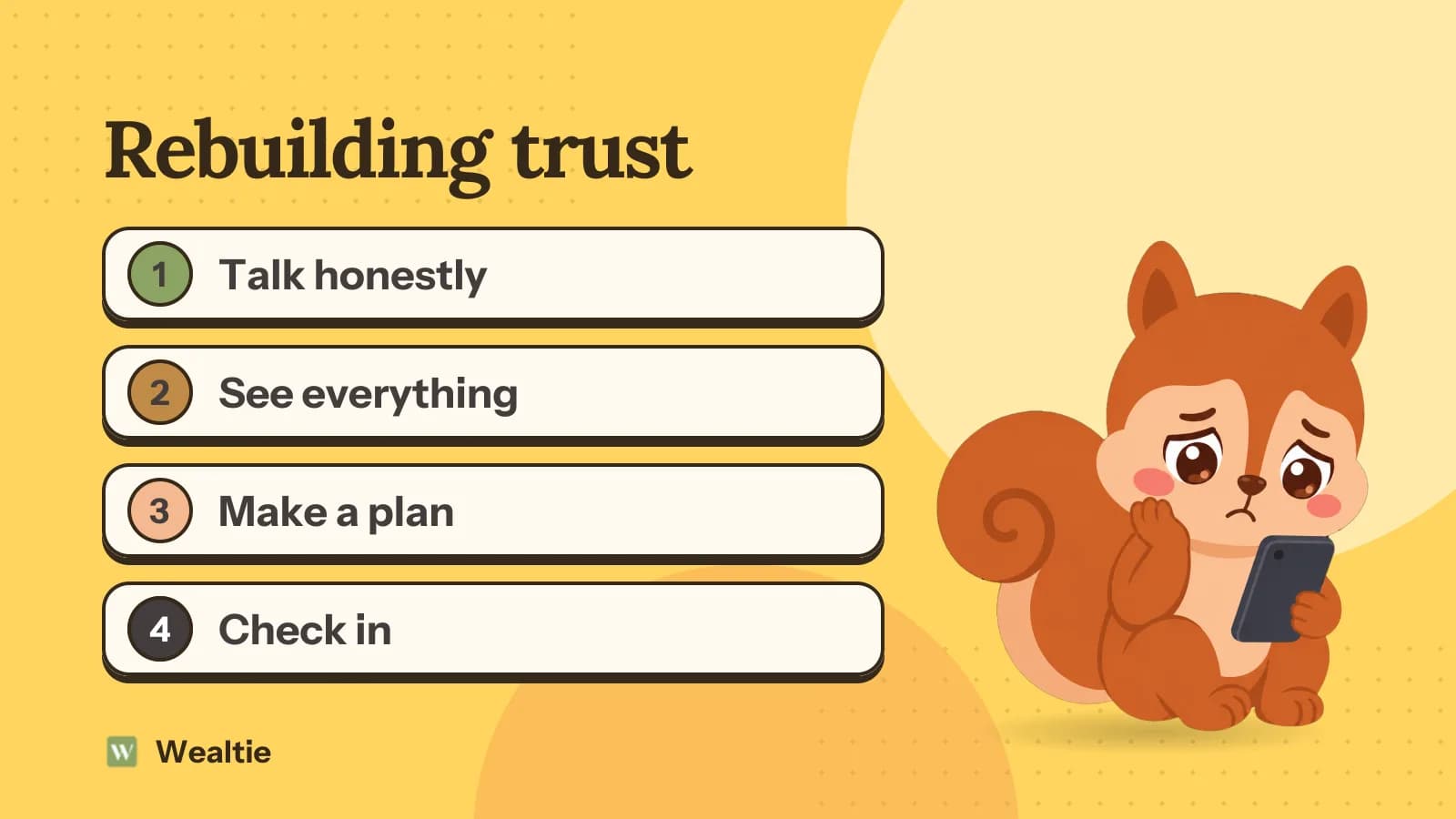
Through openness and consistency over time. A regular money check-in, weekly at first, then monthly, keeps both partners informed. Sharing access to accounts or a budgeting app makes things visible without one person policing the other. The monthly money meeting is a simple format for these conversations.
If the conversations keep turning into arguments, a couples counsellor can help you talk about money and trust more constructively. How to talk about money with your partner has tips too.
How do you prevent it happening again?
Make honesty easy. Agree that either of you can raise a money worry without blame. Keep some financial independence, like personal spending money, so neither feels the need to hide small things. Review the budget together regularly, so surprises are rare. Celebrating milestones, like clearing a debt, reinforces the progress you've made together.
How can Wealtie help couples be open about money?
Track spending in shared expense categories and set agreed limits in the budget tracker, so you can both see how the month is going. Wealtie's sharing lets you share accounts with a partner; the person who shares needs Pro, and the person invited can be on any plan.
Questions people ask
Hiding money matters from a partner, like secret spending, hidden debts or private accounts.
Talk calmly, ask for the full picture, look at statements together and make a repayment plan as a team.
Many do, with honesty, a full picture of the finances, an agreed plan and regular check-ins.
Agree that money worries can be raised without blame, give each partner personal spending money and review the budget together.
This article is general information, not financial, tax or legal advice. Your situation is your own; check the numbers that apply to you before you act on them.