Budgeting: Electric heater running cost: when it's cheaper than central heating
An electric heater running cost is higher per unit of heat than gas central heating in many homes, but heating one room for a few hours can still cost less than heating the whole house. In a worked example, a heater in one room costs about 0.60 an evening.
 By Wealtie Team · 3 min read
Key takeaways
- An electric heater can cost more per unit of heat than gas heating.
- Heating one room for a few hours can still be cheaper than heating the whole house.
- In a worked example, a heater in one room costs about 0.60 an evening.
- Oil-filled radiators and small fan heaters suit different situations.
What is the electric heater running cost?
It depends on the heater's power, how long you run it and your electricity price. Most portable electric heaters turn all the electricity they use into heat, but electricity often costs more per unit than gas. That means an electric heater usually costs more to produce the same amount of heat as a gas boiler. The catch is that central heating warms the whole home, while a heater warms just the room you're in.
So the real question isn't which is cheaper per unit of heat, but which costs less for what you need. If you're home alone, sitting in one room for an evening, a small heater in that room can cost less than heating every room in the house.
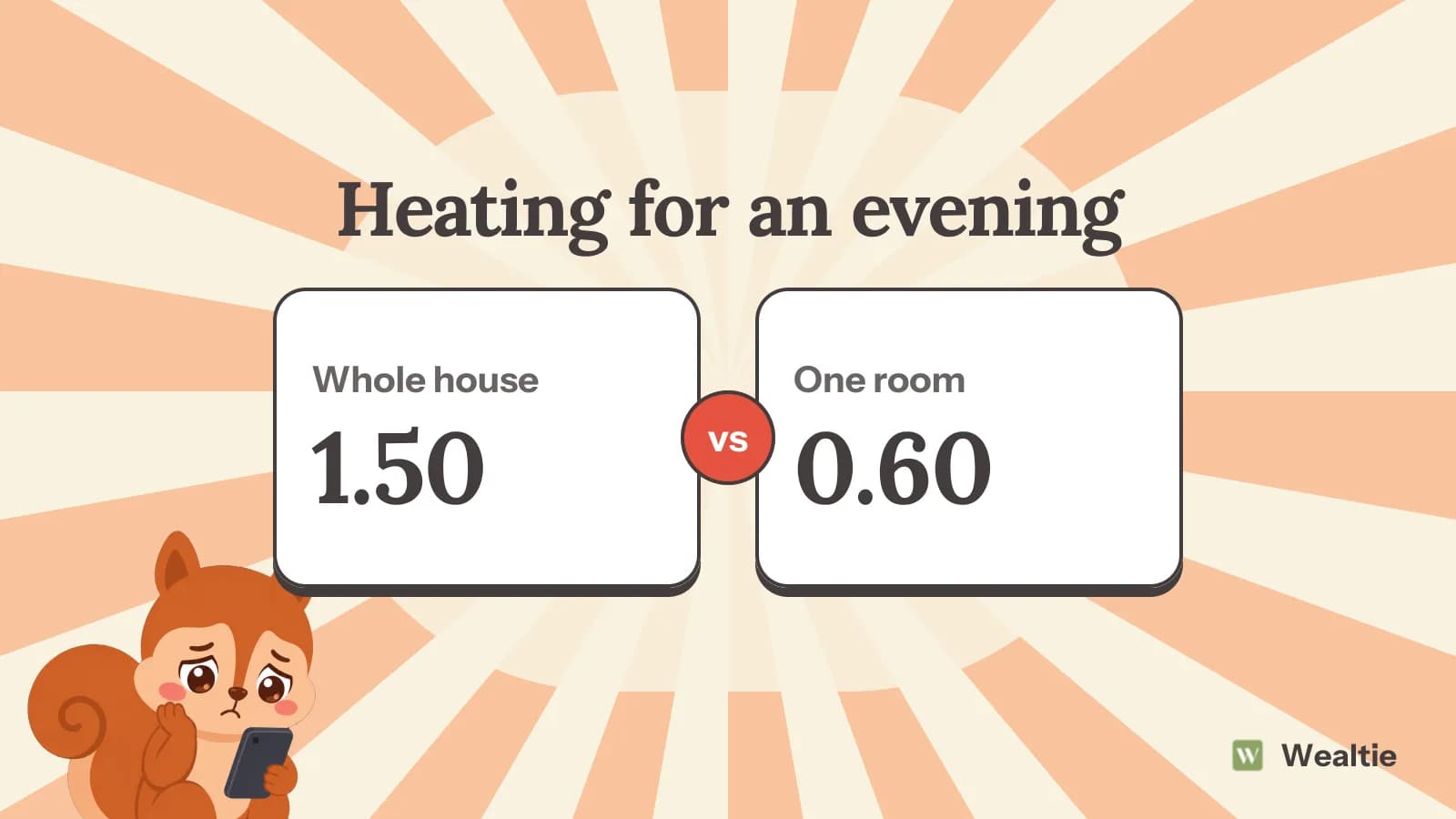
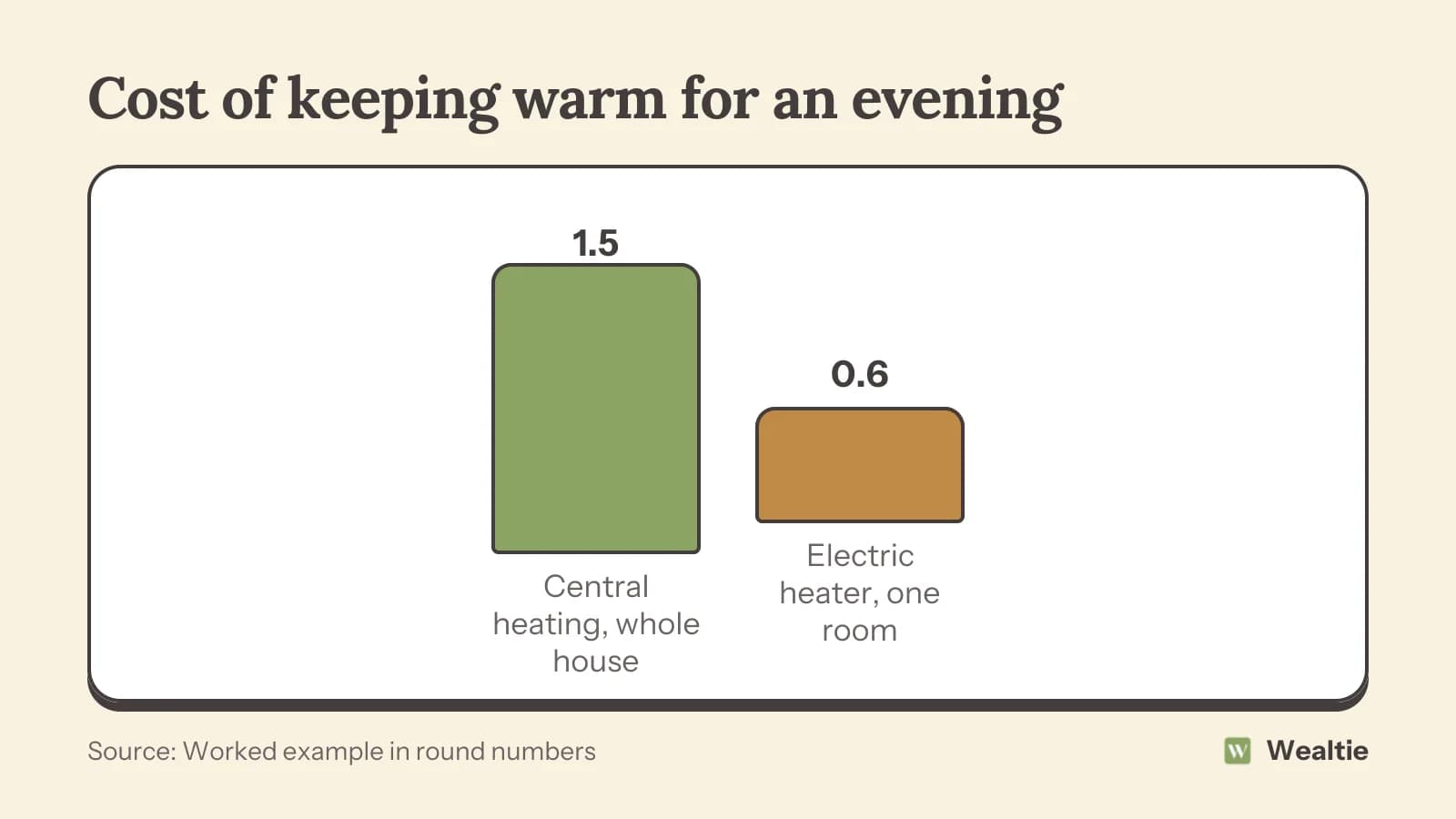
In a worked example, an electric heater in one room for three hours costs about 0.60, compared with about 1.50 to run the central heating for the same evening.
The balance changes for families or anyone using several rooms. Running heaters in three or four rooms quickly costs more than central heating, which spreads heat through the home more cheaply per unit. So electric heaters work best as a targeted tool: one room, one person, a few hours. For everything else, the central heating set to a sensible temperature, with radiators turned down in unused rooms, is usually the better choice.
If you rent, an electric heater can also help in a cold room you're not allowed to change, but check how much it adds to your bill before relying on it every day.
How does it compare with central heating?
Here's a worked example for one evening, in round numbers that work in any currency:
| Option | Cost for the evening |
|---|---|
| Central heating, whole house | 1.50 |
| Electric heater, one room | 0.60 |
Your own figures depend on your energy prices, your boiler, how big your home is and how well it's insulated. Check the power rating on your heater and the unit price on your electricity bill to work out your own cost per hour. How to save money on your electric bill explains how.
Which electric heaters are cheapest to run?
Oil-filled radiators
These warm up slowly and keep giving off heat after they're switched off. They're good for heating a room steadily over several hours.
Fan heaters
Fan heaters warm a small space quickly, which suits short bursts, like warming a bathroom before a shower. They can be noisy.
Convector heaters
These heat the air and let it circulate. They suit rooms used for a few hours.
Infrared and halogen heaters
These warm people and objects directly, rather than the air. They can suit draughty spaces or sitting in one spot.
Whatever the type, a thermostat and timer stop the heater running longer than needed, which matters more for cost than the type itself.
When is an electric heater a good idea?
Use one when you're heating a single room for a short time, like a home office during the day or a living room for an evening when you're alone. It's also useful for a cold spare room used now and then. It's usually a poor choice for heating a whole home for long periods, where central heating or a heat pump will cost less.
How do you keep heating costs down?
Close doors to keep heat in the room you're using. Draught-proof windows and doors. Use a heater with a thermostat and timer. Wear warm layers and use a throw or electric blanket, which costs very little to run. Turn the central heating down in rooms you don't use. How to save money on heating and the winter budget cover more ideas.
Use heaters safely
Keep heaters away from curtains, furniture and anything that could catch fire. Don't leave them on while you sleep or when you go out, unless they're designed for it. Plug them directly into a wall socket, not an extension lead. Check older heaters for damage.
Work out the cost per use
A heater used every evening in winter can save money if it lets you keep the central heating off. One bought and rarely used doesn't. Cost per use explains the idea.
How do you track heating costs in Wealtie?
Add energy bills as recurring transactions, so they log themselves on their date. Keep them in their own expense category and set a monthly budget for winter, so you can see how changing the way you heat affects your bills.
Questions people ask
In a worked example, a heater in one room for three hours costs about 0.60. The exact cost depends on its power and your electricity price.
For heating one room for a short time, it can be. For heating the whole home, central heating is usually cheaper.
The one sized right for the room with a thermostat and timer. Oil-filled radiators suit long use and fan heaters suit short bursts.
Keep it clear of furniture and curtains, plug it into a wall socket and don't leave it on while sleeping or away.
This article is general information, not financial, tax or legal advice. Your situation is your own; check the numbers that apply to you before you act on them.