Budgeting: Is an e-bike worth it? Costs, savings and who it suits
Is an e-bike worth it? It often is if it replaces car journeys or public transport for commuting and errands, and in a worked example an e-bike costing 1,500 pays for itself in about a year and a half.
 By Wealtie Team · 3 min read

Key takeaways
- An e-bike is often worth it if it replaces car journeys or transport fares.
- In a worked example, a 1,500 e-bike pays for itself in about 18 months.
- Running costs are low: charging, servicing and occasional parts.
- Security and insurance matter, since e-bikes are a target for theft.
Is an e-bike worth it?
For many people, yes, especially if it replaces regular car journeys or public transport. An e-bike has a battery and motor that help you pedal, which makes hills, headwinds and longer distances much easier. That opens up cycling to people who'd never ride a normal bike to work, and lets you arrive without being exhausted. E-bikes cost more upfront than normal bikes, but the running costs are low, and the savings on fares, fuel and parking can pay back the price surprisingly quickly.
They're less worth it if they end up as an occasional weekend toy. Like any purchase, the value comes from regular use.
They also bring benefits that don't show up in a budget. Regular riding is gentle exercise, which some people find replaces a gym membership. Many riders say the journey becomes the best part of their day, rather than time lost in traffic or on a crowded train.
It's worth checking the practical side before buying. Is there somewhere safe to store the bike at home and at work? Is the route reasonably safe to ride, with quiet roads or cycle paths? Will you ride in the rain and the dark? Good lights and waterproof clothing make year-round riding far more pleasant, and they're a small cost compared with the bike. If the answers are yes, an e-bike is likely to get the regular use that makes it pay.
How much can an e-bike save?
Here's a worked example of someone who swaps a train or bus pass for an e-bike, in round numbers that work in any currency:
| Option | A year |
|---|---|
| Train or bus pass | 1,200 |
| E-bike running costs | 150 |
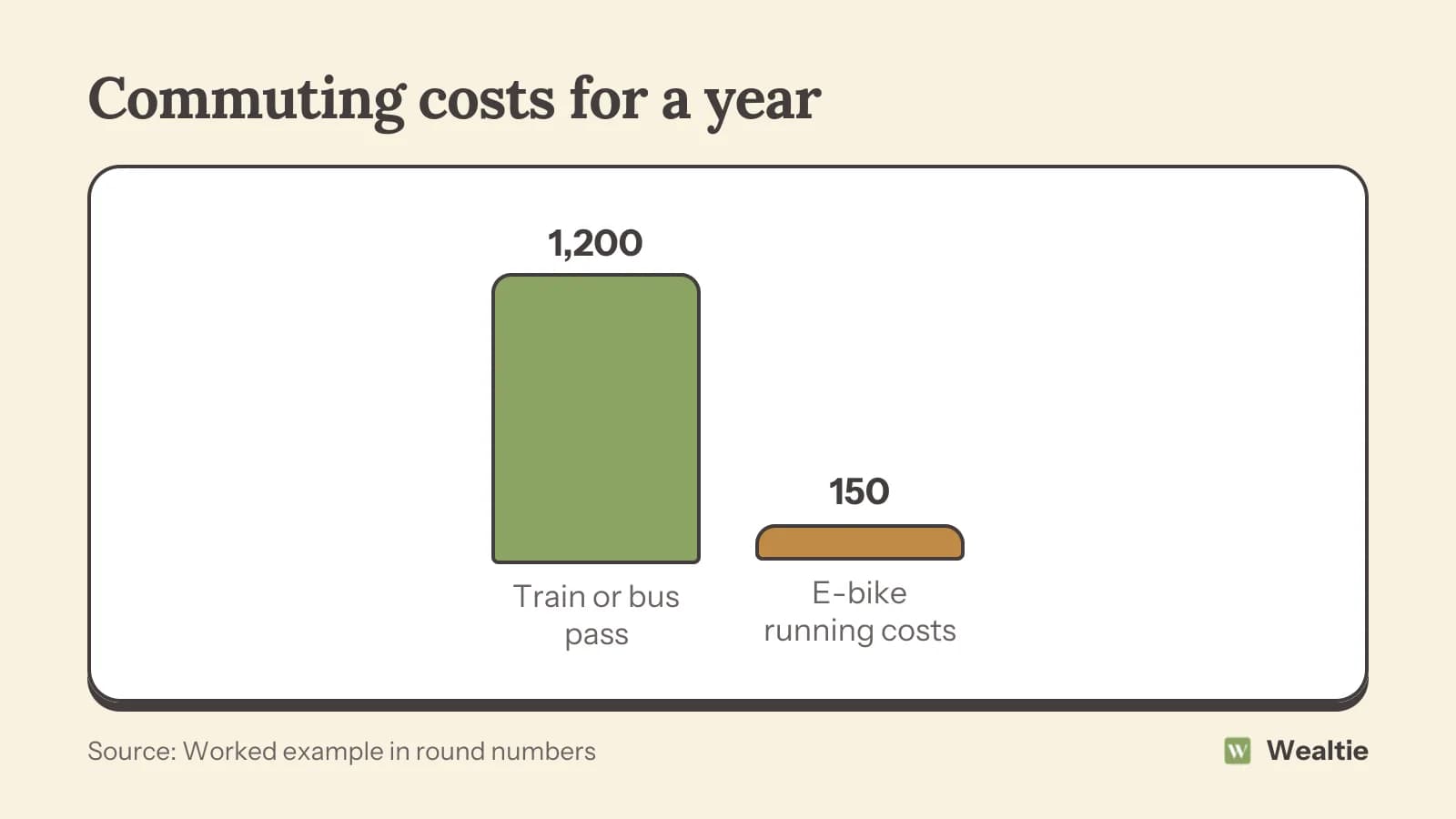
The e-bike running costs include servicing, parts like tyres and brake pads, and electricity for charging. That's a saving of about 1,050 a year. An e-bike costing 1,500 pays for itself in about 18 months, and after that, the savings are yours to keep. Replacing a second car can save far more. Is a second car worth it? covers that comparison.
What does an e-bike cost?
The bike
Prices vary from budget models to expensive premium ones. A reliable mid-range e-bike from a known brand, with good battery life and local servicing, is usually the best value. Very cheap e-bikes can have poor batteries and be hard to repair. Buying from a shop that services what it sells makes repairs easier and often cheaper over the life of the bike.
Running costs
Charging costs very little, even when you charge every day. Servicing, tyres, brake pads and chains wear faster than on normal bikes because of the extra weight and power, so budget for regular maintenance.
Battery replacement
Batteries wear out after some years of use and can be expensive to replace. Looking after the battery, like avoiding extreme heat and cold, helps it last longer.
Security and insurance
E-bikes are a target for theft. A good lock, secure storage at home and work, and insurance are worth budgeting for.
Who gets the most from an e-bike?
People with commutes of a few miles to around fifteen miles, hilly routes or a wish to arrive at work without needing a shower get the most benefit. So do families who can replace a second car, and people who find normal cycling too tiring. If your journeys are very long, or you have nowhere safe to store a bike, it may be less practical.
How can you buy an e-bike for less?
Some employers offer cycle-to-work schemes that let you spread the cost and sometimes save on tax. Rules vary by country, so check what's available. Second-hand e-bikes can be good value, but check the battery's age and condition, and buy from sellers who'll let you test ride. End-of-season sales can bring prices down. Saving up rather than using credit avoids interest. How to save for a big purchase covers how.
Try before you buy
Hire an e-bike for a week or try one at a local shop to see whether it fits your routine. A trial costs far less than buying a bike you don't use. The cost of cycling and how to cut commuting costs cover other ways to save on getting around.
How do you track e-bike savings in Wealtie?
Keep transport costs in their own expense categories and set a monthly budget. If you cancel a travel pass, remove its recurring transaction, and compare your transport spending before and after to see the saving.
Questions people ask
It often is if it replaces car journeys or transport fares. In a worked example, a 1,500 e-bike pays for itself in about 18 months.
Not much. In a worked example, servicing, parts and charging cost about 150 a year.
Several years with care, but batteries wear out and can be expensive to replace, so look after them.
Check for a cycle-to-work scheme, buy carefully second-hand, shop end-of-season sales and save up rather than borrow.
This article is general information, not financial, tax or legal advice. Your situation is your own; check the numbers that apply to you before you act on them.