Budgeting: Draught proofing cost: cheap fixes that cut heating bills
Draught proofing cost is low, since most fixes are cheap materials you can fit yourself in an afternoon. In a worked example, draught proofing a typical home costs about 100 and saves about 80 a year on heating.
 By Wealtie Team · 3 min read

Key takeaways
- Draught proofing cost is low, and most fixes are easy to fit yourself.
- In a worked example, it costs about 100 and saves about 80 a year.
- Doors, windows, chimneys and floorboards are the usual culprits.
- Keep some ventilation, especially in kitchens and bathrooms.
What is the draught proofing cost?
Draught proofing is one of the cheapest ways to keep a home warmer. Cold air sneaks in through gaps around doors and windows, letterboxes, keyholes, unused chimneys and between floorboards, while warm air escapes. Sealing those gaps keeps the heat you pay for inside. Most fixes use inexpensive materials from a hardware shop and can be fitted in an afternoon with basic tools. In a worked example, draught proofing a typical home costs about 100 and saves about 80 a year on heating.
It also makes rooms feel more comfortable, since draughts can make a room feel colder than it is. Many people find they can turn the thermostat down a little once the draughts are gone, which saves more.
Draught proofing suits renters too, since many fixes are removable or don't damage anything. Self-adhesive seals, draught excluders and chimney balloons can come with you when you move.
The work is satisfying because you notice the difference straight away. A room that felt chilly near the window, or a hallway with a cold blast under the front door, can feel noticeably warmer the same evening. That makes draught proofing a good first step before spending on bigger improvements like insulation or new windows. It also tells you where the biggest problems are, since rooms that still feel cold after draught proofing may need insulation next.
It's a good job to do in autumn, before the heating goes on for the winter, so the savings start from the first cold day.
How much does draught proofing save?
Here's a worked example for a typical home, fitted yourself, in round numbers that work in any currency:
| Fix | Cost |
|---|---|
| Window seals | 30 |
| Door seals and brushes | 25 |
| Chimney balloon | 20 |
| Letterbox and keyhole covers | 10 |
| Gap filler for floors and skirting | 15 |
| Total | 100 |
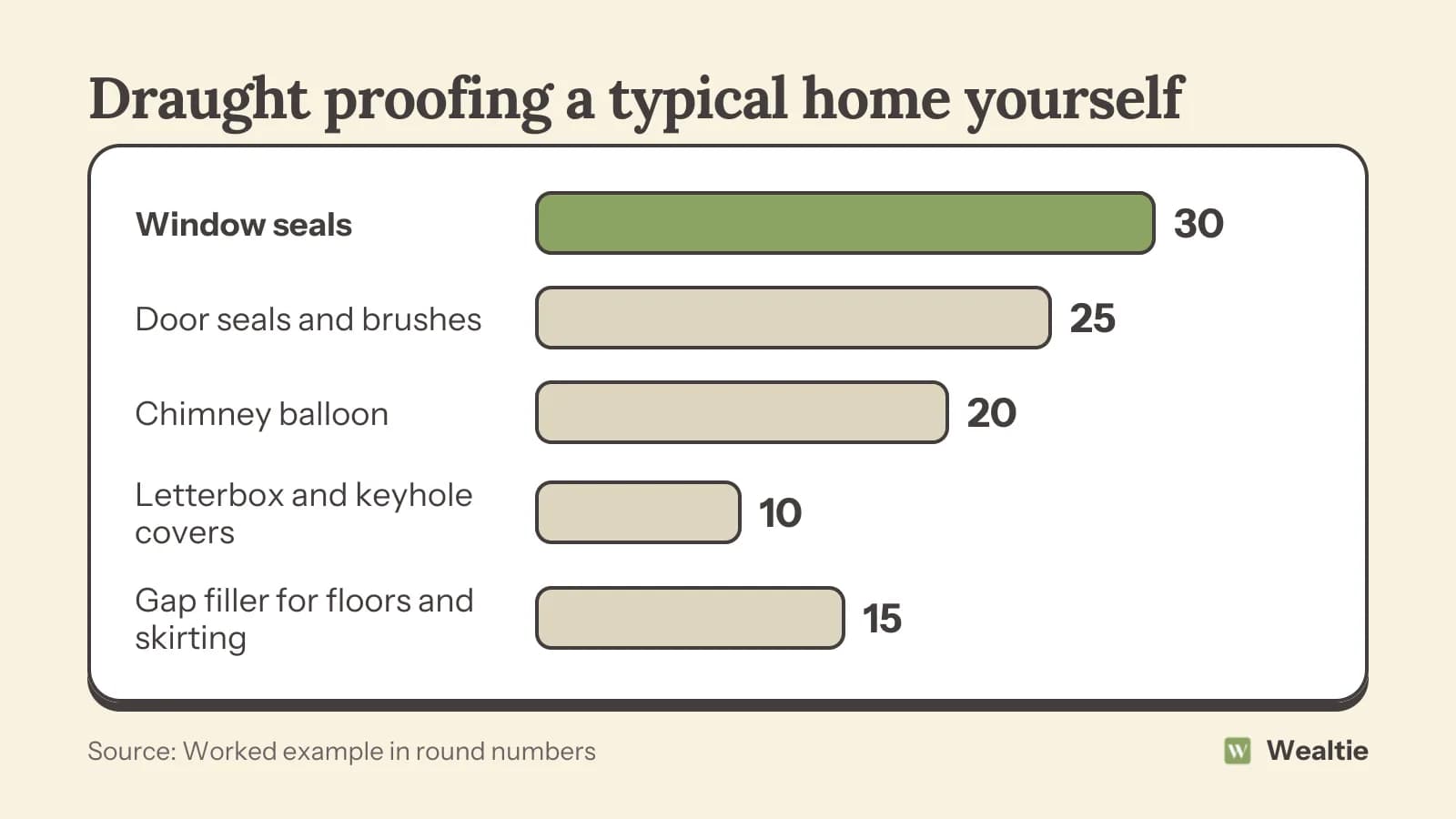
At about 80 a year, the work pays for itself in about 15 months. After that, the savings continue. Your own figures depend on how draughty your home is, how you heat it and your energy prices.
Where do draughts come from?
Windows
Gaps around opening windows let cold air in. Self-adhesive foam or rubber strips seal the gaps between the window and the frame. For windows you never open in winter, removable sealing tape or film is a cheap extra layer that comes off easily in spring.
Doors
External doors often have gaps at the bottom and sides. A brush or rubber strip along the bottom and seals around the frame make a big difference. A draught excluder works for internal doors.
Letterboxes and keyholes
A letterbox brush and a keyhole cover are cheap and quick to fit, and stop a surprising amount of cold air on windy days.
Chimneys
An unused chimney can let a lot of heat out. A chimney balloon or a removable cap blocks the draught. Remove it before lighting a fire.
Floorboards and skirting
Gaps between floorboards and under skirting boards let cold air up from below. Flexible filler or a sealant closes them. A rug over bare boards adds warmth too.
What should you not block?
Homes need some ventilation to stay healthy and avoid condensation and mould. Don't block air bricks, wall vents, trickle vents in windows or extractor fans. Kitchens and bathrooms need ventilation most. If you have a gas fire or boiler that takes air from the room, check that it has the air supply it needs. The aim is to stop uncontrolled draughts, not to seal the home completely.
How do you make the most of draught proofing?
Combine it with other simple steps. Close curtains at dusk, use thick curtains on draughty windows and put a rug on bare floorboards. Bleed radiators and set the thermostat a little lower once the draughts are gone. How to save money on heating and the winter budget cover more ideas. Bigger improvements, like insulation, can come later. The home maintenance budget covers planning for those.
Find the draughts
On a windy day, hold a lit incense stick or a strip of tissue near windows, doors and skirting. If the smoke or tissue moves, there's a draught. This costs nothing and shows you where to start. How to save money on your electric bill has more ways to cut energy use around the home.
How do you track heating savings in Wealtie?
Add energy bills as recurring transactions, so they log themselves on their date. Keep home improvements in their own expense category, and compare winter bills before and after draught proofing to see the saving.
Questions people ask
In a worked example, draught proofing a typical home yourself costs about 100 for seals, brushes, a chimney balloon and filler.
In a worked example, about 80 a year on heating, so it pays for itself in about 15 months.
Yes. Most fixes, like seals, brushes and covers, are cheap and easy to fit with basic tools.
Air bricks, wall vents, trickle vents and extractor fans, which keep the home ventilated.
This article is general information, not financial, tax or legal advice. Your situation is your own; check the numbers that apply to you before you act on them.