Budgeting: How to dispute a charge on your card or account
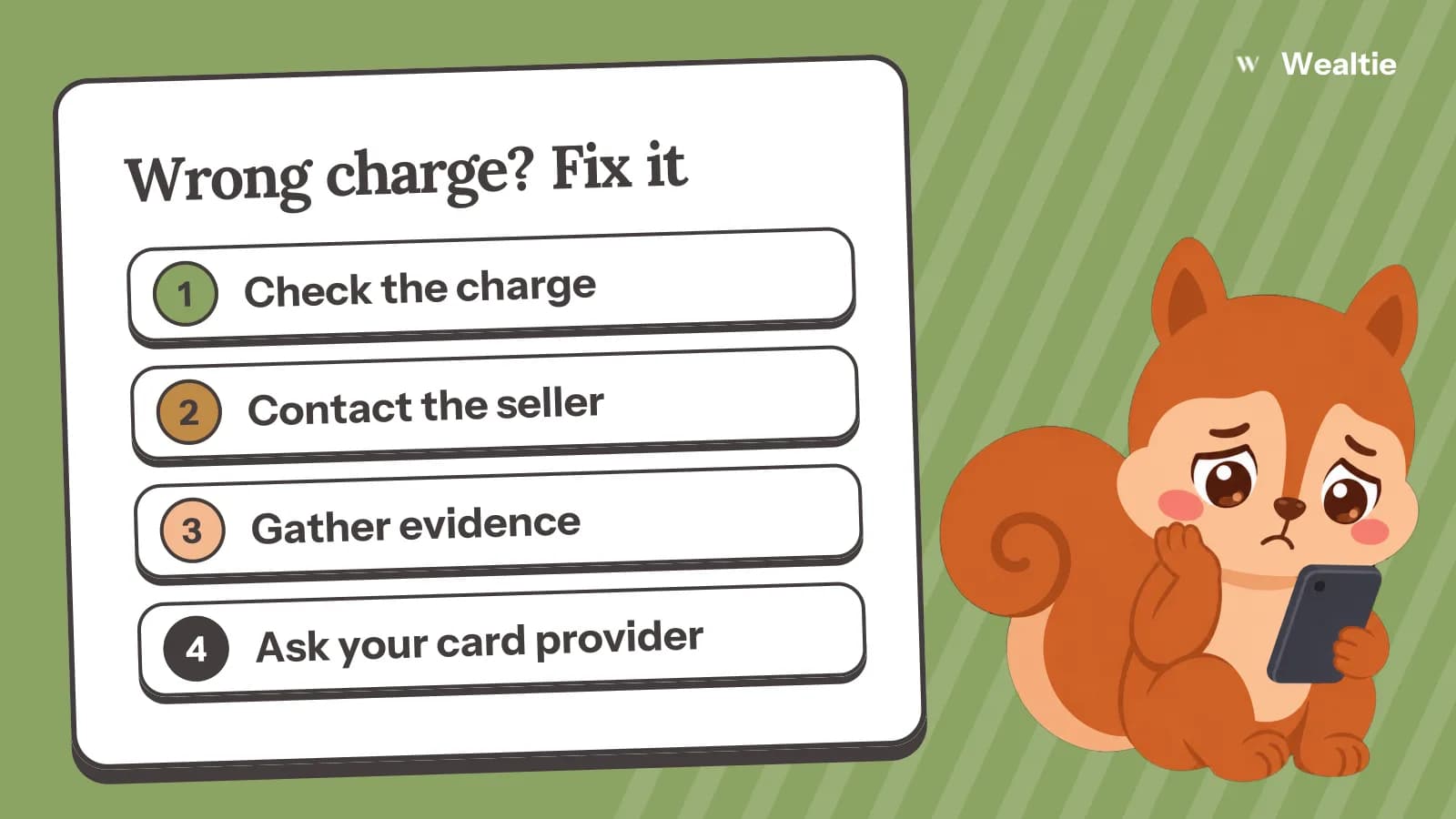
To dispute a charge, contact the seller first, and if that doesn't work, ask your card provider or bank to investigate with your evidence. Spotting the problem early, by checking your spending against your statement, makes it much easier to fix.
 By Wealtie Team · 3 min read
Key takeaways
- To dispute a charge, contact the seller first, then your card provider.
- Gather evidence like receipts, emails and screenshots.
- Act quickly, since there are time limits for disputes.
- Checking your spending against your statement catches mistakes early.
When should you dispute a charge?
Most card payments go through without a problem, but mistakes and disputes happen. You might be charged twice for the same thing, charged the wrong amount, billed for a subscription you cancelled, or pay for something that never arrived. Sometimes a charge is fraud, made by someone who has your card details. In each case, you can ask to have the money put back.
The key is spotting the problem quickly. Many disputes have time limits, and a small charge you notice months later can be harder to recover.
How do you spot a charge you should dispute?
Check your statement regularly against what you've spent. Look for payments you don't recognise, amounts that don't match your receipts, duplicate charges and subscriptions you thought were cancelled. A name on a statement isn't always the shop name you know, so search the name online before assuming it's fraud. Payments made abroad or online may show a parent company or a payment processor instead of the brand.
Pending payments can also look odd. Hotels, car hire firms and fuel stations sometimes hold an amount on your card that's later adjusted or released. Wait a few days to see whether a pending charge settles at the right amount before disputing it. How to read a bank statement covers what each line means.
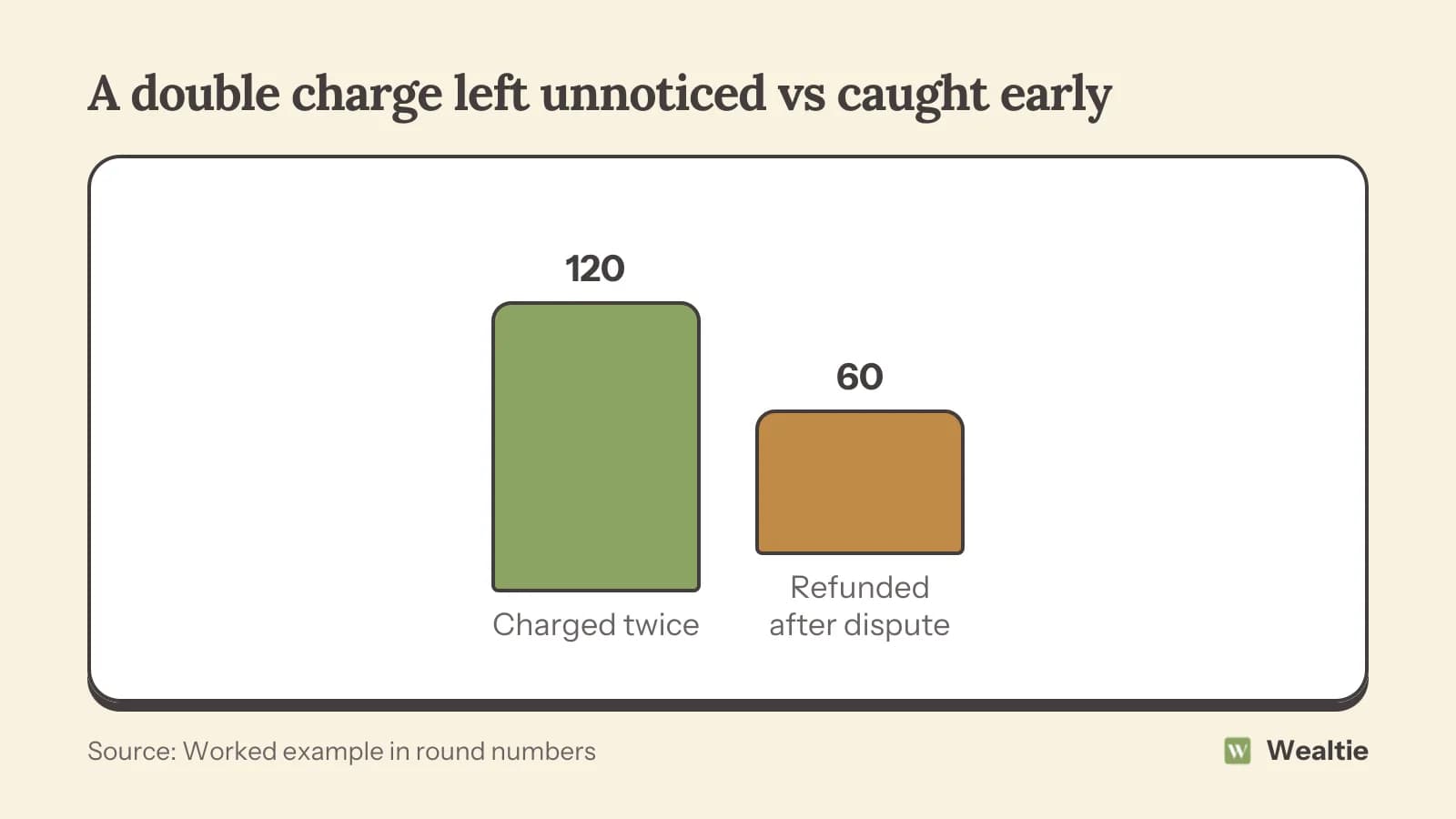
Here's a worked example, in round numbers that work in any currency. A shop charges 60 twice for one order, so 120 leaves the account. Caught within a week and disputed, the extra 60 comes back.
How do you dispute a charge?
Contact the seller first
For mistakes like double charges, wrong amounts or missing orders, start with the seller. Many problems are fixed quickly with a phone call or email. Explain what happened, give your order details and ask for a refund. Keep a record of what you sent and when.
Gather your evidence
Collect receipts, order confirmations, emails, screenshots of the price and any messages with the seller. If an item was faulty or not as described, take photos. Clear evidence makes your case much stronger. Write down the dates and times of any calls, and who you spoke to, since providers often ask for these details.
Contact your card provider or bank
If the seller won't help, or doesn't reply, contact your card provider or bank. Explain the problem and ask them to investigate. For credit and debit cards, they may be able to reverse the payment, sometimes called a chargeback. Some providers have extra protection for purchases above a certain amount.
Report fraud straight away
If you don't recognise a charge and think your card details have been stolen, contact your bank immediately. They'll usually block the card, send a new one and investigate the charges. Don't wait to contact the seller first. How to avoid money scams covers protecting your details.
How long does a dispute take?
It varies. A seller might refund within days. A dispute through your card provider can take several weeks, since they need to hear from the seller too. Some providers put the money back temporarily while they investigate. Keep an eye on your statement and reply quickly if they ask for more information, since slow replies can delay the outcome. Rules and time limits differ by country and provider, so check with yours.
What can't you dispute?
You usually can't dispute a charge just because you changed your mind, unless the seller's return policy allows it. Payments you sent yourself by bank transfer are also harder to recover than card payments. That's one reason many people pay by card for large or online purchases.
Watch out for subscriptions
Free trials that turn into paid subscriptions are a common source of surprise charges. Set a reminder to cancel before the trial ends, and check your statement after. How to cut subscription costs has more tips.
Buy now, pay later disputes
Disputes for buy now, pay later purchases often go through the lender rather than your card provider. Buy now, pay later covers how these plans work.
How does Wealtie help you spot wrong charges?
When you log each purchase in Wealtie as you spend, you have your own record to compare with your statement. Putting spending in expense categories and checking against a monthly budget makes odd charges stand out. Adding subscriptions as recurring transactions shows exactly what you expect to pay and when, so an extra charge is easy to spot.
Questions people ask
Contact the seller first with your order details. If they won't help, contact your card provider or bank with your evidence and ask them to investigate.
Receipts, order confirmations, emails, screenshots and photos of any faulty item, plus a record of your contact with the seller.
Time limits vary by provider and country, so act as soon as you notice the problem and check your provider's rules.
Search the name online first, since statement names can differ from shop names. If it's still unknown, contact your bank straight away.
This article is general information, not financial, tax or legal advice. Your situation is your own; check the numbers that apply to you before you act on them.