Budgeting: Do discount codes save money? How to use them without overspending
Discount codes save money when they cut the price of something you'd already decided to buy. Used that way, they can save around 150 a year in a worked example, but a code that tempts you into an unplanned purchase costs you money.
 By Wealtie Team · 3 min read
Key takeaways
- Discount codes save money when they cut the price of planned purchases.
- In a worked example, codes save about 150 a year.
- A code that tempts you to buy something unplanned costs money.
- Signing up for emails to get codes can lead to more spending later.
Do discount codes save money?
They can, if you use them the right way. A discount code that takes money off something you'd already decided to buy is a real saving. A code that arrives in your inbox and tempts you into a purchase you hadn't planned isn't a saving at all: it's spending you wouldn't otherwise have done. Shops send codes because they work at getting people to buy, not because they want to save you money.
Used with a plan, discount codes can save a useful amount over a year. The trick is to look for codes after deciding what to buy, not before.
Think of codes as the final step of a purchase, not the first. Decide you need a new pair of shoes, choose the pair, compare prices at a few shops, then search for a code at the cheapest one. That way the code lowers a price you were already happy with. Starting with a code and then looking for something to spend it on turns the process upside down and usually ends with more spending.
How much can discount codes save?
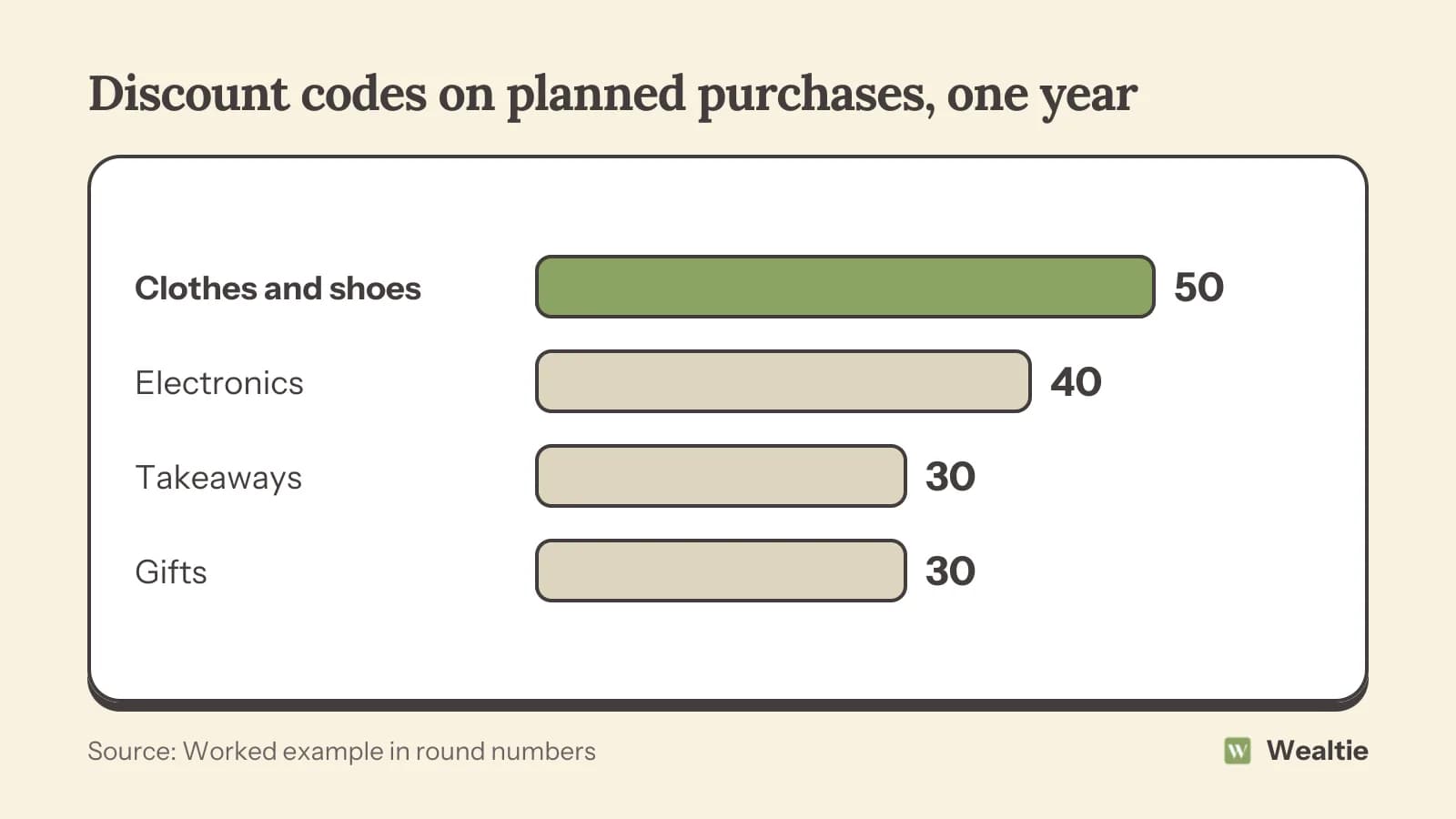
Here's a worked example of codes used only on planned purchases over a year, in round numbers that work in any currency:
| Purchase | Saved |
|---|---|
| Clothes and shoes | 50 |
| Electronics | 40 |
| Takeaways | 30 |
| Gifts | 30 |
| Total | 150 |
Now compare a code for 20 off an 80 jacket you didn't need. It feels like saving 20, but you've spent 60 you otherwise wouldn't have.
How do you find discount codes that work?
Search before you pay
Before checking out, search for the shop's name and "discount code". Code websites collect offers, though many listed codes have expired, so try a few.
Check the shop's own site
Many shops offer a code for signing up to their newsletter, downloading their app or making a first order. Some have student, key worker or older customer discounts. These are often bigger than general codes and work all year round, so check whether you qualify.
Ask
For independent shops and services, asking politely whether there are any offers or discounts can work. Many small businesses have offers they don't advertise, like a discount for paying in cash, booking midweek or being a returning customer.
Wait for an abandoned basket
Some shops send a code if you leave items in your basket without buying. If the purchase isn't urgent, waiting a day can bring an offer, though this isn't guaranteed.
When is a discount code a trap?
When it creates a purchase
Codes that arrive by email or text are designed to make you shop. If you weren't planning to buy, the code isn't saving you anything.
When it has a minimum spend
"20 off when you spend 100" can push you to add items you don't need to reach the threshold.
When it hides a higher price
A code on a shop with higher prices can still cost more than buying elsewhere without a code. Compare the final price. Price anchoring explains how a high starting price makes a discount look bigger.
When it comes with a countdown
Codes that expire in hours push you to decide quickly. Most offers come back, so give yourself time. How to stop impulse buying covers slowing down.
How do you use discount codes without overspending?
Keep a list of things you plan to buy, and only look for codes for items on that list. Unsubscribe from shop emails you don't need, or use a separate email address for shopping sign-ups, so offers don't tempt you every day. Check the final price against other shops before buying. A quick comparison often shows that another shop is cheaper without any code at all, which saves the time spent hunting for one. Keep a note of codes that worked for shops you use often, since many repeat at similar times of year. During sales, set a budget first and stick to it. The Black Friday budget covers planning for big sale events.
Combine with other savings carefully
Some people stack codes with cashback or loyalty points. It can save a little more, but only on planned purchases. Loyalty programmes covers when points are worth collecting.
How do you track savings in Wealtie?
Log purchases in your expense categories and stick to a monthly budget, so you can see whether codes are cutting what you spend or tempting you into more. If a category keeps going over, shop emails might be part of the reason.
Questions people ask
Yes, when they cut the price of something you'd already decided to buy. In a worked example, codes save about 150 a year.
Search the shop's name and "discount code" before paying, check the shop's own site and sign-up offers, or ask independent sellers.
When they tempt you into unplanned purchases, push you to reach a minimum spend or hide a higher price than elsewhere.
Unsubscribe from emails you don't need, or use a separate email address for shopping sign-ups.
This article is general information, not financial, tax or legal advice. Your situation is your own; check the numbers that apply to you before you act on them.