Budgeting: The decoy effect: how a third option makes you spend more
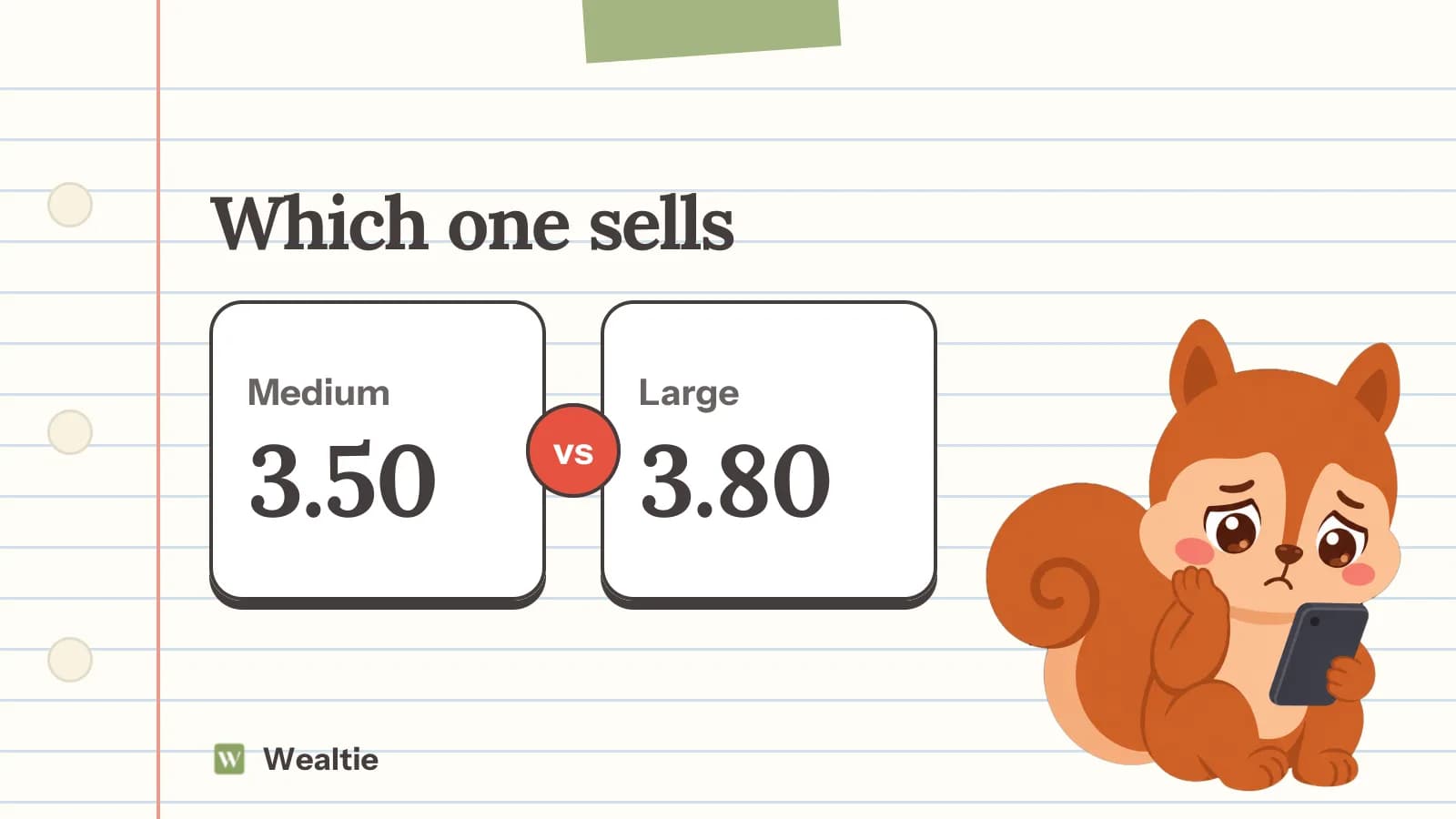
The decoy effect is a pricing trick where a third, weaker option makes a pricier one look like a bargain. A medium coffee at 3.50 next to a large at 3.80 is there to sell you the large.
 By Wealtie Team · 3 min read
Key takeaways
- The decoy effect uses a weak option to steer you to a pricier one.
- The decoy is priced close to the target but offers much less.
- Ignore the middle option and compare only what you'd buy.
- Decide what you need before you look at the menu or price page.
What is the decoy effect?
The decoy effect is when a business adds an option it doesn't expect many people to choose, purely to make another option look better. Researchers call it asymmetric dominance: the decoy is clearly worse than the option the seller wants you to buy, but only a little cheaper. Next to it, the target looks like great value, so more people choose it than would if the decoy weren't there.
The effect works because people find it hard to judge value in isolation. Is a large coffee worth 3.80? Hard to say. Is it worth 30 more than a medium at 3.50? That's an easy yes. The decoy gives you a comparison that makes the decision feel obvious, and the comparison is designed in the seller's favour.
How does a decoy work on a real menu?
Here's a worked example of a coffee menu, in round numbers that work in any currency:
| Size | Price |
|---|---|
| Small | 2.50 |
| Medium | 3.50 |
| Large | 3.80 |
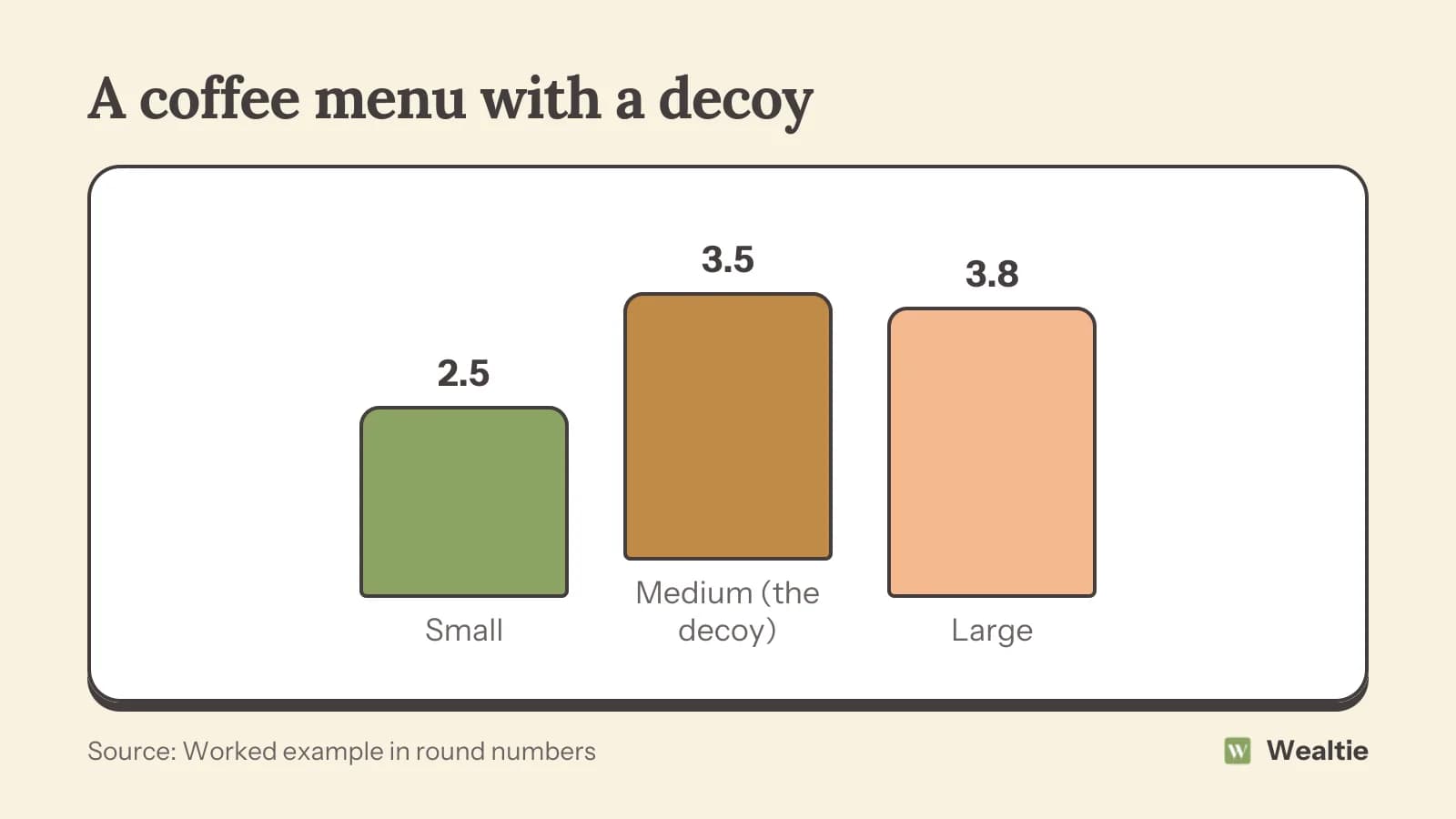
Without the medium, the choice is between a small at 2.50 and a large at 3.80, and many people would take the small. Add a medium at 3.50 and the large suddenly looks like a bargain: nearly twice the coffee for only a little more. The medium is the decoy. It isn't there to be bought. It's there to sell the large.
Where else does the decoy effect show up?
Subscription plans
A streaming service might offer a basic plan at 6, a standard plan at 11 and a premium plan at 12. The standard plan makes premium feel like an easy upgrade. The behavioural economist Dan Ariely described a famous example where a print-only magazine subscription, priced the same as print plus digital, made the bundle look far better. Annual or monthly subscription covers how to compare plans.
Cinema snacks and fast food
Popcorn and drink sizes are often priced so the middle option is poor value, pushing you to the largest.
Tech storage tiers
Phones and laptops often have a middle storage option priced close to the top one, which makes the upgrade feel sensible.
Bulk and multi-buy deals
Two for one price, three for a little more: the middle deal can be there to make the bigger pack feel smart. Is a warehouse club worth it? covers whether buying in bulk saves money.
How is the decoy effect different from anchoring?
They often appear together. Price anchoring uses a high first price to make everything after it look cheap. The decoy effect uses a carefully placed option to make one specific choice look like the best value. Both work by giving you a comparison instead of letting you judge each price on its own.
How do you avoid falling for a decoy?
Decide before you look
Work out what you need before you see the options. If you want a small coffee or the basic plan, decide that first, and the decoy has less pull.
Remove the option you'd never buy
Mentally cross out the option that seems pointless. If the choice that's left feels different, the missing option was probably a decoy.
Compare to your need, not to the menu
Ask if you'd buy the bigger option if it were the only one at that price. A large coffee you won't finish or a premium plan you won't use isn't good value however it's framed.
Think in cost per use
For plans and products, divide the price by how often you'll use it. Cost per use helps cut through clever pricing.
Check if it's a need or a want
A lot of upgrades exist to tempt, not to help. Needs vs wants is a quick test before you pay more.
It helps to remember that menus and price pages are designed carefully. Businesses test which layouts and prices sell best, and the options you see are rarely there by accident. That doesn't make every middle option a trick, but it's a good reason to slow down when one choice seems to stand out as obvious. A few seconds of thought before ordering or upgrading can keep small extras from becoming a habit that costs you every week.
How can Wealtie help you catch upgrades?
Logging purchases in their own expense categories shows you how much the small upgrades add up over a month. Put subscriptions in as recurring transactions, so a plan upgrade shows up as a higher monthly cost, and set a budget for the categories where you tend to size up.
Questions people ask
The decoy effect is when a seller adds a weak option to make a pricier one look like better value, so more people choose it.
A coffee menu with a small at 2.50, a medium at 3.50 and a large at 3.80. The medium is the decoy that makes the large look like a bargain.
Look for an option priced close to a better one but offering much less. If removing it changes how you feel about the choice, it's a decoy.
Decide what you need before you look at the options, ignore the one you'd never buy and compare each choice to your need.
This article is general information, not financial, tax or legal advice. Your situation is your own; check the numbers that apply to you before you act on them.