Budgeting: Annual or monthly subscription: which is cheaper, and when
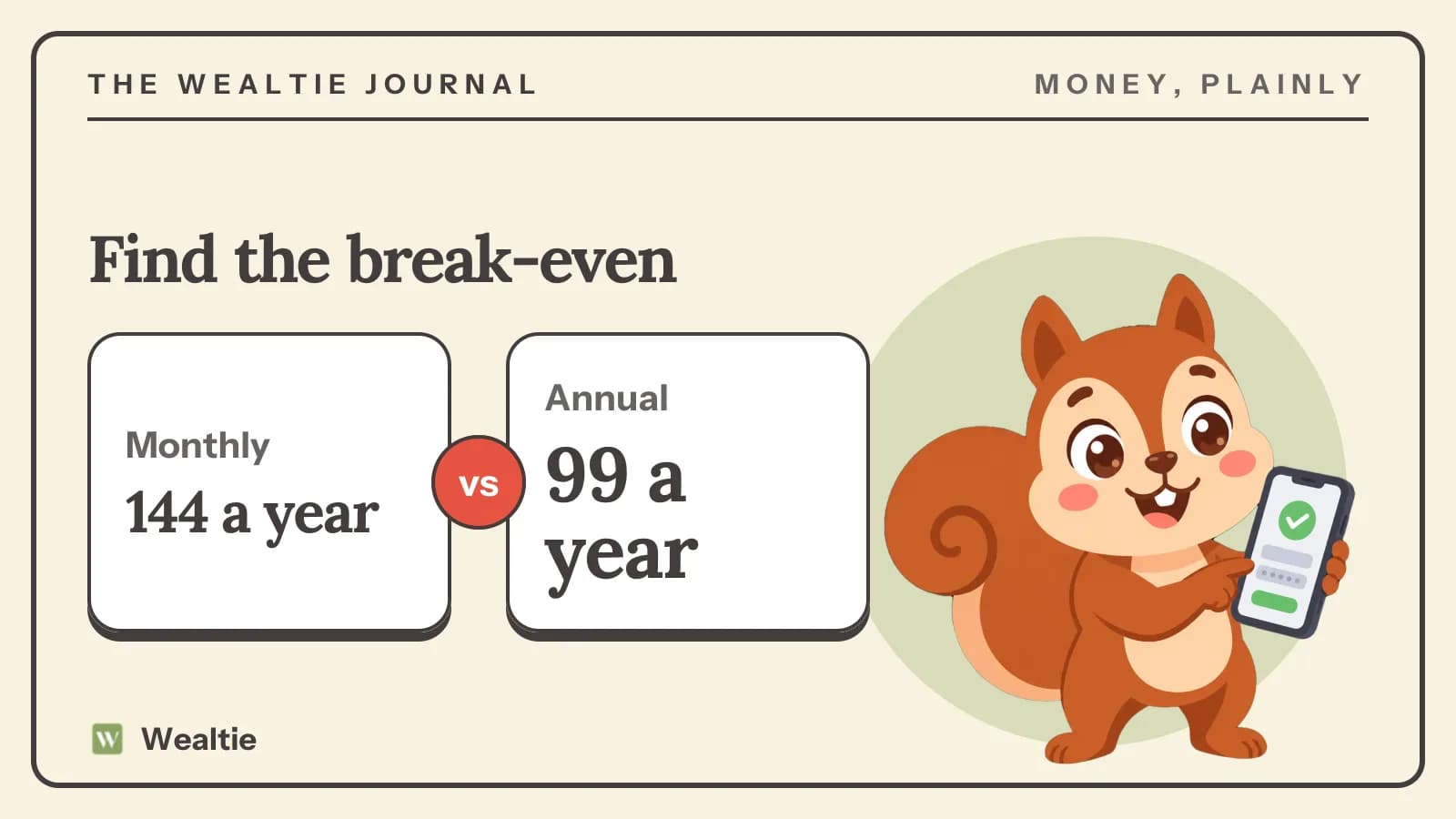
An annual or monthly subscription comes down to one sum: divide the yearly price by the monthly price to find your break-even month. At 99 a year or 12 a month, annual pays off if you'll stay more than about eight months.
 By Wealtie Team · 3 min read
Key takeaways
- Divide the yearly price by the monthly price to find the month where paying annually starts to win.
- At 99 a year or 12 a month, the break-even is a little over eight months, and a full year saves 45.
- Annual plans suit services you've used for at least a few months and expect to keep.
- Put the renewal date in your calendar, because annual plans often renew automatically.
Is an annual or monthly subscription cheaper?
Annual, if you'd stay for most of the year. Yearly plans usually cost less overall, and what you give up is the freedom to leave. Here's a worked example in round numbers that work in any currency:
| Plan | Price | Over 12 months |
|---|---|---|
| Monthly | 12 a month | 144 |
| Annual | 99 once | 99 |
| Saved by paying annually | 45 |
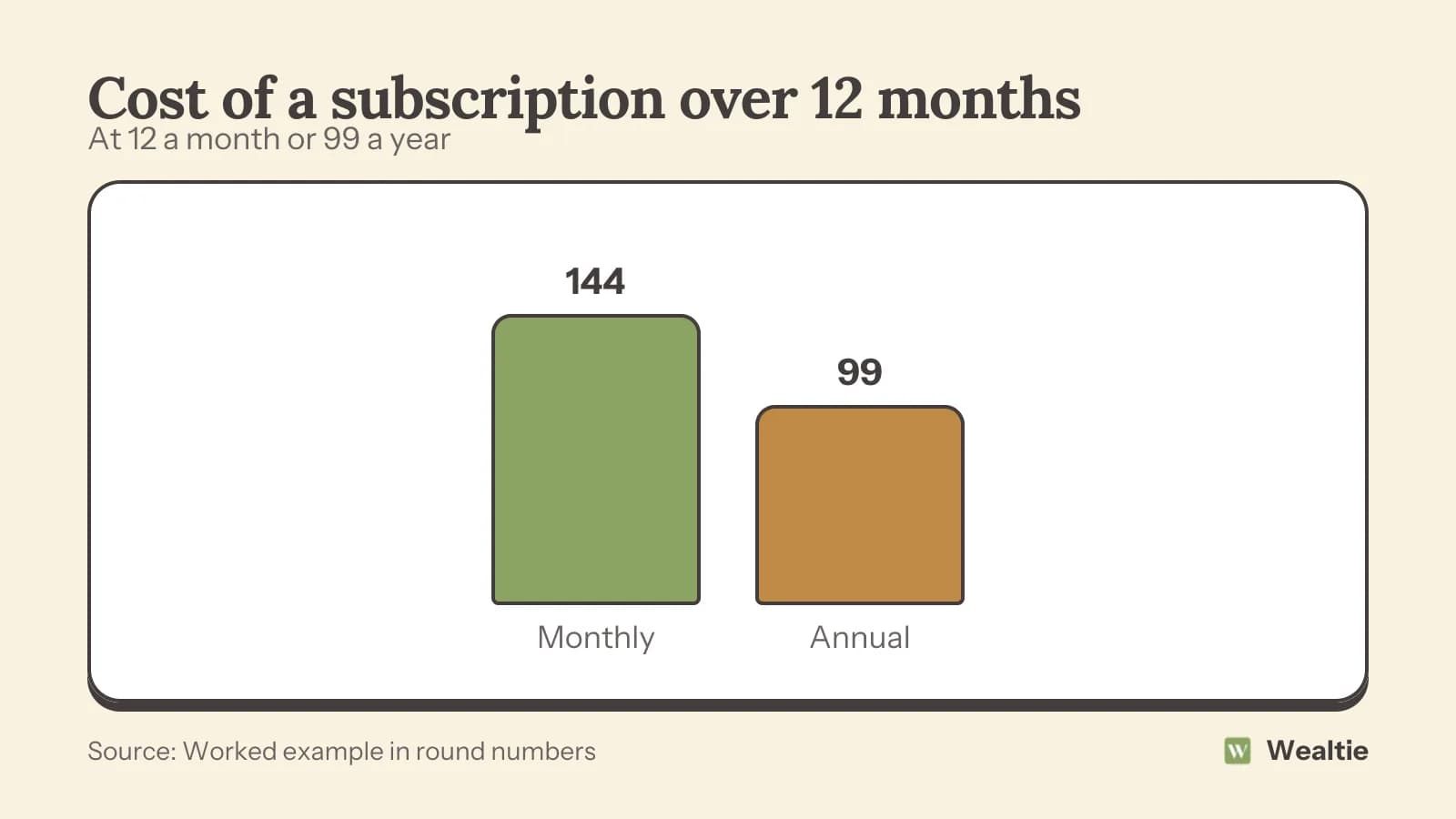
The saving's real only if you'd have stayed for the year.
How do you work out the break-even?
Divide the annual price by the monthly price. Here, 99 divided by 12 is 8.25, so you'd need to stay for nine months before annual comes out ahead.
Now look at your own record. Have you kept using something like this for nine months before? If you signed up for a fitness app in January and stopped in March, three months at 12 would have cost you 36. The annual plan would have cost 99. That's 63 extra for the privilege of committing.
Do this for every plan you're thinking of, since the break-even differs. A small discount can mean you'd need to stay for eleven months, and at that point the extra commitment isn't buying you much.
When should you pay monthly?
When you're not sure you'll keep it. That covers new services, anything you signed up for around a resolution, and things tied to a short project. It also makes sense when you'd need the cash for something else.
Start on monthly for the first two or three months, even when it costs a bit more. You'll find out if you use it, and then you can switch. That small extra cost is cheap compared with paying for a year of something you've stopped opening.
Monthly's also useful if money's tight, because a single large payment can be hard to fit in. How to budget for annual expenses shows how to prepare for one if you'd like to go annual later.
When should you pay annually?
When you've used it for months and you'd be annoyed to lose it. Software you use for work, storage holding your photos, and insurance you'd renew anyway are all good candidates.
Check that you've got the money sitting ready, and that paying won't push you into debt. Paying 99 on a card and carrying the balance can use up the 45 you saved, and more.
Business tools can be worth paying annually if your income's steady enough, and for the self-employed the cost may also be a business expense. Check what applies to you.
What should you watch for with annual plans?
The renewal. Annual plans often renew automatically at whatever the current price is, sometimes higher than what you paid. Things to check before you pay:
- When it renews and how much notice you'll get
- Whether there's a refund if you cancel partway through
- Whether the first-year price is a promotion that goes up in year two
Put a reminder in your calendar for about two weeks before the renewal, and decide then. A lot of unwanted renewals happen because nobody remembered that date.
For anything bought through an app store, look at your subscriptions in the store's settings, because that's usually where you cancel.
How much are your subscriptions costing you?
Add them all up, monthly and annual together, and look at the total. Go through twelve months of statements, since yearly charges don't show up in a single month. Divide each annual price by 12 so you're comparing like with like.
Cut the ones you haven't opened in a month or two. How to cut subscription costs goes through how to do that, and it's usually quick to find a few that can go.
Sharing a family plan can reduce the cost as well, as long as the terms allow it and everyone uses it.
What if you've already paid for a year you don't want?
Ask for a refund, particularly if the renewal only just happened. Many companies will refund a recent automatic renewal if you ask politely. Consumer law may also give you a cooling-off period in some countries and for some purchases.
If you can't get a refund, cancel anyway so it doesn't renew next time, and try to use what you've paid for in the meantime.
How do you keep track of subscriptions in Wealtie?
Set each one up as a recurring transaction with a Monthly or Yearly frequency. It logs itself on the due date and counts against that month's budget. The recurring list shows what's due next, so renewals don't come as a surprise. The subscription tracker page has more detail. Free includes one recurring transaction, and Pro has no limit. Log any you've cancelled in your expense categories under Subscriptions, so the total drops where you can see it.
Questions people ask
Annually is usually cheaper if you'd stay for the year. At 99 a year or 12 a month, you'd save 45 over twelve months.
Divide the yearly price by the monthly price to get your break-even in months. If you're confident you'll stay beyond that, the annual plan wins.
Sometimes, particularly right after an automatic renewal. Ask the company, and check the terms and your local consumer rules.
Yes, for the first two or three months, so you find out if you'll use it before you commit to a year.
This article is general information, not financial, tax or legal advice. Your situation is your own; check the numbers that apply to you before you act on them.



