Money as a couple: How to build an emergency fund as a couple
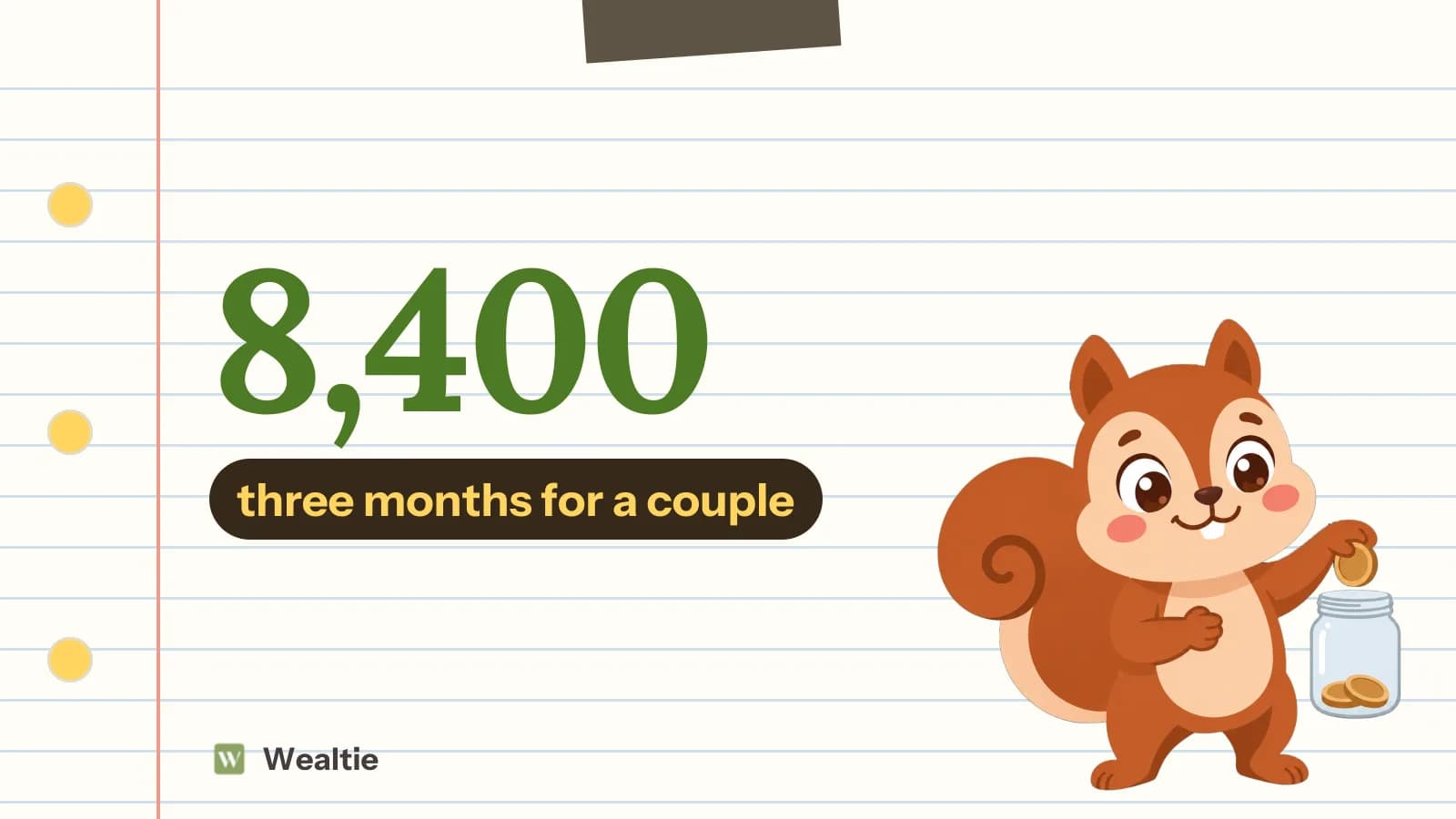
To build an emergency fund as a couple, agree a target based on your shared essential costs, decide whether to keep it jointly or separately, and contribute in a way that feels fair. In a worked example, a couple with 2,800 of monthly essentials aim for 8,400, three months of costs.
 By Wealtie Team · 3 min read
Key takeaways
- An emergency fund as a couple should cover a few months of your shared essential costs.
- In a worked example, 2,800 of monthly essentials means a three-month target of 8,400.
- Agree what counts as an emergency, so the fund is used as intended.
- Contribute equally or by income, whichever feels fair to both of you.
How do you build an emergency fund as a couple?
Agree a target, choose where to keep it and decide how each of you will contribute. An emergency fund is money set aside for the unexpected: a job loss, a car repair, a boiler breaking or a medical bill. Building an emergency fund as a couple brings extra questions, like whose money it is and how much each person puts in. Answering them early keeps the fund working when you need it. Talking about it also shows how each of you feels about risk, which helps with other money decisions.
How much should you aim for?
Base it on your shared essential costs. Add up what you'd need each month to cover housing, bills, food, transport and minimum debt payments. Here's a worked example for a couple with 2,800 of monthly essentials, in round numbers that work in any currency:
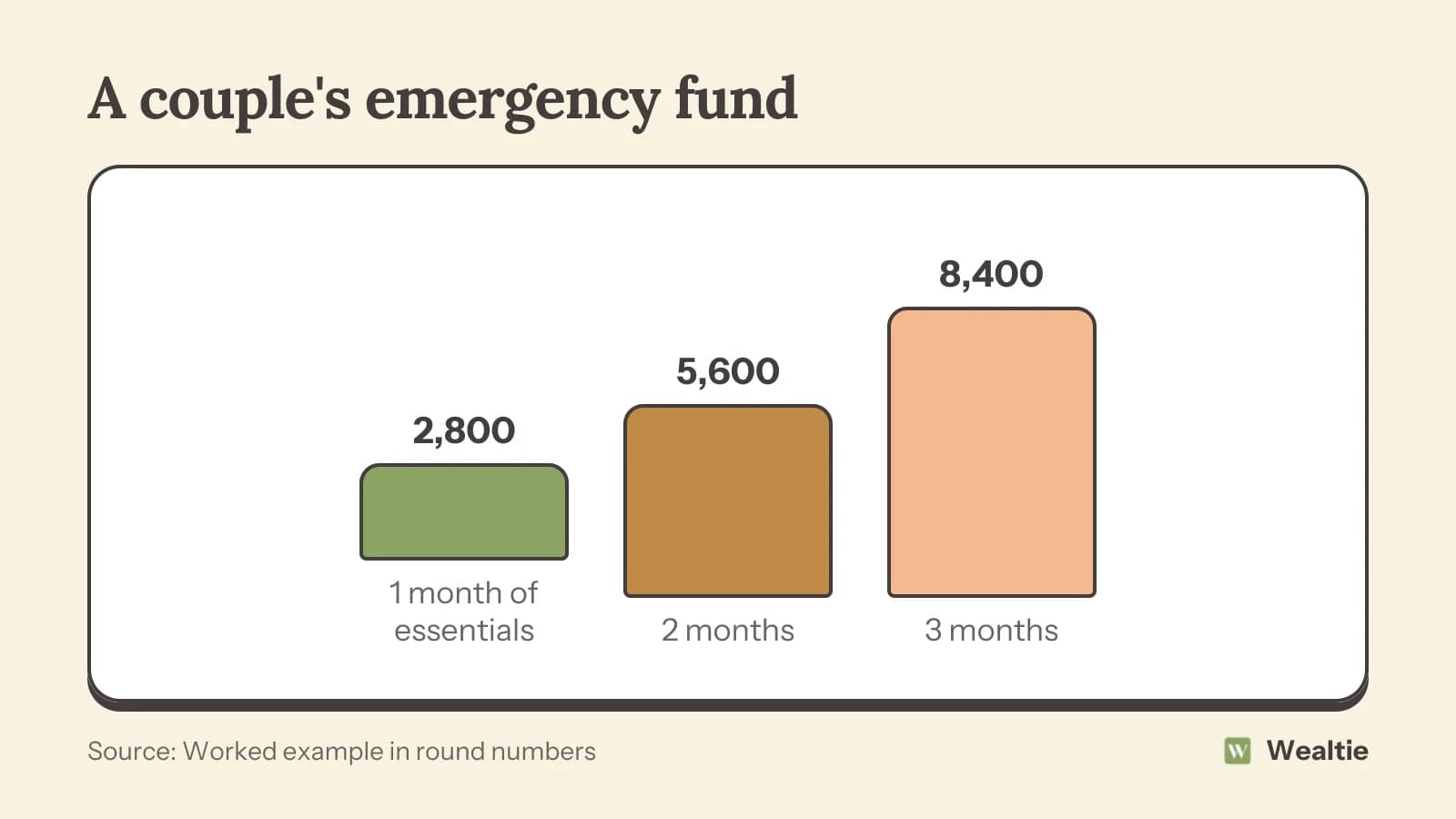
Three months of essentials comes to 8,400 in this example. Couples with children, one income, self-employment or unsteady work might aim for more. If you rent and your landlord handles repairs, you may need less than homeowners, who cover repairs themselves. How to build an emergency fund covers choosing a target.
Two incomes help
With two incomes, losing one is less likely to stop all income at once, which some couples use to justify a smaller fund. But many shared costs can't be cut quickly, so a few months of essentials is still a good aim. Checking your essentials every year keeps the target realistic as costs change.
Should the fund be joint or separate?
Both can work. A joint fund is simple and clearly shared, which suits couples who already combine finances. Separate funds, where each partner keeps their own, suit couples who keep finances more independent. Some couples do both: a joint fund for shared emergencies and a small personal fund each. What matters is that you both know where the money is and how to reach it. Make sure each partner could access it if the other was ill or away.
How do you split contributions?
Choose what feels fair. Some couples contribute equally. Others contribute in proportion to income, so the higher earner puts in more. In a worked example, a couple saving 400 a month might each add 200, or split it 250 and 150 if one earns more. At 400 a month, reaching 8,400 takes about 21 months. How to split bills as a couple covers fair ways to share costs. Starting with a smaller first target, like one month of essentials, gives you a quick win and builds momentum.
What counts as an emergency?
Agree in advance. A true emergency is unexpected, necessary and urgent: losing a job, essential repairs, urgent medical costs or travel for a family emergency. A holiday, a sale or a planned purchase isn't. Agreeing the rules together prevents arguments later and keeps the fund ready. What counts as an emergency has a simple test.
Agree how to use it
Decide whether either partner can use the fund on their own in an emergency, or whether you'll always talk first. Many couples agree that either can act in a true emergency, then discuss afterwards.
Where should you keep it?
In an easy-access savings account, separate from everyday spending. It should be quick to reach but not so easy that it gets spent. Choosing an account with no penalty for withdrawals means the money is there when you need it. Where to keep your emergency fund covers the options.
How do you rebuild it after using it?
Make topping it up a priority. After an emergency, agree how much each of you will add each month until it's back to target. Pausing other savings goals for a while is often worth it, since an empty fund leaves you exposed. Looking at what caused the emergency can also show whether a cost should be planned for separately next time, like car repairs. How to save for a goal together has tips for saving as a team.
How do you track a couple's emergency fund in Wealtie?
Add the fund as an account and move money into it as a transfer each month, which isn't counted as spending. Set the target and watch the balance grow. Wealtie's sharing lets you share accounts with a partner, so you can both see the fund; the person who shares needs Pro, and the person invited can be on any plan. Track shared spending in your expense categories with a limit in the budget tracker.
Questions people ask
A few months of shared essential costs. In a worked example, three months at 2,800 is 8,400.
It can be simple and clearly shared, but separate funds or a mix also work. Agree what suits you.
Equally or in proportion to income, whichever feels fair to both of you.
Agree in advance. Many couples let either act in a true emergency, then discuss afterwards.
This article is general information, not financial, tax or legal advice. Your situation is your own; check the numbers that apply to you before you act on them.