Budgeting: The cost of skateboarding for beginners
The cost of skateboarding is low compared with many sports, with a complete board and safety gear as the main costs. In a worked example, a first year costs 300, including a board, pads, a helmet and replacement parts.
 By Wealtie Team · 3 min read

Key takeaways
- The cost of skateboarding is low to start, with a board and safety gear as the main costs.
- A decent complete board is better than a cheap toy board.
- Shoes and replacement parts are the ongoing costs.
- Free skateparks and second-hand gear keep it affordable.
What is the cost of skateboarding?
Skateboarding is one of the more affordable sports to get into. Once you have a board and some safety gear, many skateparks are free, and you can practise on any smooth surface. The cost of skateboarding depends mostly on the quality of your board, how quickly you wear out shoes and parts and whether you take lessons or use paid skateparks.
Here's a worked example of a first year for a beginner, in round numbers that work in any currency:
| Item | Cost |
|---|---|
| Complete skateboard | 100 |
| Helmet and pads | 70 |
| Skate shoes | 60 |
| Replacement parts | 50 |
| Lessons or skatepark fees | 20 |
| Total | 300 |
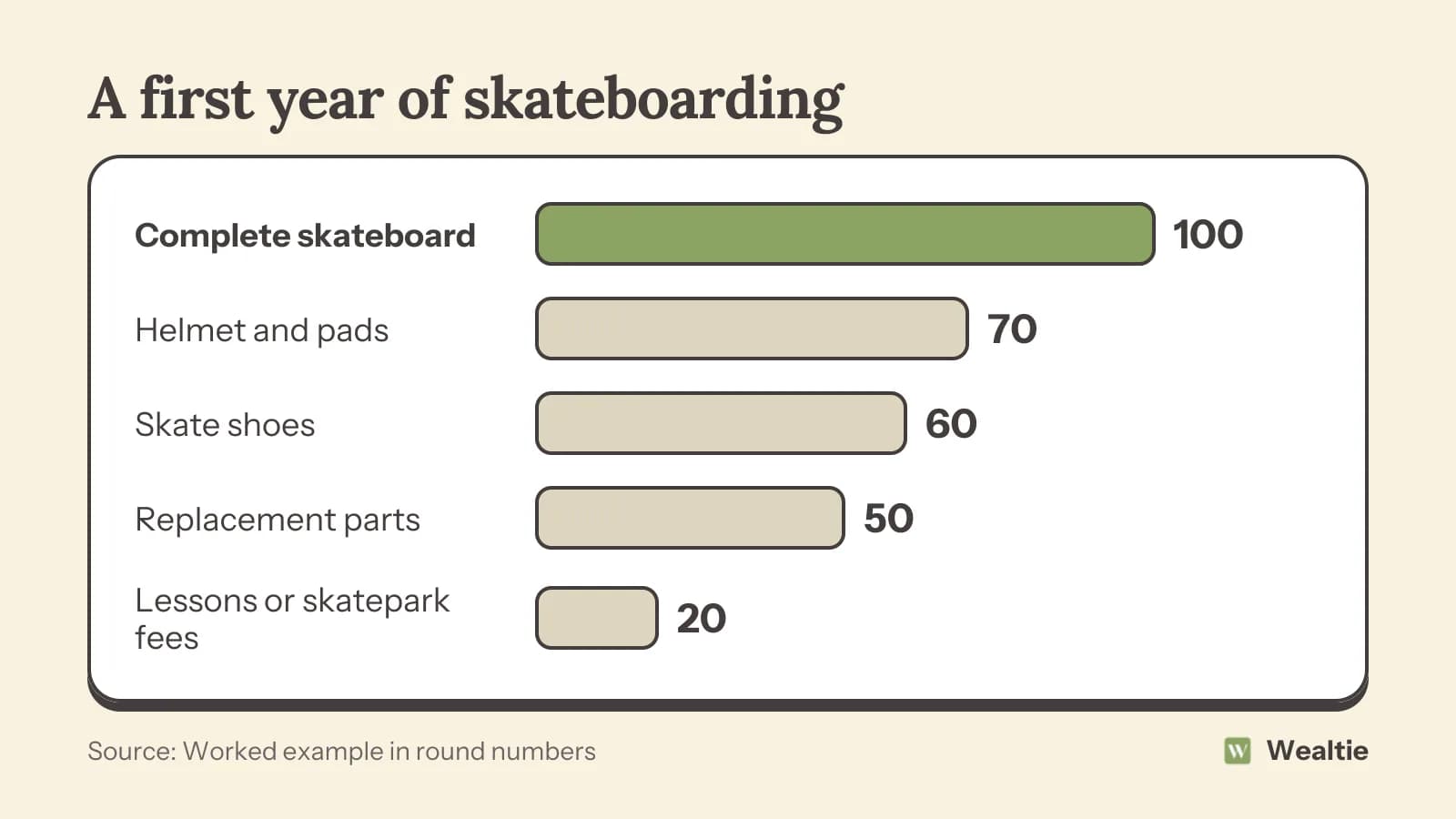
A complete board, already assembled with deck, trucks, wheels and bearings, is the easiest way to start. Safety gear is essential for beginners. Replacement parts like grip tape, wheels and bearings wear out over time, and skate shoes wear quickly from the board's rough grip tape.
What do you need to start?
A complete board
A decent complete board from a skate shop is far better than a cheap toy board from a supermarket, which can be unstable and wear out quickly. You don't need the most expensive one, just a reliable board in the right size.
Safety gear
A helmet, knee pads, elbow pads and wrist guards help protect you while you learn and fall, which you will. They're worth the cost.
Shoes
Skate shoes with flat, grippy soles help control the board. Any flat trainers work at first, but skating wears them out quickly.
What are the ongoing costs?
Shoes
Regular skaters may need new shoes several times a year.
Decks and parts
Decks can crack or wear out, and wheels, bearings and grip tape need replacing. Buying parts separately and replacing only what's worn is cheaper than a new complete board.
Skatepark fees and lessons
Many skateparks are free, but indoor parks often charge entry. Lessons are optional but can help beginners learn safely.
How do you keep skateboarding affordable?
Buy second-hand
Second-hand boards and safety gear can be good value. Check the deck for cracks and the trucks for damage.
Use free skateparks
Outdoor skateparks are free in many areas and are a great place to learn from others.
Replace parts, not the whole board
When something wears out, replace that part rather than buying a new complete board.
Look after your gear
Keeping your board dry and checking bolts and bearings helps it last longer.
Share with friends
Friends can share tools, swap parts and learn together, which makes the hobby cheaper and more fun. How to save money on sports kit has more tips for buying gear.
Is skateboarding a good activity for kids?
Skateboarding is a popular, low-cost activity for children and teenagers, building balance, confidence and friendships. Safety gear is especially important for younger skaters. Compared with many organised sports, the ongoing costs are low. How to save money on kids' activities covers comparing activity costs for children, and the cost of cycling covers another outdoor option.
Learning safely saves money as well as bruises. Beginners who start on smooth, flat ground and build up slowly are less likely to get hurt or break their board. A lesson or two, or skating with more experienced friends, helps you learn good habits early. Many skateparks have quieter times, often in the morning, which are better for beginners.
Choosing the right board size matters too. A deck that's too wide or narrow for your feet can make learning harder. Skate shop staff can help you choose a complete board that suits your size and style, which avoids buying twice.
For parents, it's worth checking whether the child wants to skate regularly before spending a lot. A decent second-hand board and basic safety gear is a good way to start. If they stick with it, upgrading parts over time spreads the cost and lets them learn what they like.
Skateboarding can also save money on transport for short trips, as long as it's safe and allowed where you live. Some skaters use cruiser boards for getting around, which are designed for smoother rides.
Finally, think about the long term. Skateboarding can be a lifelong hobby with very low running costs, which makes it great value compared with many sports and activities.
Keep a note of what you replace and when. After a few months, you will know how quickly you wear through shoes, wheels and grip tape, which makes it easy to set a sensible monthly amount for the hobby.
How can Wealtie help you track hobby costs?
Log boards, gear and parts in a hobby expense category, and set a monthly budget for skateboarding. Seeing how much you spend on shoes and parts helps you plan replacements without surprises.
Questions people ask
In a worked example, a first year cost about 300, including a complete board, safety gear, shoes and replacement parts.
A decent complete board from a skate shop, a helmet, knee and elbow pads, wrist guards and flat, grippy shoes.
Very cheap toy boards are often unstable and wear quickly. A decent complete board from a skate shop is better value.
Buy second-hand, use free skateparks, replace worn parts instead of the whole board and look after your gear.
This article is general information, not financial, tax or legal advice. Your situation is your own; check the numbers that apply to you before you act on them.