Budgeting: The cost of owning a reptile: setup and running costs
The cost of owning a reptile is mostly the setup, since the tank, heating and lighting must be right from day one. In a worked example, a bearded dragon costs 500 to set up and about 40 a month to run.
 By Wealtie Team · 3 min read

Key takeaways
- The cost of owning a reptile is mostly the setup: enclosure, heat and light.
- Running costs include electricity, live food and replacement UV bulbs.
- Reptiles need specialist vets, which can cost more.
- Cutting corners on setup often leads to health problems and bigger bills.
What is the cost of owning a reptile?
Reptiles like leopard geckos, bearded dragons and corn snakes are popular pets for people who want something different. They don't need walks or grooming, and many are quiet and low-maintenance day to day. But they do need a carefully controlled environment, and the cost of owning a reptile is mostly in setting that up correctly. The animal itself is often one of the cheaper parts.
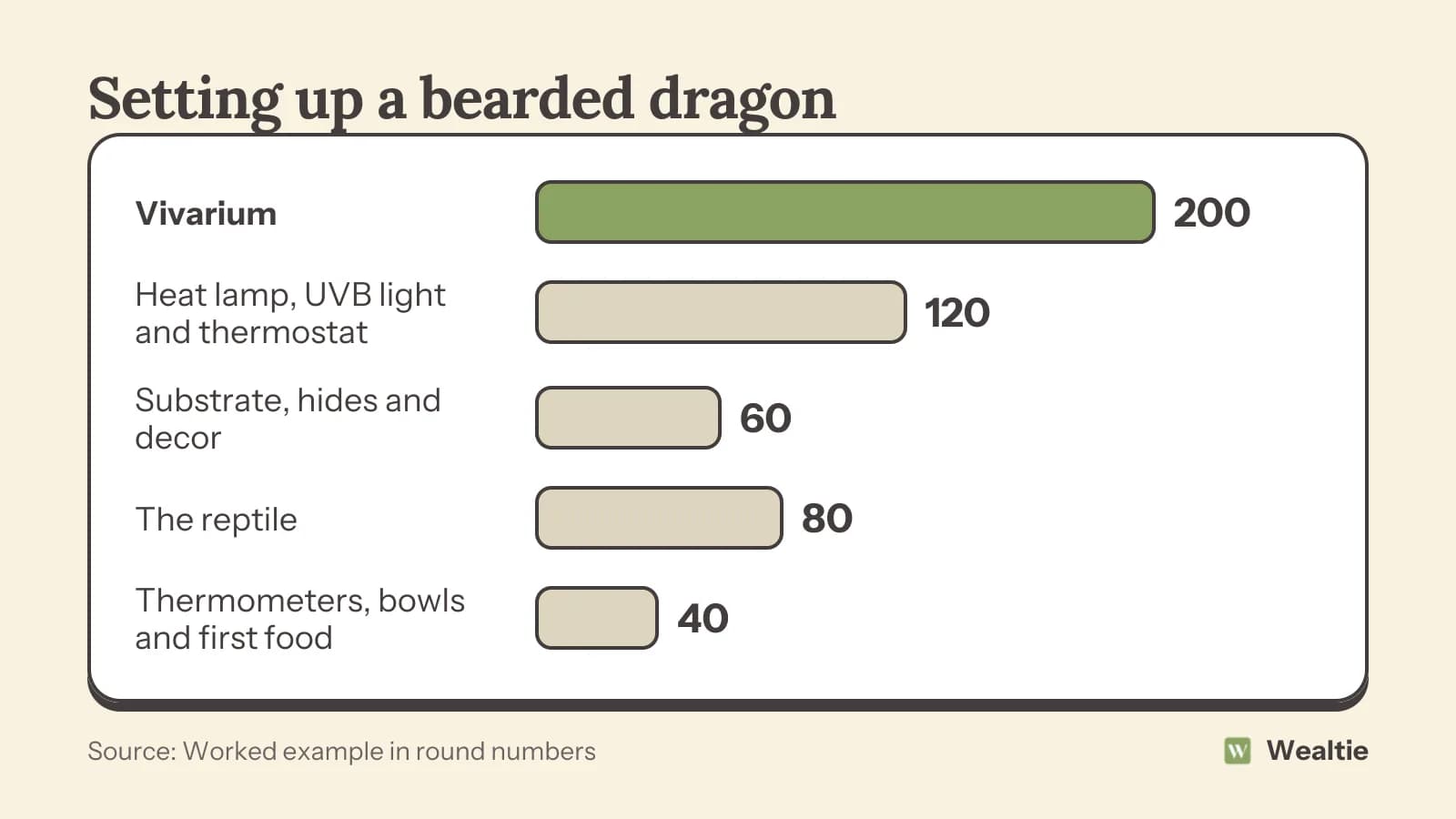
Here's a worked example for setting up a bearded dragon, in round numbers that work in any currency:
| Item | Cost |
|---|---|
| Vivarium | 200 |
| Heat lamp, UVB light and thermostat | 120 |
| Substrate, hides and decor | 60 |
| The reptile | 80 |
| Thermometers, bowls and first food | 40 |
| Total | 500 |
A leopard gecko usually needs a smaller enclosure and less powerful lighting, so its setup might cost around 300. Snakes vary by species and size. Larger reptiles that grow big need bigger enclosures over time, which adds to the cost.
What does a reptile cost to run each month?
In the bearded dragon example, running costs come to about 40 a month:
- Electricity: about 15 for heat lamps and lights running most of the day
- Live food and vegetables: about 20 for insects and fresh greens
- Supplements: about 5 for calcium and vitamin powders
A leopard gecko might cost around 20 a month. UVB bulbs need replacing regularly, even if they still light up, since their UV output fades over time. Add that to your yearly budget. Electricity costs depend on your energy prices and how warm your home is. How to save money on your electric bill covers cutting power costs in general.
Why does the setup matter so much?
Reptiles rely on their environment to control their body temperature and stay healthy. Without the right heat, UV light and humidity, they can develop serious illnesses, which are expensive to treat and can be fatal. Buying a cheap enclosure or skipping a thermostat or UVB light can cost far more in vet bills later. Research the exact needs of your chosen species before buying anything.
What are the main ongoing costs?
Food
Many reptiles eat live insects, which you'll need to buy regularly. Some also need fresh vegetables. Snakes usually eat frozen prey, often bought in bulk.
Electricity
Heat lamps, mats and lights run for many hours a day, so electricity is a steady cost.
Replacement bulbs and equipment
UVB bulbs, heat bulbs and thermostats wear out and need replacing.
Vet care
Reptiles need vets with specialist knowledge, which can mean higher fees and travel. Regular check-ups help catch problems early. How to build a vet bills fund covers saving for unexpected treatment.
Insurance
Some insurers cover reptiles. Is pet insurance worth it? covers how to decide whether it's worth paying for.
How do you keep reptile costs down?
Choose a species that suits your budget
Leopard geckos and corn snakes are often cheaper to set up and run than bearded dragons or larger lizards.
Buy a full setup second-hand
Complete vivariums with lighting are often sold second-hand. Check the equipment works and replace UV bulbs, since you won't know their age.
Adopt a rehomed reptile
Reptile rescues and owners who can no longer keep their pets often rehome animals with their full setup included.
Buy food in bulk
Frozen food for snakes and bulk insects for lizards usually cost less per meal. Some keepers breed insects at home.
Use timers and thermostats
Timers and thermostats keep temperatures right and avoid running heat and lights longer than needed, which saves electricity.
How do you plan for a reptile's lifespan?
Many reptiles live for years, and some for decades, so the monthly cost continues for a long time. Think about who will care for your reptile when you travel, since they still need heat, light and food. How to budget for a pet covers comparing long-term pet costs before you decide.
Before buying, talk to experienced keepers or a specialist reptile shop about the exact needs of the species you're considering. Online care sheets vary in quality, and good advice early on can save you from buying the wrong equipment. Some keepers keep a simple log of temperatures, feeding and shedding, which helps spot health problems early and gives a vet useful information if something goes wrong.
It's also worth checking that a reptile vet is within reach before you buy. In an emergency, travelling a long way for treatment adds cost and stress, so knowing where to go in advance is part of planning.
How can Wealtie help you track reptile costs?
Log the setup, food, bulbs and vet visits in a pet expense category, and set a monthly budget for your reptile. You'll see what it costs over a year and know when to plan for replacement equipment.
Questions people ask
In a worked example, a bearded dragon cost about 500 to set up and 40 a month to run, while a leopard gecko cost less.
Leopard geckos and corn snakes are often among the cheaper reptiles to set up and run, since they need smaller enclosures and less lighting.
Reptiles need the right heat, UV light and humidity to stay healthy, so enclosures, lamps and thermostats are essential.
Choose a low-cost species, buy a full setup second-hand, adopt a rehomed reptile, buy food in bulk and use timers and thermostats.
This article is general information, not financial, tax or legal advice. Your situation is your own; check the numbers that apply to you before you act on them.