Budgeting: The cost of manicures: salon vs at home over a year
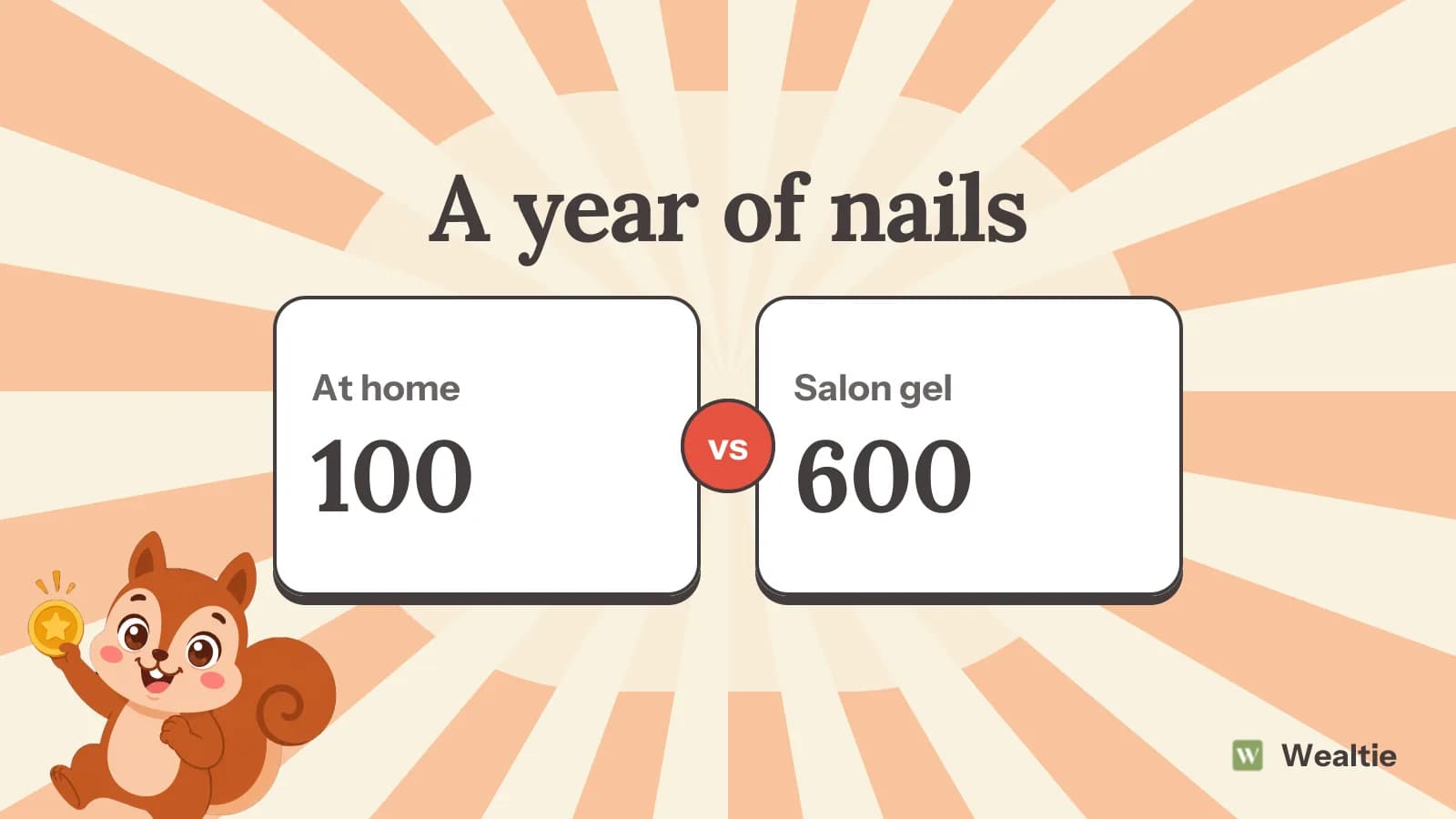
The cost of manicures adds up quickly when salon appointments become a regular habit. In a worked example, gel nails every three weeks cost 600 a year, while doing them at home costs about 100.
 By Wealtie Team · 3 min read
Key takeaways
- The cost of manicures adds up when salon visits become a regular habit.
- Gel and acrylic nails need regular infills or removal, which adds cost.
- An at-home gel kit can pay for itself within a few months.
- Mixing salon treats with home care keeps nails nice for less.
What is the cost of manicures?
Having your nails done can be a lovely treat and a confidence boost. But regular salon appointments add up, especially for gel and acrylic nails that need redoing every few weeks. The cost of manicures depends on the type of nails, how often you go, the salon and any extras like nail art.
Here's a worked example of a year of nails, in round numbers that work in any currency:
| Approach | Yearly cost |
|---|---|
| DIY polish at home | 40 |
| Gel kit at home | 100 |
| Salon gel every 3 weeks | 600 |
| Salon acrylics every 3 weeks | 800 |
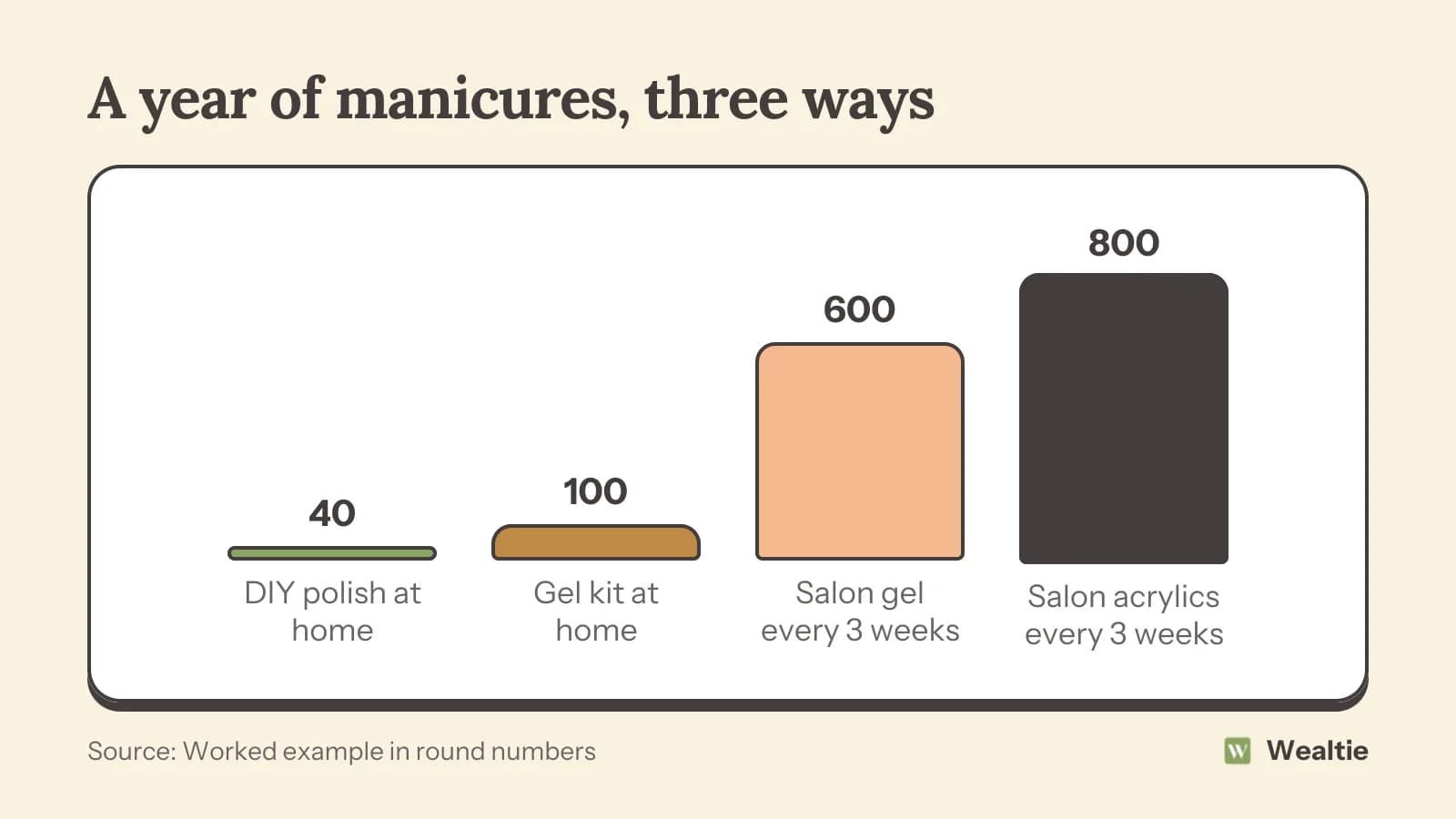
Salon gel nails at around 35 every three weeks come to about 600 a year. Acrylics cost more. An at-home gel kit with a lamp and supplies might cost around 100 in the first year, and less after that. Simple polish at home costs very little.
Many people don't realise how much they spend on nails until they add it up. A visit every three weeks is around 17 appointments a year, and extras like nail art, removal fees and tips can add a lot.
Why do salon nails cost so much over time?
Regular appointments
Gel and acrylic nails grow out and need infills or a fresh set every two to four weeks.
Extras and removal
Nail art, extensions, special shapes and removal of old gel or acrylics often cost extra.
Tips
In many places, tipping your nail technician is common, which adds to each visit.
Repairs
Broken nails between appointments can mean extra visits.
How do you cut the cost of manicures?
Stretch the time between appointments
Going every four weeks instead of three cuts the number of appointments from 17 to 13 a year. Looking after your nails between visits, like wearing gloves for cleaning, helps them last longer.
Learn to do gel at home
An at-home gel kit takes practice, but many people get good results after a few tries. It can pay for itself in a few months compared with salon gel.
Remove gel yourself
Learning to remove gel safely at home avoids removal fees. Take care to avoid damaging your natural nails.
Choose simpler designs
Plain colours cost less than detailed nail art. Save special designs for occasions.
Look for salon offers
Some salons offer cheaper prices on quieter days, loyalty cards or student discounts.
Book training salons
Beauty schools sometimes offer treatments by supervised students at lower prices.
Is a salon manicure worth it?
For some people, a salon visit is relaxing time to themselves and worth the cost. That's a fine choice when it fits your budget. The key is deciding on purpose rather than letting appointments become an automatic expense you never review. Cost per use and how to save money on personal care can help you decide what's worth keeping.
How can you balance treats and savings?
A mix often works well: salon nails for special occasions like weddings, holidays or birthdays, and home manicures the rest of the time. Some people treat salon visits as a reward for reaching a savings goal, which makes them feel more special. How to stop impulse buying covers keeping treats planned rather than spontaneous.
Think about what you enjoy most about salon visits. For some people it's the result, for others it's an hour of relaxation or a catch-up with a technician they like. If it's the relaxation, a less frequent but longer appointment might give you more of what you want for the same yearly cost. If it's the result, learning to do a good manicure at home may be the better use of money.
Look after your natural nails between appointments, too. Regular gel and acrylic use, especially with harsh removal, can weaken nails, which may lead to more repairs and treatments. Taking occasional breaks, using cuticle oil and filing gently keeps nails healthy, which makes both salon and home manicures last longer and look better.
If you're building a home kit, start with the basics: a lamp, base and top coat, a couple of colours, a file and cuticle oil. Adding colours gradually avoids spending a lot on shades you rarely wear.
Some friends take turns doing each other's nails at home, which is cheap, sociable and a good way to learn new techniques.
Finally, review your spending every few months. Habits can change without you noticing, and a quick look at the total can help you decide whether to keep your routine as it is or adjust it.
How can Wealtie help you track beauty spending?
Log nail appointments and supplies in a personal care expense category and set a monthly budget for beauty treatments. Seeing your yearly total helps you decide how often to book and whether doing some at home is worth it.
Questions people ask
In a worked example, salon gel nails every three weeks cost about 600 a year, while doing gel at home cost about 100.
Yes. An at-home gel kit can pay for itself within a few months compared with regular salon visits, though it takes practice.
Wear gloves for cleaning, avoid using nails as tools, apply cuticle oil and choose a shape that suits your daily life.
Stretch time between appointments, learn to do gel at home, choose simpler designs and look for salon offers or training salons.
This article is general information, not financial, tax or legal advice. Your situation is your own; check the numbers that apply to you before you act on them.