Budgeting: The cost of a Lego hobby for adults and kids
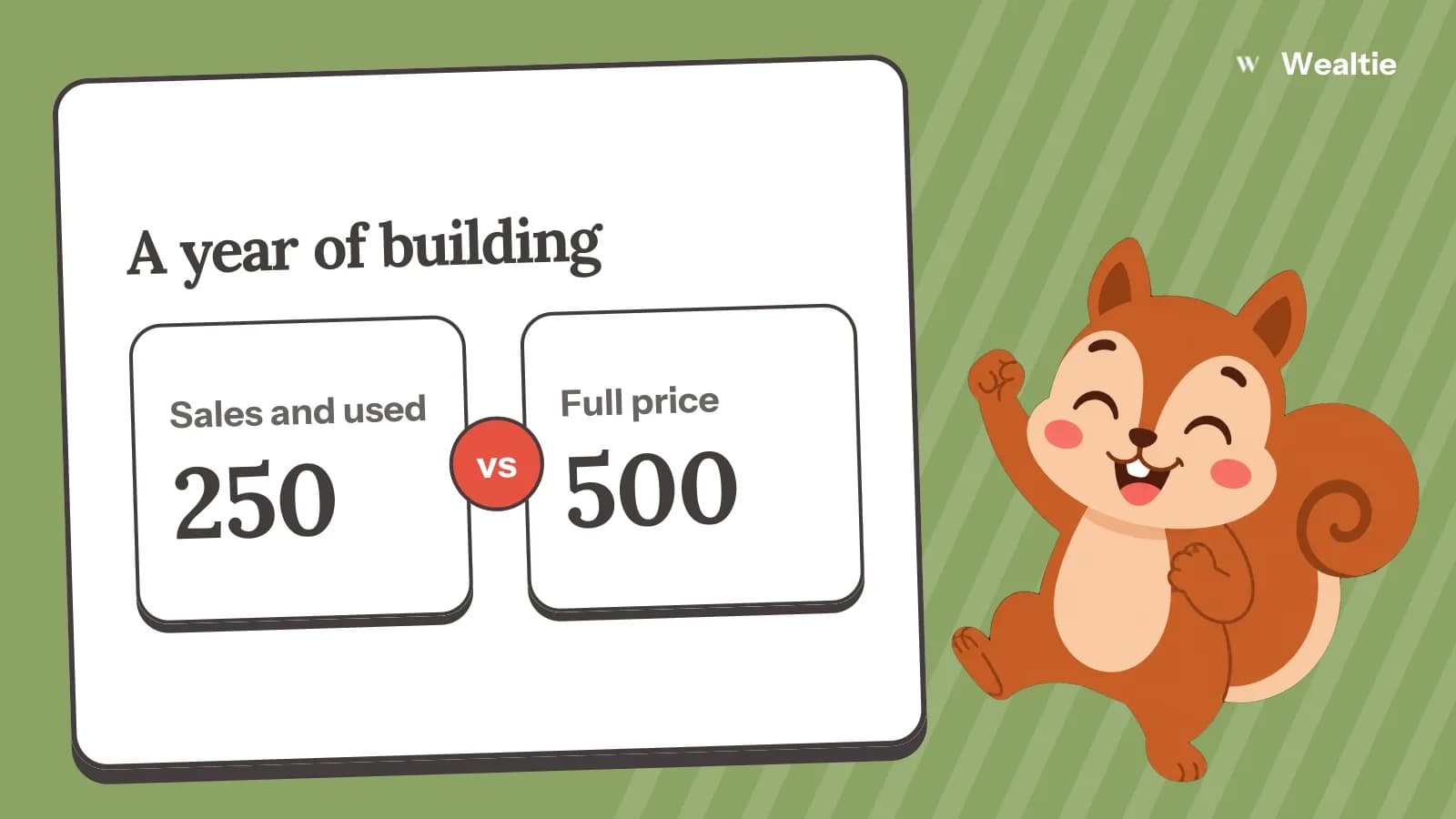
The cost of a Lego hobby can grow quickly, since large sets are expensive and new themes keep coming out. In a worked example, a family buying a few sets and extras spends about 500 a year, or 250 by mixing second-hand and sales.
 By Wealtie Team · 3 min read
Key takeaways
- The cost of a Lego hobby depends on set size and how often you buy.
- Sales, second-hand sets and bulk bricks cut the cost a lot.
- Free building from existing bricks costs nothing.
- Some sets hold value, but don't count on it as an investment.
What is the cost of a Lego hobby?
Lego is loved by children and adults alike, and building sets has become a popular hobby for grown-ups too. It's also one of the more expensive toys and hobbies around, especially large display sets and licensed themes. The cost of a Lego hobby depends on the size of the sets you buy, how often you buy them and whether you pay full price.
Here's a worked example of a year of Lego for a family, in round numbers that work in any currency:
| Approach | Yearly cost |
|---|---|
| New sets at full price | 500 |
| Sales, second-hand and bulk bricks | 250 |
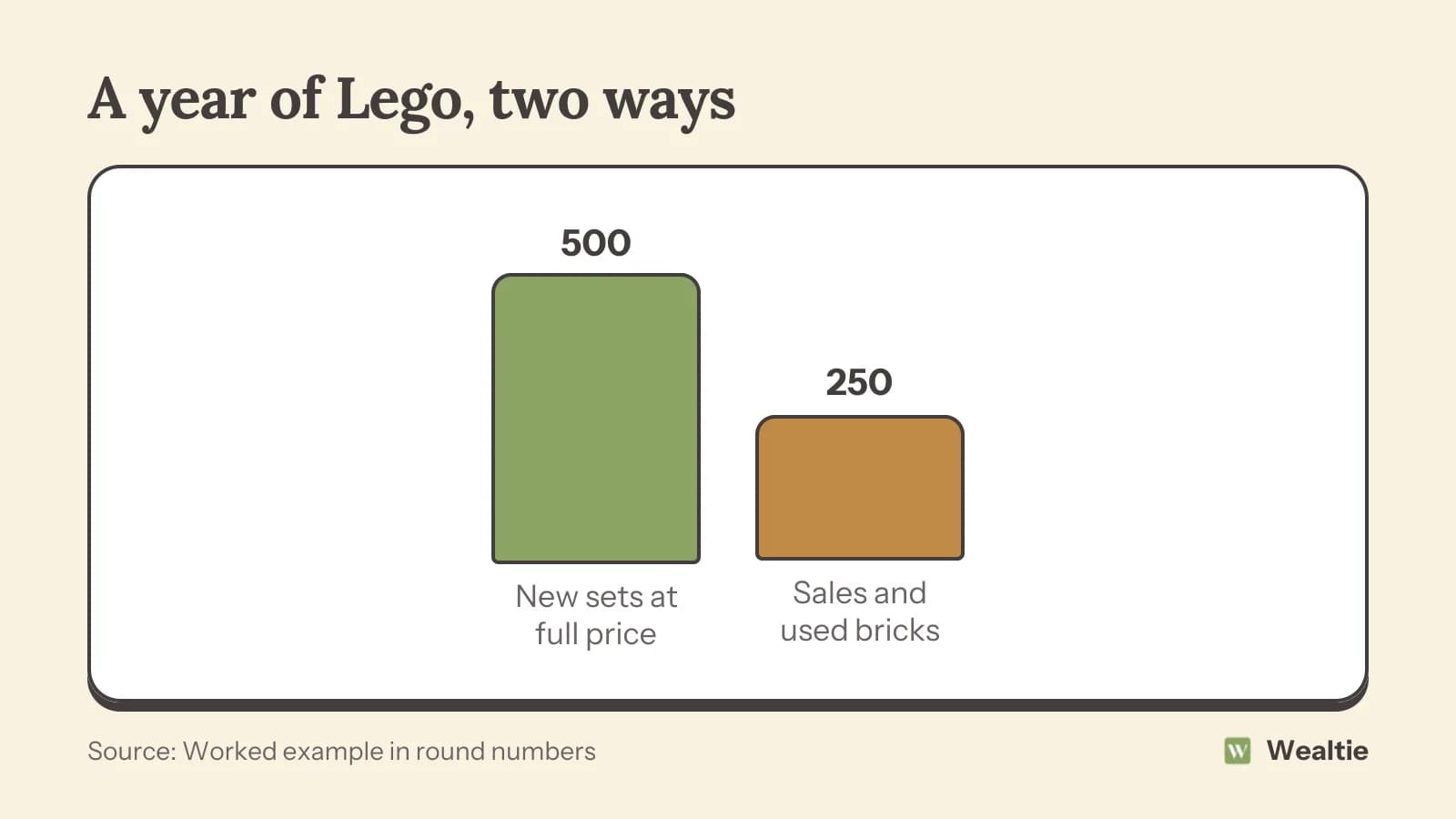
Buying one large set, a few medium sets and some extras at full price comes to about 500. Buying the same amount of building through sales, second-hand sets and bulk bricks halves it. Many families find the half-price approach gives just as much fun.
Why is Lego expensive?
Lego bricks are made to precise standards so they fit together perfectly, even decades later, and they last a very long time. Licensed sets based on films and games often cost more, and large display sets for adults can be very expensive. New themes and limited editions make it easy to keep buying.
How do you enjoy Lego for less?
Wait for sales
Lego is often discounted in seasonal sales and by retailers clearing stock. If a set isn't urgent, adding it to a wish list and waiting can save a lot.
Buy second-hand
Complete sets and bulk bricks are widely available second-hand. Check that sets are complete, or be happy building your own designs if some pieces are missing.
Buy bulk bricks
Tubs of mixed bricks give endless building options for children who like creating their own models, often at a lower price per piece than sets.
Rebuild and remix
Taking sets apart and building something new costs nothing. Many builders enjoy creating their own designs from bricks they already own.
Swap with friends
Swapping sets or bricks with other families keeps things fresh without buying more. Some libraries run Lego clubs too.
Set a yearly budget
A yearly Lego budget, perhaps tied to birthdays and holidays, keeps buying under control. How to save money on toys covers toy spending in general.
Is Lego an investment?
Some retired sets, especially popular ones kept sealed in their boxes, have gone up in value. But many haven't, and collecting for profit takes space, knowledge and luck. It's best to buy Lego to enjoy it. If a set happens to hold its value, selling it later can recover some of the cost. How to sell things you don't use covers selling online.
Lego for adults: a hobby worth budgeting for
Adult builders often buy larger, more detailed sets, which can cost much more per set. Treating it like any hobby, with a monthly budget, helps it stay enjoyable rather than a source of guilt. How to save money on a hobby covers keeping hobbies affordable, and cost per use can help you decide whether a big set is worth it, since some adults spend dozens of hours building one model.
Storage is part of the hobby too. Large sets take up space on display, and loose bricks need sorting containers. Simple storage boxes and drawers keep bricks organised and make rebuilding easier, which means you get more use from what you already own. Some families rotate sets, keeping a few out and storing the rest, so old sets feel new again when they come back out.
For children, involving them in choosing sets within a budget teaches them about money. Letting them save pocket money towards a set they want most can make it more special and help them learn patience. Some families set a rule that a new set means passing on or selling an old one, which keeps the collection manageable.
Building clubs at libraries, schools and community centres offer a free way to build with large collections of bricks and meet other builders. They're a great option for children who love Lego but don't need to own every set.
For adult builders, it can help to choose one or two themes you love most rather than buying across every range. A focused collection is easier to budget for and often more satisfying to display.
Finally, keep instructions and boxes if you think you might sell sets later, since complete sets with instructions sell for more.
How can Wealtie help you track Lego spending?
Log Lego purchases in a toys or hobby expense category, and set a budget for the year. Seeing the total helps you choose which sets are worth buying and which can wait for a sale.
Questions people ask
In a worked example, a family spent about 500 a year at full price, or 250 by buying in sales, second-hand and in bulk.
Wait for sales, buy second-hand sets and bulk bricks, swap with friends and rebuild sets into new designs.
Not reliably. Some retired sets rise in value, but many don't. It's best to buy Lego to enjoy it.
Yes. Second-hand sets and bulk bricks are often much cheaper. Check sets are complete if you want to build the original model.
This article is general information, not financial, tax or legal advice. Your situation is your own; check the numbers that apply to you before you act on them.