Budgeting: How much does horse riding cost, from lessons to owning a horse
The answer to how much does horse riding cost depends on how involved you want to be, from weekly lessons to the much larger cost of owning a horse. In a worked example, a weekly lesson costs about 160 a month, sharing a horse about 250, and owning one about 600 a month before vet bills.
 By Wealtie Team · 3 min read

Key takeaways
- How much horse riding costs depends on whether you take lessons, share a horse or own one.
- In a worked example, weekly lessons cost about 160 a month, sharing about 250 and owning about 600.
- Owning a horse brings large, unpredictable costs like vet bills, so an emergency fund is essential.
- Sharing or loaning a horse gives more riding time without the full cost of ownership.
How much does horse riding cost?
It depends on how involved you want to be. Riding can mean a weekly lesson at a riding school, sharing a horse with its owner, or owning a horse yourself, and the costs rise sharply at each step. Knowing the full picture helps you choose a level of riding that fits your budget, and plan ahead if you hope to move up.
How do the options compare?
Here's a worked example of monthly costs, in round numbers that work in any currency:
| Option | Monthly cost |
|---|---|
| Weekly lessons, 4 at 40 | 160 |
| Sharing a horse | 250 |
| Owning a horse | 600 |
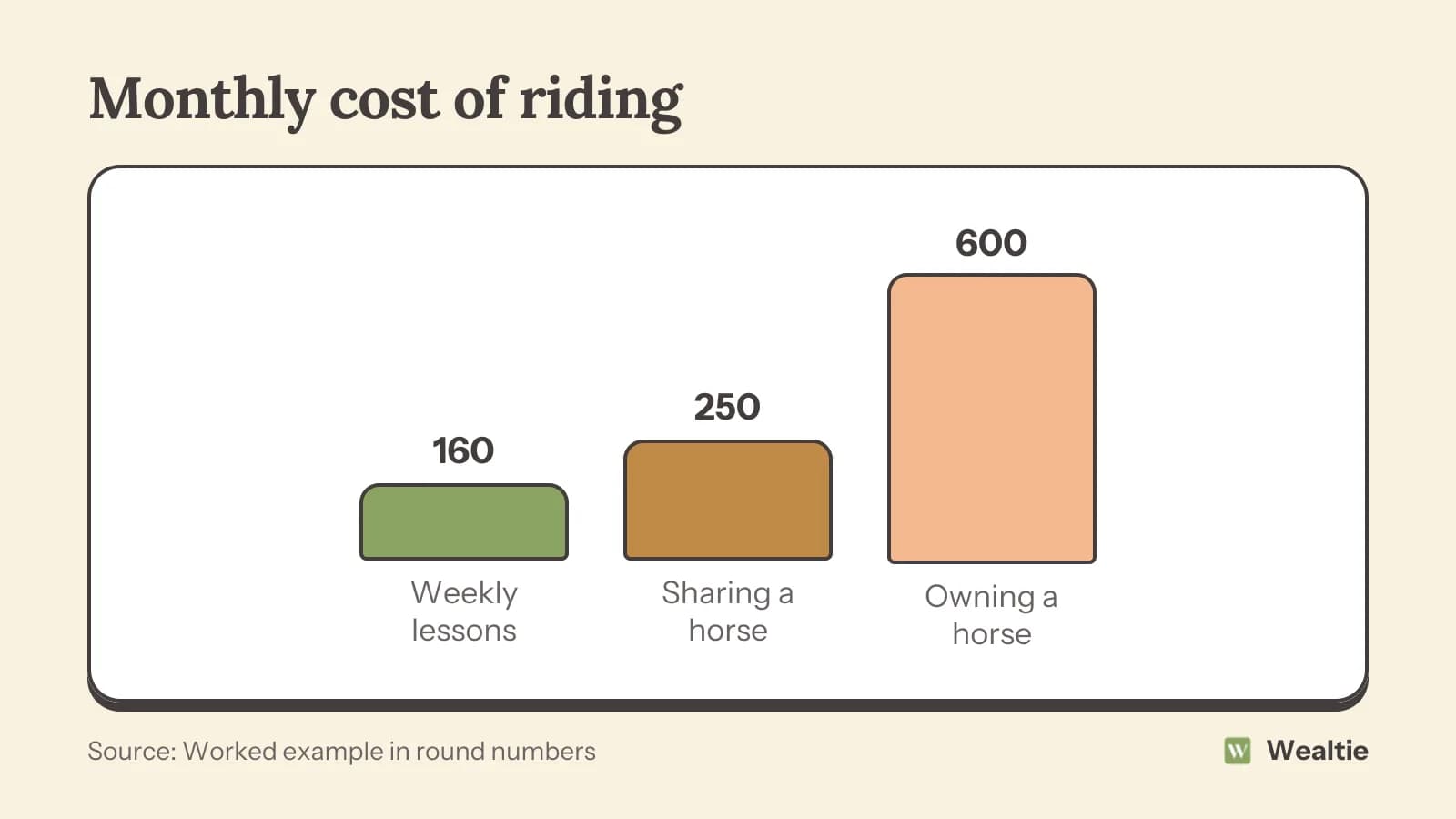
Your own figures depend on where you live, the type of lessons and the horse's needs. Costs are often higher near cities, where land and stabling cost more.
What do riding lessons cost?
Group lessons usually cost less than private ones, and are a good way to start. Private lessons give more attention and help you progress faster, but cost more per hour. Many riding schools offer blocks of lessons at a discount, or cheaper rates on weekdays. Trying a few schools helps you find good teaching at a fair price. Lessons in a small group of similar ability give you more attention than a big group, often for only a little more.
For children, group lessons and pony days can be a fun, lower-cost way to ride. How to save money on kids' activities has more ideas for keeping activities affordable.
What gear do you need?
For lessons, a riding hat that meets current safety standards and suitable boots are the essentials. In a worked example, a hat, boots and a few basics cost about 150. Many riding schools lend hats to beginners, so you can try riding before buying.
Buy the hat new, since a hat that's been dropped or damaged may not protect you. Other items, like boots, jodhpurs and gloves, are widely available second-hand. Gloves help with grip and protect your hands, and they're cheap to buy. How to buy second-hand has tips on checking quality.
What does it cost to share a horse?
Sharing, sometimes called part-loaning, means paying the owner a monthly amount in return for riding their horse on set days, often with some care duties. It gives you much more time with a horse than lessons, without the full cost and responsibility of owning one. In the worked example, it costs about 250 a month.
Agree the details in writing: which days you ride, what you pay, who covers what costs and what happens if the horse is injured or unwell.
Finding a share
Riding schools, local stables and riding clubs often know owners looking for sharers. Meet the horse and owner before agreeing, ride a few times on trial and make sure your experience suits the horse.
What does it cost to own a horse?
Much more than most people expect. Here's a worked example of monthly costs:
| Cost | Amount |
|---|---|
| Livery or stabling | 350 |
| Feed and bedding | 100 |
| Farrier | 50 |
| Insurance | 40 |
| Other care, like worming, dentist and tack repairs | 60 |
| Total | 600 |
That's before buying the horse, the saddle and other tack, and before vet bills. The costs carry on every month, whether you ride or not. Many owners also pay for transport to shows or lessons, competition entries and rugs, which add up over a year.
Vet bills and emergencies
Vet bills are the biggest risk. A horse can need treatment suddenly, and bills can be large. Insurance helps, but often has limits and excesses. An emergency fund for the horse is essential before you buy. How to build an emergency fund covers the basics.
How do you ride for less?
There are several ways to spend more time with horses for less:
- Volunteer at a riding school or stables in return for lessons
- Share or loan a horse rather than buying one
- Choose group lessons and weekday times
- Buy gear second-hand, except the hat
- Look for riding clubs that organise lower-cost group sessions
How to save money on a hobby has more ideas that apply to riding too.
Before buying a horse
Try sharing first. A share shows you the real time and costs of caring for a horse, and whether it fits your life. If you then decide to buy, save for the purchase, the tack and an emergency fund beforehand, and make sure the monthly costs fit comfortably within your budget.
How do you track riding costs in Wealtie?
Give riding its own line in your expense categories, so lessons, gear and horse costs add up in one place. Regular costs like livery or a share fee can be set up as recurring transactions with the bill tracker. A monthly limit in the budget tracker shows whether riding fits your plan.
Questions people ask
In a worked example, a weekly lesson at 40 costs about 160 a month. Group lessons and weekday times usually cost less.
In a worked example, about 600 a month for livery, feed, farrier, insurance and care, before vet bills and the cost of buying.
Paying a horse's owner a monthly fee to ride on set days, often with some care duties. It costs much less than owning.
Volunteer at stables, share a horse, choose group lessons and buy gear second-hand, except your hat.
This article is general information, not financial, tax or legal advice. Your situation is your own; check the numbers that apply to you before you act on them.