Budgeting: The cost of home brewing beer: kit, ingredients and savings
The cost of home brewing beer covers a starter kit, ingredients for each batch, bottles and a few extras like sanitiser. In a worked example, the first batch costs about 120, and later batches work out much cheaper per bottle than buying.
 By Wealtie Team · 3 min read
Key takeaways
- The cost of home brewing covers a starter kit, ingredients and bottles.
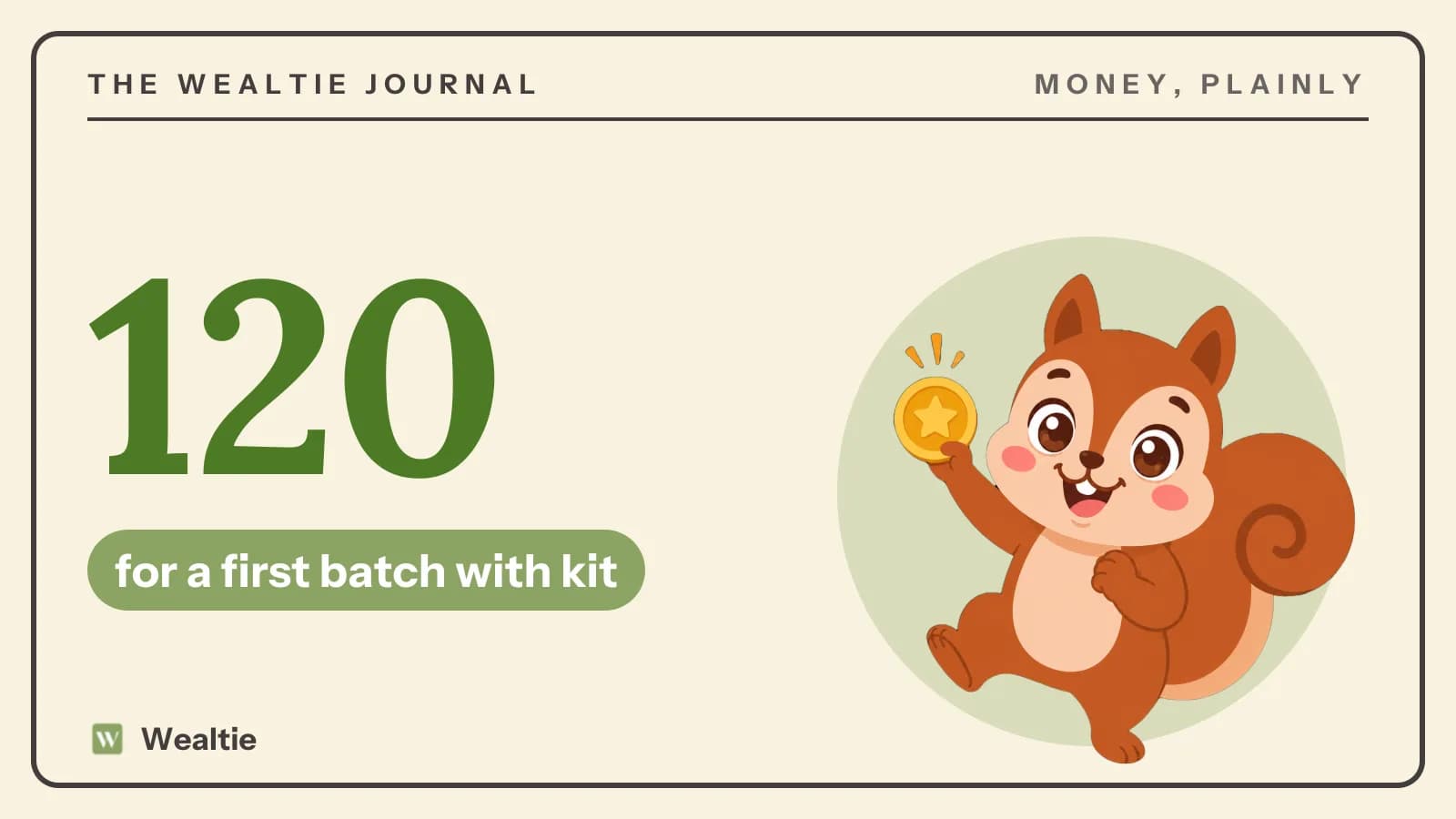
- In a worked example, a first batch costs about 120 with the kit.
- Later batches cost about 30 for ingredients, far less per bottle than buying.
- Clean equipment matters most, since one infected batch wastes everything.
What is the cost of home brewing?
Home brewing beer is a hobby that combines a little science, a little cooking and a lot of patience. You start with a kit of basic equipment, then buy ingredients for each batch. Many beginners use beer kits, which come with everything needed for one batch and are simple to follow. More experienced brewers make beer from grain, which needs more equipment but gives more control. In a worked example, the first batch costs about 120 including the kit, and later batches cost about 30 for ingredients.
Laws on home brewing vary by country, so check what applies where you live. Most places allow brewing for your own use, but selling it usually needs a licence. As with any alcohol, drink sensibly.
Part of the appeal is the process itself. Brewing day, checking fermentation and finally tasting the first bottle make it a hobby that stretches over weeks. Many brewers enjoy sharing their beer with friends and swapping recipes, and local home brewing clubs are a cheap way to learn and taste other people's efforts. Starting with a simple kit and following the instructions closely is the surest way to a good first batch. Once you're confident, small changes to recipes let you experiment without much extra cost.
What does home brewing cost?
Here's a worked example, in round numbers that work in any currency:
| Item | Cost |
|---|---|
| Starter equipment kit | 70 |
| Ingredients for a batch | 30 |
| Bottles and caps | 20 |
| First batch total | 120 |
| Later batches | 30 |
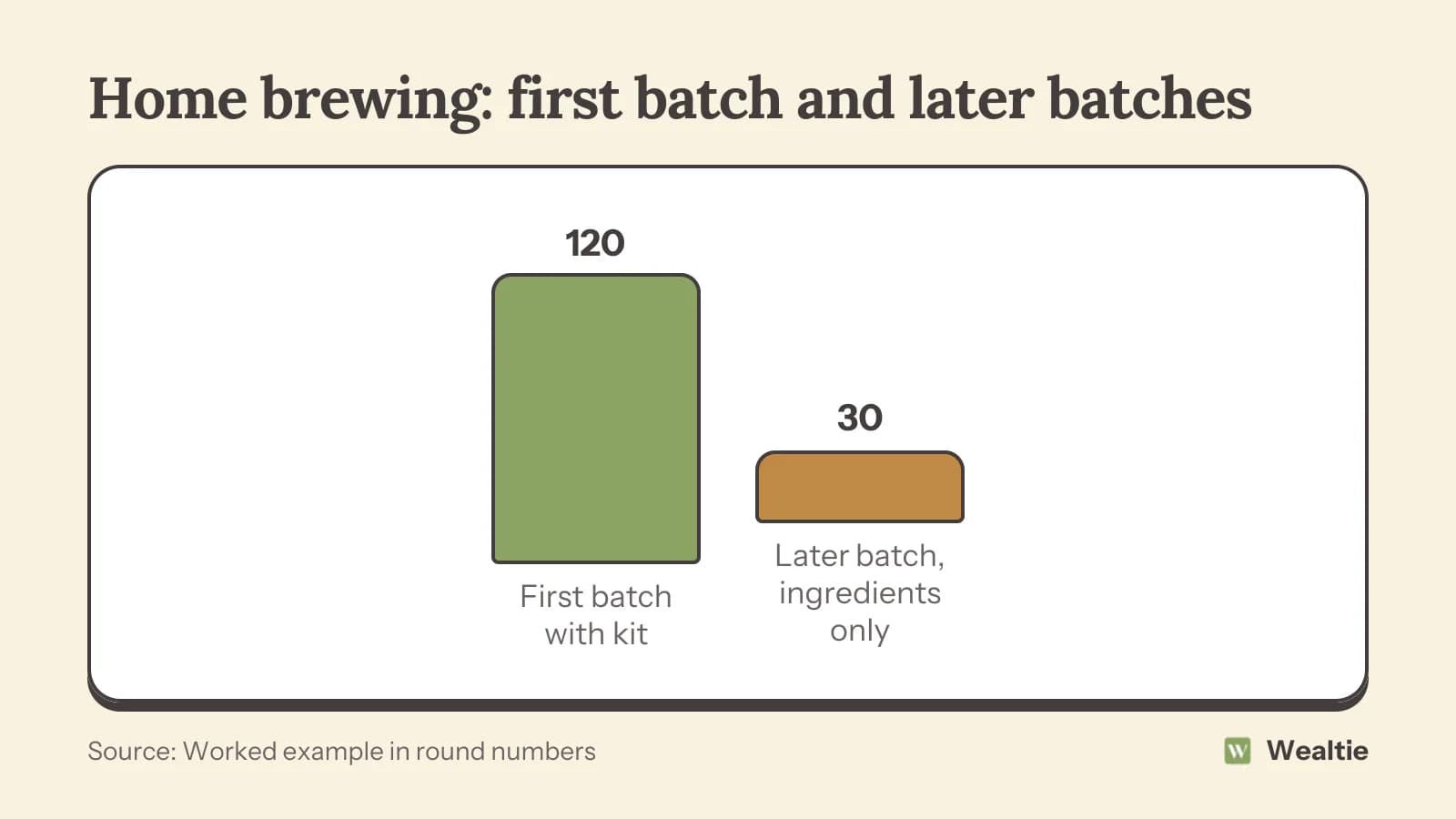
A typical batch makes around 40 bottles. After the first batch, the equipment and bottles are reused, so each later batch costs mainly the ingredients.
What are the main home brewing costs?
Equipment
A starter kit usually includes a fermenting bucket, an airlock, a thermometer, a hydrometer, a siphon and a bottling stick. It's reused for every batch and lasts years with care. Second-hand kits are common, since people often try brewing once and stop, but sterilise everything thoroughly before use.
Ingredients
Beer kits contain malt extract and hops, and sometimes yeast. Brewing from grain needs malted grain, hops and yeast bought separately, which can be cheaper per batch once you have the equipment.
Bottles
Swing-top bottles are reusable for years. Many brewers collect and clean bottles from shop-bought beer and buy only new caps.
Cleaning and sanitising
Sanitiser and cleaning products are cheap but essential. Poor hygiene is the most common reason batches go wrong, and a spoiled batch wastes all the ingredients and weeks of waiting.
What else adds to the cost of home brewing?
Moving from kits to brewing from grain needs larger pots, a mash tun and sometimes a wort chiller, which can cost more than the starter kit. Kegs and gas for draught beer are another step up. Space matters, since fermentation needs a spot with a steady temperature, and storing bottles while they condition takes room. Energy for boiling the wort adds a small amount to your bills. Specialty ingredients and new recipes are tempting, so it helps to set a monthly brewing budget.
Time is a cost too. A kit batch takes an evening to start and an hour or two to bottle, plus weeks of waiting. Brewing from grain can take most of a day. If you enjoy the process, that's part of the fun, but it's worth knowing before you invest in bigger equipment.
Is home brewing cheaper than buying beer?
Usually, once you've paid for the equipment. In the worked example, a later batch of about 40 bottles costs 30, which is far less per bottle than buying beer in a shop. The first batch costs more because of the equipment, so the savings build up over several batches. If you only brew once or twice, it may not save money, but it can still be a rewarding hobby. Work out the cost per use of your kit as you go.
Keep costs down
Reuse bottles, buy ingredients in bulk, keep equipment clean to avoid wasted batches, and share costs with a friend who brews. Brewing beer for gatherings can make hosting cheaper too. How to host a dinner on a budget covers more ideas. If you're cutting back on drinking, Dry January savings shows what a month off can save. How to save money on a hobby has more ways to keep hobby costs in check.
How do you track brewing costs in Wealtie?
Add a hobby category to your expense categories and set a budget for ingredients and equipment, so you can see what each batch costs over time.
Questions people ask
In a worked example, a first batch costs about 120 including a starter kit, ingredients and bottles. Later batches cost about 30 for ingredients.
Usually, once the equipment is paid for. In a worked example, a later batch of about 40 bottles costs 30.
A fermenting bucket, airlock, thermometer, hydrometer, siphon, bottling stick, bottles and sanitiser.
Poor cleaning and sanitising is the most common reason. Clean equipment protects every batch.
This article is general information, not financial, tax or legal advice. Your situation is your own; check the numbers that apply to you before you act on them.