Saving: How much does Dry January save, and where should the money go?
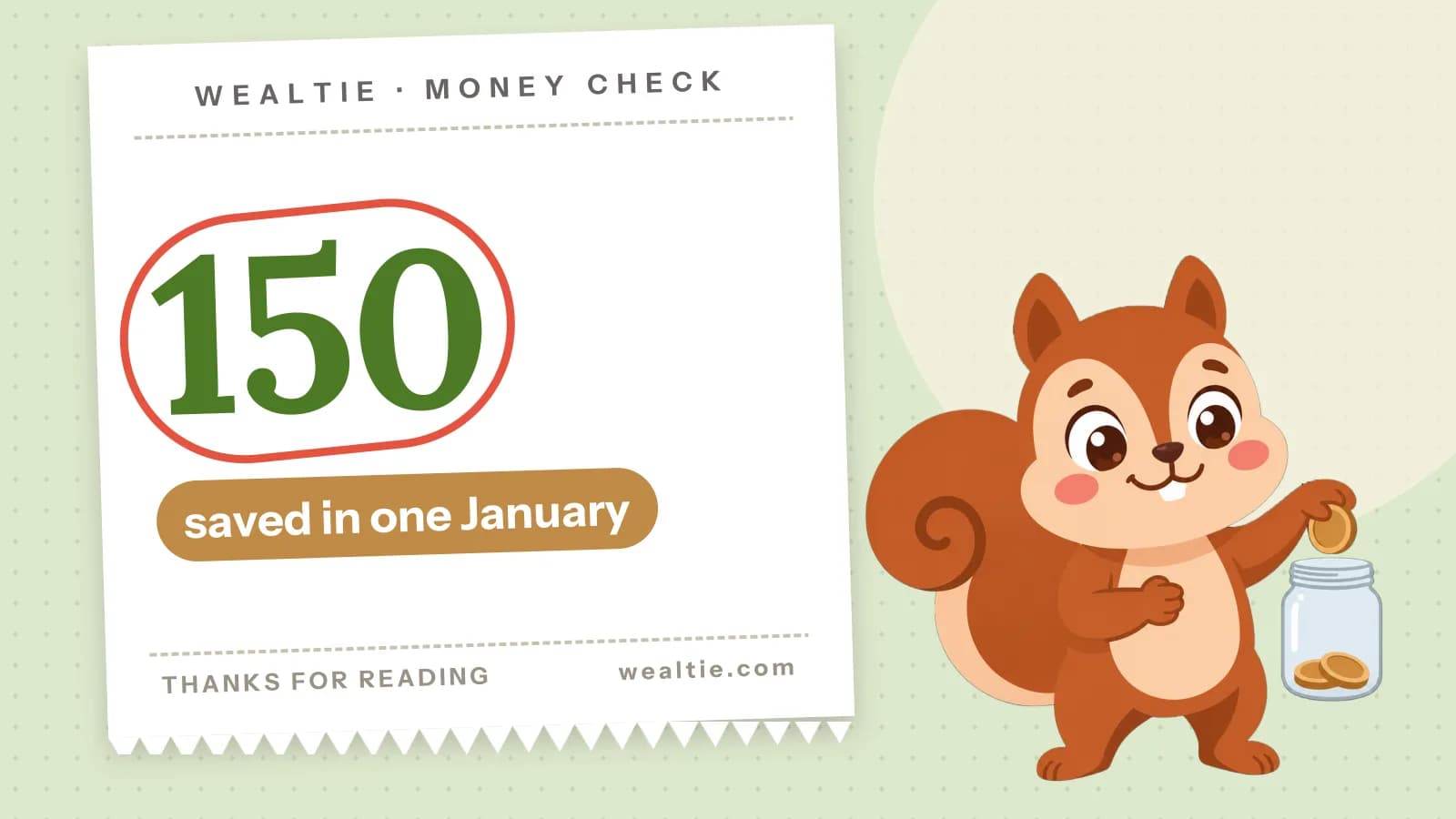
Dry January savings depend on what you normally spend on drinks, at home and out. In a worked example, someone spending 35 a week saves about 150 over the month, and moving it to savings each week makes sure it doesn't just disappear.
 By Wealtie Team · 3 min read
Key takeaways
- Work out what you'd normally spend on drinks, including at home, out, taxis and late-night food.
- In a worked example, spending of 35 a week means about 150 saved over the month.
- Move the saving to a separate pot each week, so it doesn't get absorbed into other spending.
- Alcohol-free nights out still cost money, so plan for soft drinks and other costs.
How much does Dry January save?
It depends on what you normally spend, and most people underestimate it. Add up what you'd usually spend on drinks in a month: at home, out with friends, and the costs that come with nights out, like taxis and late-night food. That total is roughly what January could save. January is a good month to try, because many people are cutting back after the holidays and the social calendar is often quieter.
How do you work out your own figure?
Look at December's or November's spending, or a typical month. Here's a worked example in round numbers that work in any currency:
| Line | A typical month |
|---|---|
| Drinks at home | 50 |
| Drinks out | 80 |
| Taxis and late-night food | 20 |
| Total | 150 |
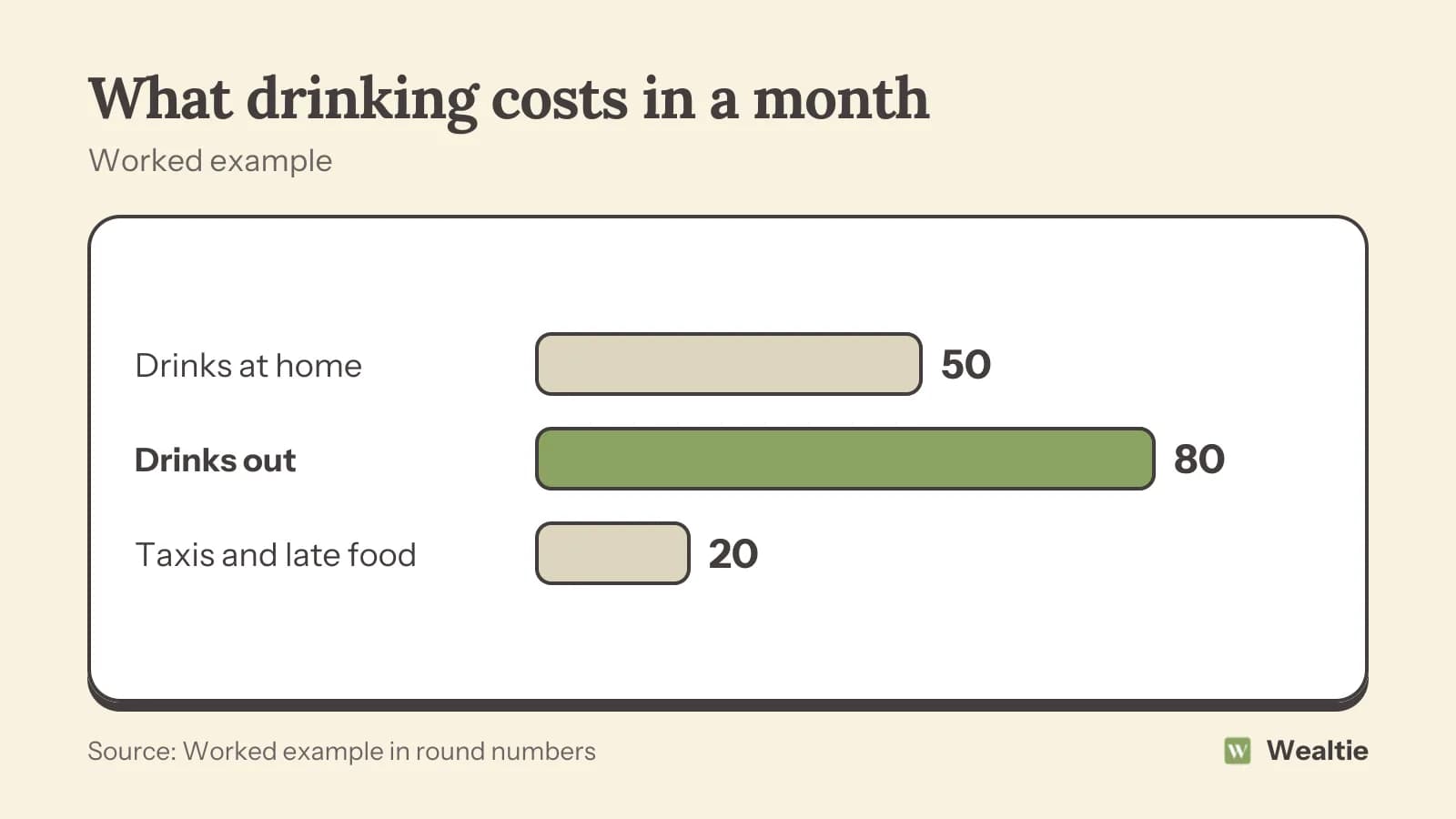
That's about 35 a week. For some people it's much less, and for others far more. If you're not sure, check your bank app for bars, shops and taxi rides over the last month, and include rounds bought for others and any drinks deliveries. Weekends are usually where most of it happens.
Where does the money go if you don't move it?
Usually into other spending. A takeaway here, a bit more shopping there, and the month's saving has quietly gone somewhere else. Unallocated money tends to behave that way. Money you don't spend on drinks doesn't announce itself, and by the end of the month it's often gone on other things. The fix is simple: each week, move what you would have spent into a separate savings pot.
Doing it weekly, rather than at the end of the month, makes the saving visible as you go, which is encouraging. Some people set up a standing order for the weekly amount on the first of January, so it happens without thinking. If you usually drink with the same friends, ask them to join in, since it's easier when the group does it.
Do alcohol-free nights out still cost money?
Yes. Soft drinks and alcohol-free alternatives cost money too, sometimes almost as much. You might also spend more on food or activities when you're not drinking. Count those, so your saving figure is honest and the plan holds up for the whole month. Many bars charge a lot for soft drinks, so a coffee catch-up, a film night at home or a walk can cost less.
What should you do with the money?
Give it a job, ideally one you'll notice. Seeing a pot grow by 35 every week is more motivating than a vague sense that you spent less. A few good options:
- Put it toward any January bills, especially if December was expensive
- Add it to an emergency fund
- Start a fund for something you'll enjoy later, like a trip
- Pay down a credit card balance from the holidays
Decide in the first week, so the money has a destination from the start. If the holidays went on a card, how to recover from holiday spending has a plan, and putting January's saving toward the card helps.
How do you keep the saving after January?
Decide what happens in February before it arrives. Some people go back to their old habits, and the saving stops. Others find they don't miss some of the drinks and keep part of the change. If you keep spending half of what you used to, that's 75 a month saved, or 900 a year.
Track drinks spending for February and March as well, to see where it settles. You could set a monthly amount for drinks going forward and give it a share of your budget, so it stays in view. How much spending money per month helps you set the rest of the month around it.
What other "dry" months save money?
Your bank statement will show which habit costs you most. The same approach works for any habit: a month without takeaways, without online shopping or without buying lunch. Add up what it normally costs, move the saving each week and decide afterwards what you'll keep. The no-spend challenge applies the idea more widely.
How do you track Dry January savings in Wealtie?
Give drinks their own line in your expense categories, so you can see what you spent before and after. Add a savings account and move each week's saving into it as a transfer, which isn't counted as spending. Your net worth tracker shows the pot growing through the month.
Questions people ask
Roughly what you'd normally spend on drinks, plus related costs like taxis and late-night food. A worked example comes to about 150 for the month.
Move what you'd have spent into a separate savings pot each week, instead of waiting until the end of the month.
Sometimes nearly as much on a night out, so count them when you work out your saving.
Set a monthly amount for drinks going forward, keep it in your budget, and keep moving any difference to savings.
This article is general information, not financial, tax or legal advice. Your situation is your own; check the numbers that apply to you before you act on them.