Budgeting: The cost of having twins: a first-year budget
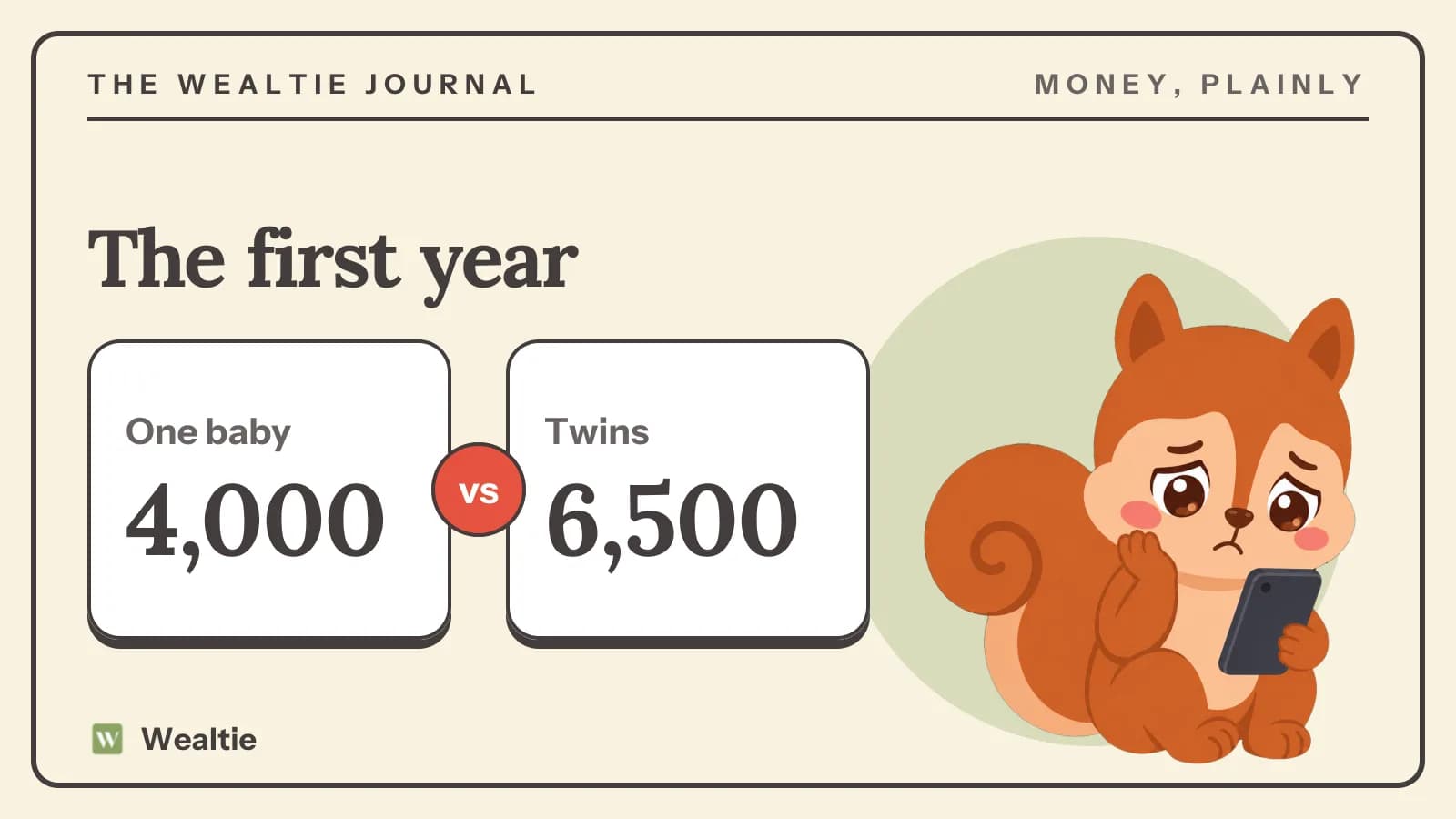
The cost of having twins is not quite double one baby, because some gear can be shared while nappies, feeding and childcare do double. In a worked example, the first year with twins costs 6,500, against 4,000 for one baby.
 By Wealtie Team · 3 min read
Key takeaways
- The cost of having twins is less than double one baby, since some items are shared.
- Nappies, feeding, car seats and cots double up.
- Second-hand gear and twins clubs cut the cost a lot.
- Childcare for two is often the biggest cost once parental leave ends.
What is the cost of having twins?
Finding out you're expecting twins brings a lot of joy and, for many parents, a moment of panic about money. The good news is that the cost of having twins isn't double the cost of one baby. Some things can be shared, like a changing table, a baby bath, a monitor and many toys. Other costs do double: nappies, feeding, car seats, cots and, later, childcare.
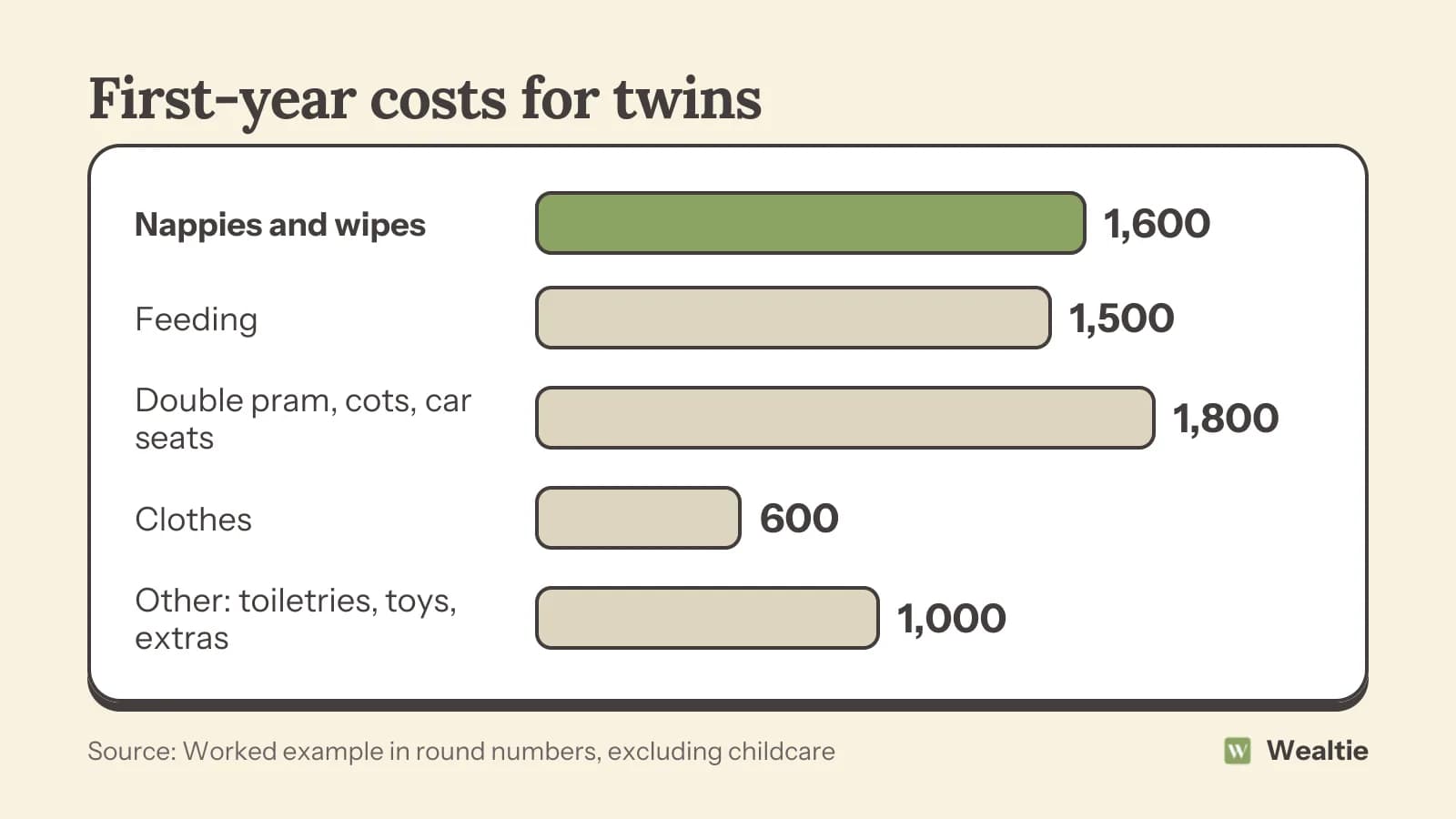
Here's a worked example of first-year costs for twins, not including childcare, in round numbers that work in any currency:
| Item | Cost |
|---|---|
| Nappies and wipes | 1,600 |
| Feeding | 1,500 |
| Double pram, cots, car seats | 1,800 |
| Clothes | 600 |
| Other: toiletries, toys, extras | 1,000 |
| Total | 6,500 |
In the same example, one baby's first year costs about 4,000. So twins cost around 2,500 more, not twice as much. Costs vary a lot depending on whether you breastfeed or use formula, buy new or second-hand, and how much you receive as gifts. How to budget for a baby covers the costs of one baby in more detail.
Which costs double with twins?
Nappies and wipes
Two babies use two sets of nappies, often around the clock, which makes this one of the biggest ongoing costs. Buying in bulk, using own-brand nappies or trying reusable ones can help.
Feeding
If you use formula, the cost doubles. Breastfeeding twins is possible and can save a lot, though many parents combine both. A breast pump and bottles may still be needed.
Car seats and cots
Each baby needs their own car seat and safe sleeping space. These are hard to share, although some parents use one cot for both in the very early weeks if their health visitor or midwife agrees it's safe.
Clothes
Twins need clothes at the same time, so hand-me-downs between them don't work like they do with siblings of different ages. Gifts and second-hand bundles help a lot.
Childcare
When parental leave ends, childcare for two is often the biggest cost of all. Some nurseries offer a discount for siblings or twins, so ask. A nanny can sometimes cost about the same as two nursery places and be more practical. How to save money on childcare covers support that may be available.
Which costs can you share?
Changing mats, baby baths, monitors, bouncers, play mats, many toys, a nappy bag and baby books can all be shared. You may want two of some things, like bouncers, so both babies can be settled at once, but there's no need to buy two of everything.
How do you save money with twins?
Join a twins club
Many areas have twins and multiples clubs where parents swap advice and buy and sell second-hand gear. Some brands and shops also offer discounts for multiples, so it's worth asking.
Buy second-hand
Double prams, cots and baby gear are often sold second-hand in good condition. Car seats are the exception: buy new or from someone you trust, so you know their history.
Accept help and gifts
Friends and family often want to help. A gift list with practical items like nappies, wipes and clothes in larger sizes is useful. How to save money on baby basics has more ideas.
Buy in bulk
Nappies, wipes and formula are cheaper in bulk, and you'll go through them quickly with two.
Don't buy too early
Babies grow fast and have different needs. Buy the essentials first and add things as you discover what you need.
How do you plan the budget?
Plan for reduced income
Many twin parents take longer leave or find it harder to return to work quickly. Plan your budget for the months when one parent's income may be lower or stop.
Build a buffer
Twins are more likely to arrive early, which can mean unexpected costs like extra travel to hospital, parking and premature-size clothes. A small buffer helps.
Check what support is available
Some countries offer extra parental leave, benefits or allowances for multiple births. Check what applies to you.
Review the budget often
Costs change quickly in the first year. Reviewing your budget every month or two keeps it realistic. How to budget for a second child covers planning when your family grows.
Look after yourselves too. The first months with twins are tiring, and tired parents are more likely to make expensive convenience purchases, like takeaways and next-day deliveries. Batch cooking before the birth, accepting meals from friends and keeping a simple weekly shopping list can save money and stress at the same time.
How can Wealtie help you manage the first year?
Set a monthly budget for baby costs and log nappies, feeding, gear and clothes in their own expense categories. You'll see which costs are biggest, and where buying in bulk or second-hand would make the most difference.
Questions people ask
In a worked example, the first year with twins cost about 6,500 excluding childcare, compared with about 4,000 for one baby.
No. Some items like a changing table, monitor and toys can be shared, but nappies, feeding, car seats and childcare do double.
Join a twins club, buy second-hand gear except car seats, buy nappies and formula in bulk and accept practical gifts.
Some nurseries offer sibling or twin discounts. It's worth asking when you compare childcare options.
This article is general information, not financial, tax or legal advice. Your situation is your own; check the numbers that apply to you before you act on them.