Budgeting: How much does fishing cost as a hobby? A starter budget
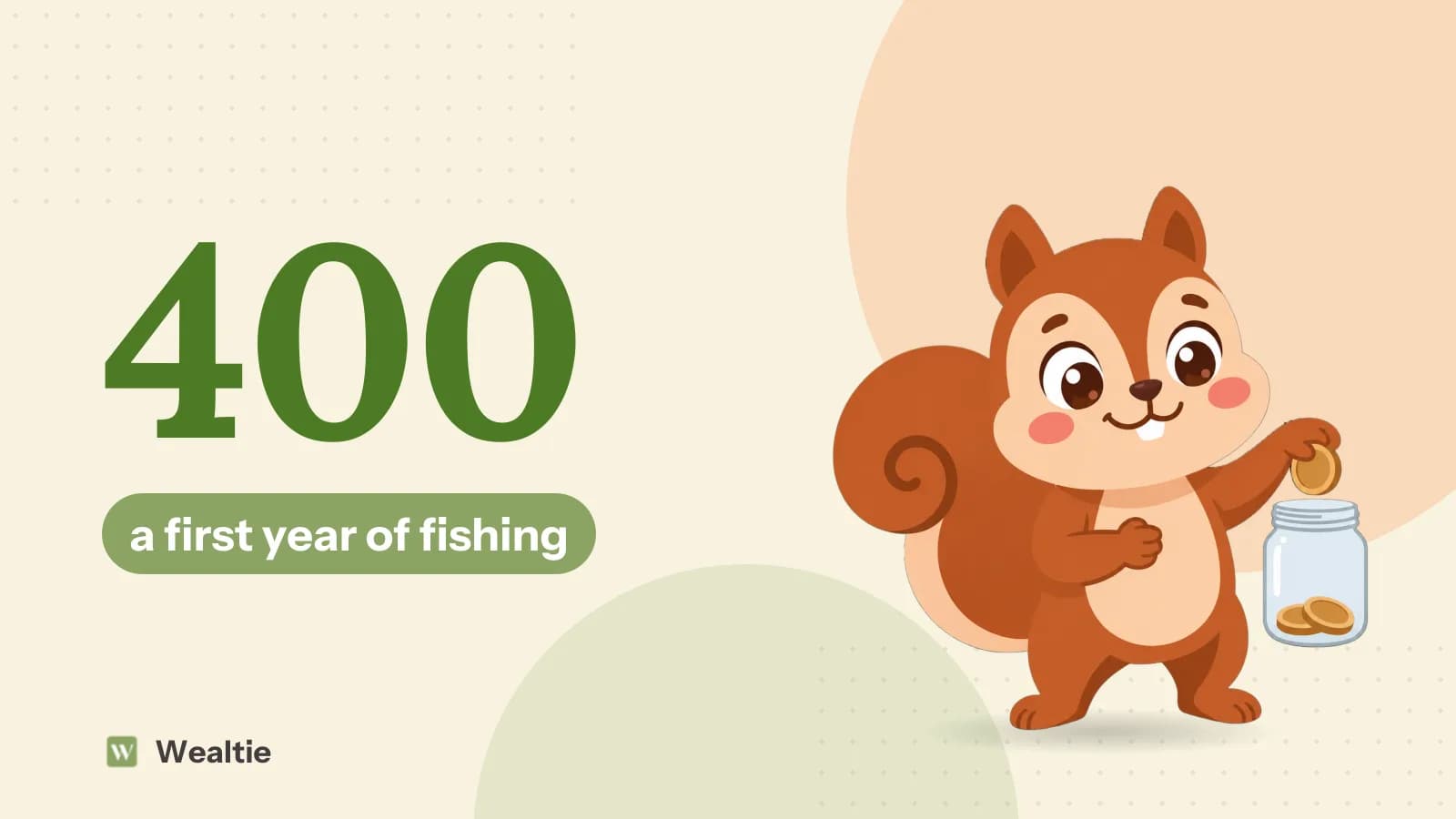
The cost of fishing as a hobby covers a rod and reel, tackle, bait, any licence or permit and travel to where you fish. In a worked example, a first year of freshwater fishing costs about 400.
 By Wealtie Team · 3 min read
Key takeaways
- The cost of fishing covers gear, tackle, bait, licences and travel.
- In a worked example, a first year of freshwater fishing costs about 400.
- A simple starter setup is enough for most beginners.
- Licence rules vary, so check what's needed where you'll fish.
How much does fishing cost as a hobby?
Fishing can be a cheap way to spend time outdoors, or an expensive one, depending on the kind of fishing and how much gear you collect. A beginner fishing on a local river or lake needs a rod and reel, some tackle, bait and, in many places, a licence or permit. Sea fishing from the shore needs similar kit, while fishing from a boat or travelling for game fish costs much more. In a worked example, a first year of freshwater fishing costs about 400.
Rules on licences and permits vary a lot by country and by water, so check what's needed before you go.
What does a first year of fishing cost?
Here's a worked example for freshwater fishing, in round numbers that work in any currency:
| Item | A year |
|---|---|
| Rod and reel | 120 |
| Tackle and line | 80 |
| Licence and permits | 80 |
| Bait | 60 |
| Travel | 60 |
| Total | 400 |
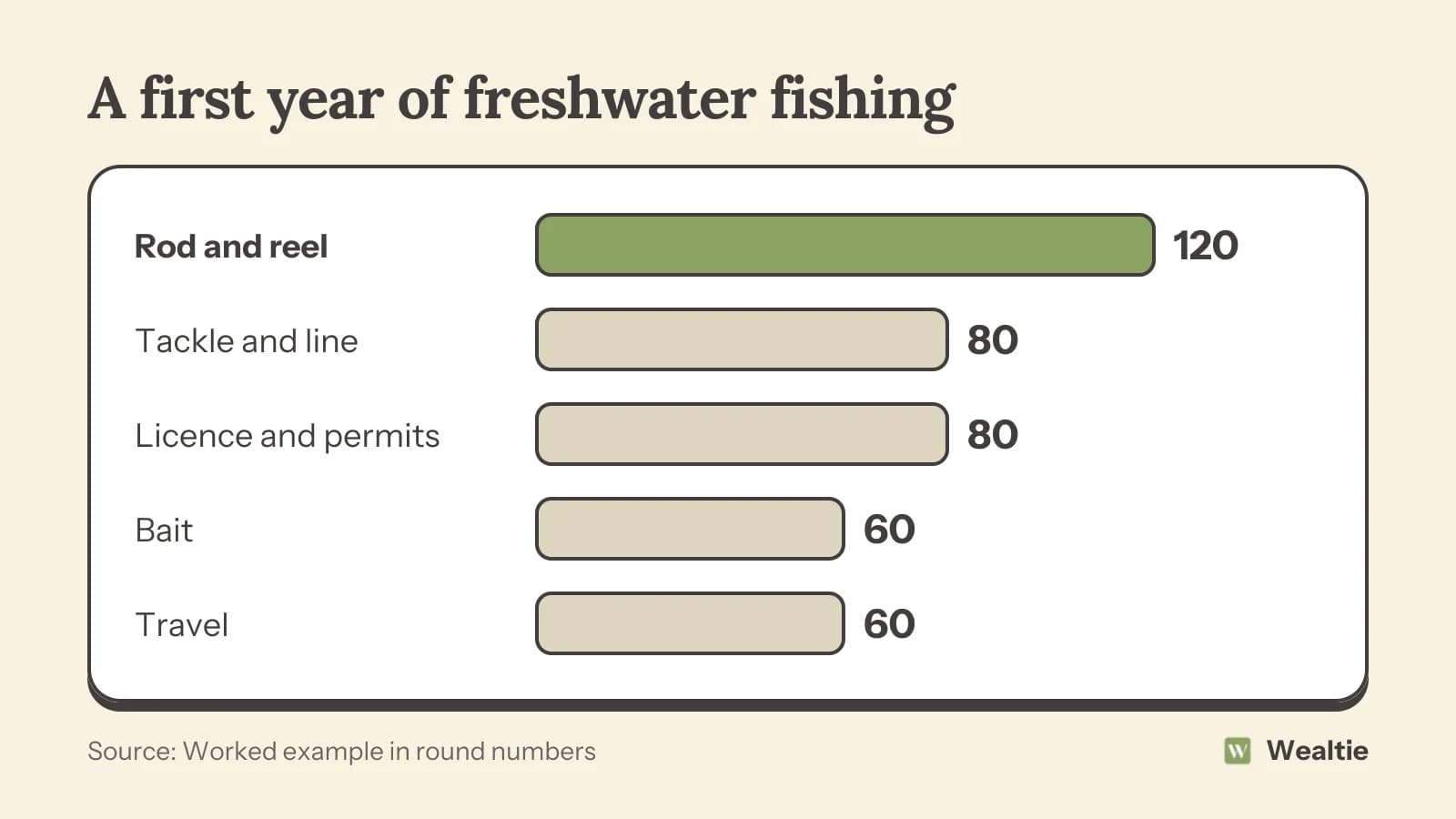
After the first year, the rod and reel usually last, so ongoing costs drop to tackle, bait, permits and travel.
What are the main costs of fishing?
Rod and reel
A beginner rod and reel combo is affordable and fine for learning. Pick one suited to the fish and water you'll fish most. Expensive rods are lighter and more sensitive, but you don't need one to catch fish.
Tackle
Hooks, weights, floats, line, lures and a small box to carry them. Tackle gets lost on snags, so it's an ongoing cost. Start with a small selection and add what you need.
Licences and permits
Many places require a fishing licence, and some waters need a separate permit or day ticket. Season tickets are often cheaper than day tickets if you fish the same water often.
Bait
Worms, maggots, sweetcorn or bread for freshwater, and other baits for the sea. Some anglers use lures instead, which can be reused.
Travel and extras
Fuel or fares to reach the water, plus clothing for the weather, a chair, a landing net and a bag. These can be added over time.
How can you fish for less?
- Start with a combo kit: a matched rod and reel is cheaper than buying separately.
- Buy second-hand: many anglers sell good gear when they upgrade.
- Fish locally: less travel and cheaper permits.
- Buy a season ticket: cheaper than day tickets if you fish one water often.
- Use simple bait: bread and sweetcorn are cheap and effective for many fish.
- Join a club: clubs often offer cheap access to waters, plus advice from experienced anglers.
- Go with a friend: share travel costs and learn faster together.
Avoid gear creep
Fishing shops are full of tempting gadgets. Most beginners catch plenty with a simple setup. Set a yearly gear budget and add new kit only when you find a clear need. How to save money on a hobby covers more ways to keep costs in check, and how to save money on sports kit applies to fishing gear too.
Is fishing a cheap hobby?
It can be. Once you have the basic gear, a day's fishing can cost little more than bait and a permit. Compared with hobbies that need regular fees, like golf, it's often cheaper. The cost rises with travel, boat trips and specialist gear.
Combine it with camping
A fishing trip with a night or two camping can be a cheap break. The camping trip budget covers planning the costs.
Look after your gear
Rinse reels after sea fishing, dry your kit and store it properly. Well-kept gear lasts for years, which keeps the hobby cheap in the long run.
What else adds to the cost of fishing?
As you get into fishing, extra costs appear. Waterproof clothing, boots or waders make long days by the water more comfortable. A comfortable chair, a shelter or an umbrella help in bad weather. Sea fishing trips on a charter boat cost far more than fishing from the shore, but can be a fun treat a few times a year. Specialist fishing, like fly fishing for trout or salmon, often needs different gear and more expensive permits. Storing bait and gear at home can need a small freezer or a shed. Add these slowly, as you find out which kind of fishing you enjoy most.
How do you track fishing costs in Wealtie?
Add a fishing category to your expense categories and set a budget for it, so you can see what you spend on gear, permits and trips over a year.
Questions people ask
In a worked example, a first year of freshwater fishing costs about 400 for a rod and reel, tackle, permits, bait and travel.
In many places, yes, and some waters need a separate permit or day ticket. Check the rules where you'll fish.
It doesn't have to be. Once you have basic gear, a day's fishing can cost little more than bait and a permit.
Start with a combo kit, buy second-hand, fish locally, buy a season ticket and join a club.
This article is general information, not financial, tax or legal advice. Your situation is your own; check the numbers that apply to you before you act on them.