Budgeting: The cost of CrossFit vs a regular gym
The cost of CrossFit is usually higher than a regular gym because classes are coached and groups are small. In a worked example, a CrossFit membership costs 1,440 a year, against 360 for a budget gym.
 By Wealtie Team · 3 min read

Key takeaways
- The cost of CrossFit is usually higher than a regular gym because classes are coached.
- You're paying for coaching, programming and community.
- Limited-session memberships and off-peak times lower the price.
- It's worth it if the coaching and community keep you training.
What is the cost of CrossFit?
CrossFit gyms, often called boxes, run coached group classes that mix weightlifting, gymnastics and high-intensity conditioning. Classes are usually small, with a coach guiding every session, and many people love the community and accountability. That model costs more to run than a regular gym, so the cost of CrossFit is usually higher.
Here's a worked example of a year of training, in round numbers that work in any currency:
| Option | Yearly cost |
|---|---|
| Budget gym | 360 |
| Mid-range gym with classes | 720 |
| CrossFit box membership | 1,440 |
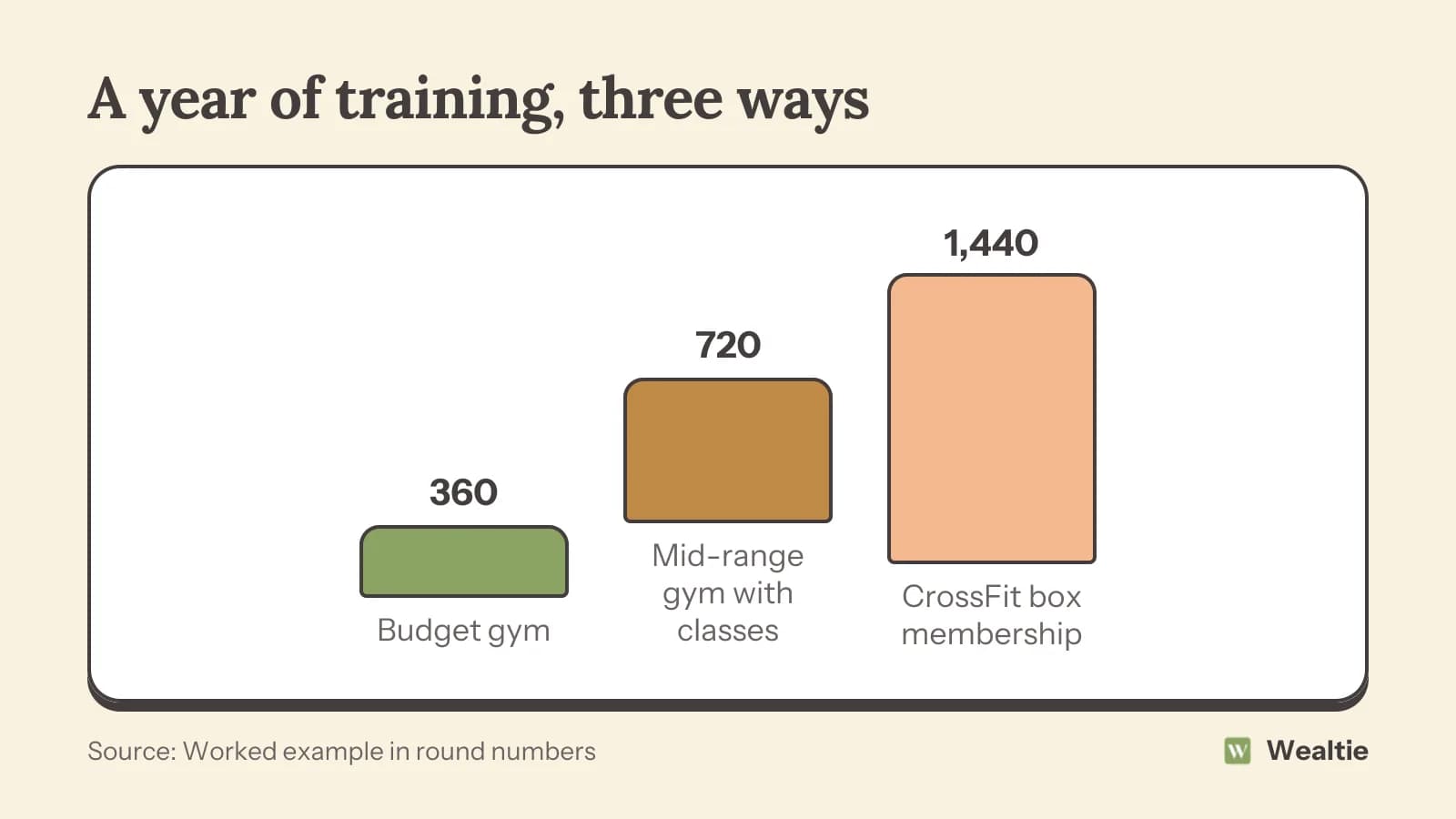
An unlimited CrossFit membership at around 120 a month costs 1,440 a year. A budget gym at 30 a month costs 360, and a mid-range gym with classes around 720. Prices vary a lot by area and box.
What are you paying for?
Coaching in every class
Each session is led by a coach who plans the workout, teaches technique and helps you scale movements to your level.
Programming
The box plans your training, so you don't have to design your own workouts.
Small groups and community
Many people stay motivated by training with the same group and coaches.
Equipment and space
Boxes are set up with barbells, rigs and other equipment for functional training.
What other costs are there?
Kit
Good training shoes, wrist wraps or grips might cost around 100. Most equipment is provided.
Foundations or on-ramp courses
Many boxes require a beginner course before joining classes, which may cost extra.
Competitions and events
Optional competitions and workshops add costs.
How do you pay less for CrossFit?
Choose a limited membership
Many boxes offer memberships for two or three classes a week at a lower price than unlimited.
Look for off-peak or student rates
Some boxes offer cheaper prices for quieter times or for students.
Pay upfront
Paying for several months at once can be cheaper than monthly, but only if you're committed.
Try before you buy
Free taster sessions or trial weeks let you test a box before signing up.
Mix with cheaper training
Some people combine fewer CrossFit classes with running or home workouts to keep costs down.
Is CrossFit worth the cost?
If the coaching and community keep you training consistently, the higher price can be worth it, since a gym membership you rarely use is poor value however cheap it is. If you're confident designing your own workouts, a regular gym may suit you better. Cost per use is a good way to compare: divide the monthly cost by how many sessions you attend.
How does it compare with other options?
How to save money on a gym membership covers getting more from a regular gym, and the cost of yoga classes covers another class-based option. How to save money on sports kit covers buying training gear for less.
Before joining, try classes at a couple of boxes if you can. Coaching style, class times, atmosphere and the level of other members vary a lot between gyms. A box where you feel welcome and well coached is more likely to keep you training, which makes the higher price better value. Ask about how they support beginners, since good boxes teach technique carefully before adding heavy weights.
Think about how many classes you'll realistically attend. Many people sign up for unlimited memberships but only go two or three times a week. Choosing a membership that matches your real routine can save hundreds a year. You can always upgrade if you find yourself going more often.
Some boxes offer discounts for couples, families, students, emergency workers or people who pay for several months upfront. It's worth asking, since these deals aren't always advertised.
Look after your body to protect your investment. Injuries can stop you training for weeks while you're still paying. Warming up properly, scaling workouts to your level and listening to coaches helps you train consistently.
If the cost is too high, some people use CrossFit-style programming at a regular gym or at home, joining a box only for occasional classes to learn technique.
Finally, review your membership every few months. Comparing what you pay with how often you train shows whether it's still worth it.
Many boxes freeze memberships for holidays or injuries if you ask, which avoids paying for weeks you can't train.
Ask whether the box offers a free community workout or open gym session each week, which can add extra training without extra cost.
How can Wealtie help you track fitness costs?
Add your membership as a recurring transaction in Wealtie, and log kit and extras in a fitness expense category. Comparing your monthly cost with the sessions you attend shows whether your membership is good value.
Questions people ask
In a worked example, an unlimited CrossFit membership cost about 1,440 a year, compared with 360 for a budget gym.
Classes are coached in small groups, with programming and equipment included, which costs more to run than an open gym.
Choose a limited membership, look for off-peak or student rates, try a trial week and mix classes with cheaper training.
It can be if the coaching and community keep you training consistently. Compare the cost per session you attend.
This article is general information, not financial, tax or legal advice. Your situation is your own; check the numbers that apply to you before you act on them.