Budgeting: The cost of cosplay: building costumes on a budget
The cost of cosplay ranges from almost nothing for a closet cosplay to hundreds for a detailed handmade costume, plus convention tickets and travel. In a worked example, one costume and a convention weekend cost 450.
 By Wealtie Team · 3 min read

Key takeaways
- The cost of cosplay depends on how detailed the costume is and how many events you attend.
- Closet cosplay and thrifted items keep costs low.
- Conventions add tickets, travel and accommodation.
- Reusing wigs, materials and props across costumes saves money.
What is the cost of cosplay?
Cosplay, dressing up as characters from films, games, comics and anime, is a creative and social hobby. Some cosplayers buy ready-made costumes, others spend months making detailed outfits and props, and many do a mix. The cost of cosplay depends on how detailed you want to be, how many costumes you make and how many conventions or events you attend.
Here's a worked example of one handmade costume and a convention weekend, in round numbers that work in any currency:
| Cost | Amount |
|---|---|
| Fabric and materials | 120 |
| Wig and makeup | 60 |
| Props and accessories | 50 |
| Convention ticket | 70 |
| Travel, food and accommodation | 150 |
| Total | 450 |
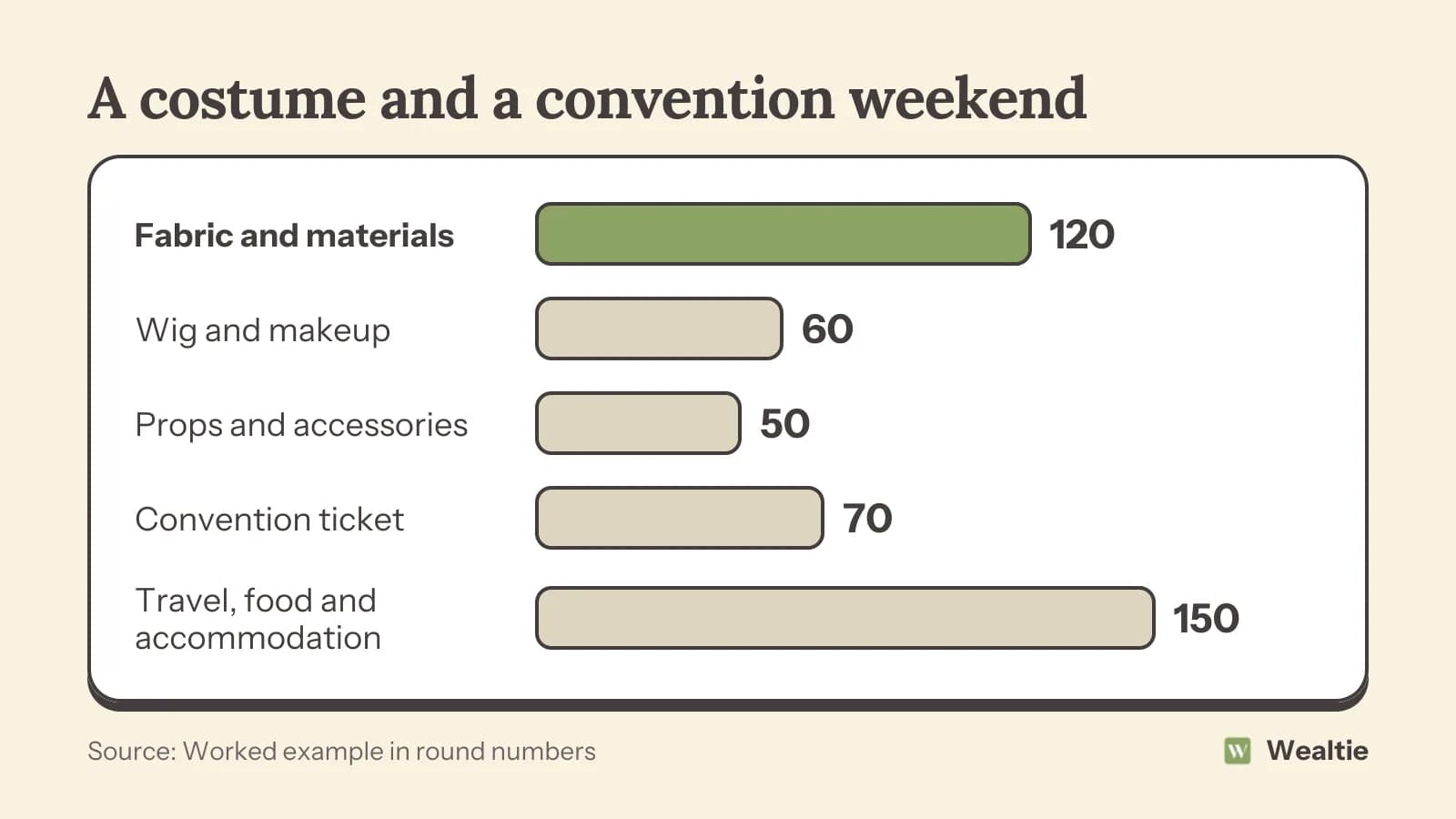
The costume comes to about 230 and the convention weekend to 220. A simple costume put together from clothes you already own could cost almost nothing, while a highly detailed costume with armour, lights and custom props could cost much more.
Should you buy or make a costume?
Buying
Ready-made costumes are quick and easy, and some are good value. Cheaper ones can be low quality, and popular characters' costumes can be expensive.
Making
Making your own lets you control quality and fit and is a big part of the fun for many cosplayers. It takes time and skills, and materials can add up if you're not careful.
Mixing both
Many cosplayers buy some parts, like a wig or base clothing, and make or modify the rest.
How do you cosplay on a budget?
Try closet cosplay
Choose characters whose outfits can be created from everyday clothes you already own or can find cheaply. Closet cosplay can look great for very little.
Thrift and upcycle
Charity shops and second-hand sites are full of clothes, fabrics and accessories that can be adapted. How to save money on clothes has more ideas for second-hand shopping.
Use cheap materials
Foam, cardboard and craft materials can make impressive props and armour for much less than specialist materials.
Reuse wigs and pieces
Wigs can be restyled, and base pieces like boots, gloves and leggings can be used across several costumes.
Plan before buying
Make a list of everything a costume needs and set a budget before you start. It's easy to keep buying extra materials as you go.
Share and swap
Cosplay communities often swap or sell costumes, wigs and props. Selling finished costumes can fund the next one. How to sell things you don't use covers selling online.
How do you keep convention costs down?
Book tickets early, share accommodation with friends, bring food and drinks where allowed and choose a few events a year rather than every one. Local events and meet-ups are often cheaper than big conventions. The music festival budget covers similar costs for another kind of event.
How does cosplay compare with other costume costs?
If you mostly dress up for Halloween or parties, the Halloween budget covers keeping costume spending low. For dedicated cosplayers, treating it like any hobby with a monthly budget keeps it enjoyable. How to save money on a hobby covers that approach.
Time is one of the biggest costs in cosplay, especially for handmade costumes. Planning projects well ahead of an event avoids last-minute panic buys and expensive express shipping. Breaking a costume into stages, like base clothing, wig, props and details, makes it easier to spread the cost over a few months and see where the money is going.
Learning a few basic skills, like simple sewing, foam crafting and wig styling, saves a lot over time, since you can make and adapt pieces yourself rather than buying them. Free online tutorials and community workshops make it easy to learn. Many cosplayers say learning new skills is one of the best parts of the hobby.
Choosing characters wisely helps too. Characters with simple outfits, everyday clothing or colours you already own are much cheaper to recreate than ones with complex armour or unusual materials. Some cosplayers keep a list of affordable characters for events where they don't want to spend much.
If you attend several conventions a year, consider which ones matter most and plan a budget for each. Smaller local events, meet-ups and photo shoots can give you plenty of chances to wear your costumes without big travel costs.
Finally, look after finished costumes, storing them carefully so they can be worn again or sold later, which spreads the cost over more events.
How can Wealtie help you track cosplay costs?
Log materials, wigs, props and convention costs in a hobby expense category, and set a budget for each costume or event. Seeing what each project costs helps you plan the next one.
Questions people ask
It varies widely. In a worked example, one handmade costume and a convention weekend cost about 450.
Making can be cheaper with thrifted and craft materials, but detailed handmade costumes can cost more than buying.
Closet cosplay means creating a character's look from everyday clothes you already own or can find cheaply.
Try closet cosplay, thrift and upcycle, use foam and craft materials, reuse wigs and plan a budget before you start.
This article is general information, not financial, tax or legal advice. Your situation is your own; check the numbers that apply to you before you act on them.