Budgeting: How to plan a Halloween budget for costumes, sweets and parties
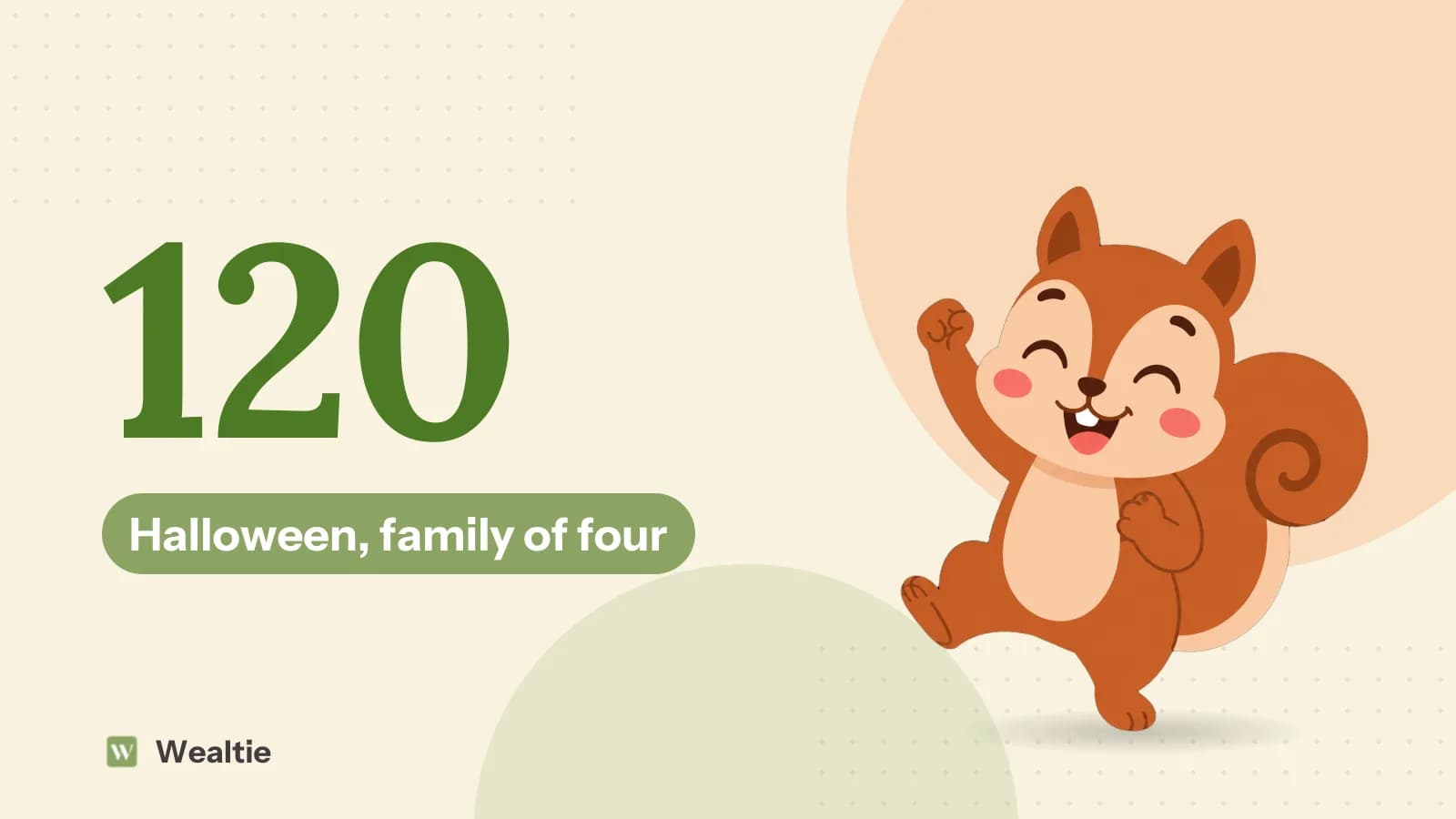
A Halloween budget covers costumes, sweets for trick-or-treaters, decorations and any parties, and it's easy to overspend in the shops in October. In a worked example, Halloween for a family of four costs about 120, and homemade costumes and reused decorations keep it low.
 By Wealtie Team · 3 min read
Key takeaways
- A Halloween budget covers costumes, sweets, decorations and parties.
- In a worked example, Halloween for a family of four costs about 120.
- Homemade and swapped costumes are the biggest saving.
- Decide how many sweets to buy before you shop, since big bags are easy to overbuy.
How do you plan a Halloween budget?
List what your household does for Halloween, set an amount for each part, and stick to it in the shops. Halloween can be lots of fun, especially for children, but shops fill with costumes, decorations and sweets weeks in advance, and it's easy to spend more than you meant to. A simple Halloween budget keeps the fun without the cost creeping up.
How big Halloween is varies a lot between countries and families, so plan around how you celebrate.
What does Halloween cost?
Here's a worked example for a family of four, in round numbers that work in any currency:
| Cost | Amount |
|---|---|
| Costumes | 50 |
| Sweets for trick-or-treaters | 30 |
| Decorations | 20 |
| Pumpkins and party food | 20 |
| Total | 120 |
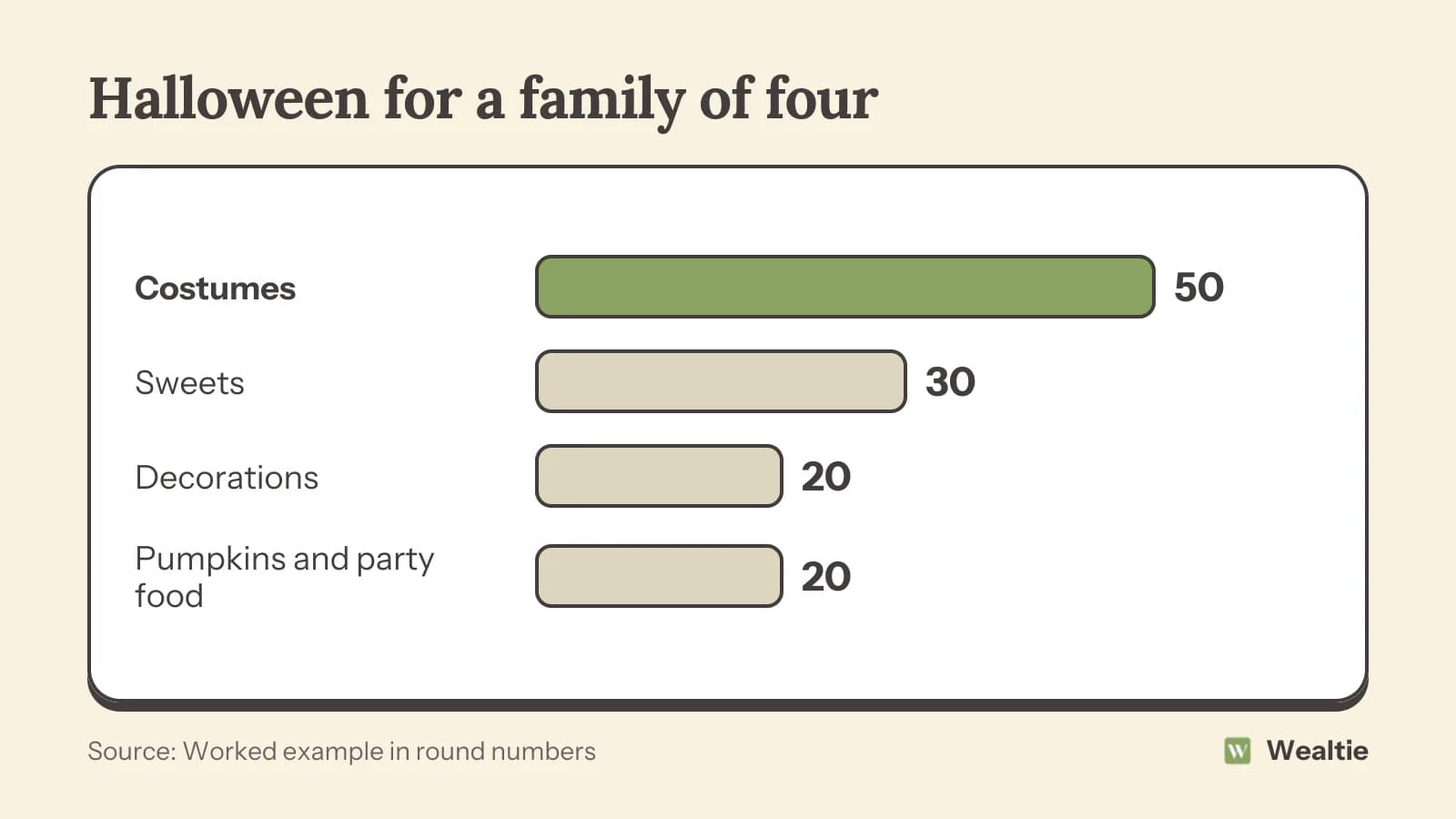
Your figures depend on how many costumes you need, whether you host a party and how many trick-or-treaters visit.
How do you save on costumes?
Make, swap or reuse them. Shop-bought costumes can cost 30 or more each, and are often worn once. In the worked example, four bought costumes would cost about 120 on their own, against 50 for a mix of homemade and second-hand ones. Ideas that cost little:
- Build a costume from clothes you already own, with a few accessories
- Swap costumes with friends or at a school or community swap
- Buy second-hand from charity shops or online selling groups
- Use face paint and simple props instead of full outfits
- Let children help make their own, which is part of the fun
How to buy second-hand has tips for finding good pieces. After Halloween, keep costumes in a dressing-up box for next year or for play.
Shop after Halloween
Costumes and decorations are often heavily reduced in the days after Halloween. If you know you'll celebrate next year, buying then can save a lot. Planning costumes a few weeks ahead also avoids last-minute buying, when choice is limited and prices are highest.
How do you save on sweets?
Decide how many you need before you shop. Think about how many trick-or-treaters came last year, and buy enough for them plus a few extra. Big multipacks are often cheaper per sweet, but it's easy to buy more than you need and eat the rest. Some households give one or two sweets per child, or offer small non-food treats like stickers. Leftover sweets can go into lunchboxes, and chocolate freezes well for baking.
If you're out trick-or-treating yourself, there's no need to buy for the door as well. A sign or turning off the porch light signals you're not handing out sweets.
How do you decorate cheaply?
Reuse and make. Decorations can be stored and used every year, so add one or two new pieces at most. Homemade decorations, like paper bats, cotton wool cobwebs, painted jars and carved pumpkins, cost very little and make a fun family activity. Use pumpkin flesh for soup or pie, so nothing goes to waste. A few candles or lanterns create more atmosphere than lots of shop-bought decorations.
How do you host a Halloween party on a budget?
Keep it simple. A small gathering with themed snacks, games and a costume contest can be just as fun as a big party. Ask guests to bring a dish, make food that's easy to theme with names and decorations, and use games that cost nothing, like apple bobbing or a spooky story competition. Setting a start and end time keeps a party manageable, and a short afternoon gathering needs less food than an evening one. How to host dinner on a budget has more ideas for feeding a group.
Parties for children
For children, a few friends, a film and some homemade treats can be the highlight. The kids' birthday party budget covers similar parties if you want more ideas.
How do you stop Halloween spending creeping up?
Set your total before October starts, and decide what's included. Shops put Halloween items near the entrance and by the tills to encourage impulse buys. Having a list and a limit makes it easy to walk past. Agreeing the plan with children beforehand, including what they'll dress as and how much they can spend, avoids negotiations in the shop. If they're trick-or-treating, a torch or reflective tape for each child costs little and keeps them visible. Halloween also falls close to other autumn and winter celebrations, so keeping it small leaves room in the budget for what comes next.
How do you track Halloween spending in Wealtie?
Log costumes, sweets and decorations in a Holidays or Celebrations category in your expense categories, so you can see what Halloween cost and plan next year. A monthly limit in the budget tracker, with Budget Health, keeps October spending on track.
Questions people ask
In a worked example, a family of four spends about 120 on costumes, sweets, decorations and party food.
Make costumes from clothes you own, swap with friends, buy second-hand or use face paint and simple props.
Enough for last year's trick-or-treaters plus a few extra. Decide before you shop to avoid overbuying.
In the days after Halloween, when shops reduce costumes and decorations heavily.
This article is general information, not financial, tax or legal advice. Your situation is your own; check the numbers that apply to you before you act on them.