Budgeting: The cost of birdwatching: binoculars, guides and trips
The cost of birdwatching can be very low: a pair of binoculars, a field guide or free app and somewhere to walk are all you need. In a worked example, a first year costs about 200, including binoculars, a guide and a nature reserve membership.
 By Wealtie Team · 3 min read
Key takeaways
- The cost of birdwatching can be very low.
- In a worked example, a first year costs about 200.
- Binoculars are the one item worth spending a little on.
- Your garden, local park and free apps are enough to start.
What is the cost of birdwatching?
Birdwatching, or birding, is one of the cheapest hobbies you can take up. Birds are everywhere: in gardens, parks, rivers, coasts and city streets. You can start today by looking out of the window and noticing what visits. Most people soon want a pair of binoculars to see birds more clearly, a field guide or app to identify them, and perhaps a feeder to bring birds closer. In a worked example, a first year costs about 200, including binoculars, a guide, a feeder and a membership to a local nature reserve.
Birdwatching also gets you outdoors, walking and noticing the seasons, which many people find calming. It's easy to fit around other commitments, since you can do it for five minutes or a whole day. Many birders keep a simple list of the species they've seen, which turns every walk into a small treasure hunt and costs nothing at all.
The hobby can grow as much or as little as you like. Some people are happy watching their garden feeder with a cup of tea. Others travel to see rare birds and keep detailed lists. The cost follows the same pattern, so you can decide how far to take it.
What does a first year of birdwatching cost?
Here's a worked example, in round numbers that work in any currency:
| Item | First year |
|---|---|
| Binoculars | 100 |
| Nature reserve membership | 50 |
| Field guide | 20 |
| Bird feeder and seed | 30 |
| Total | 200 |
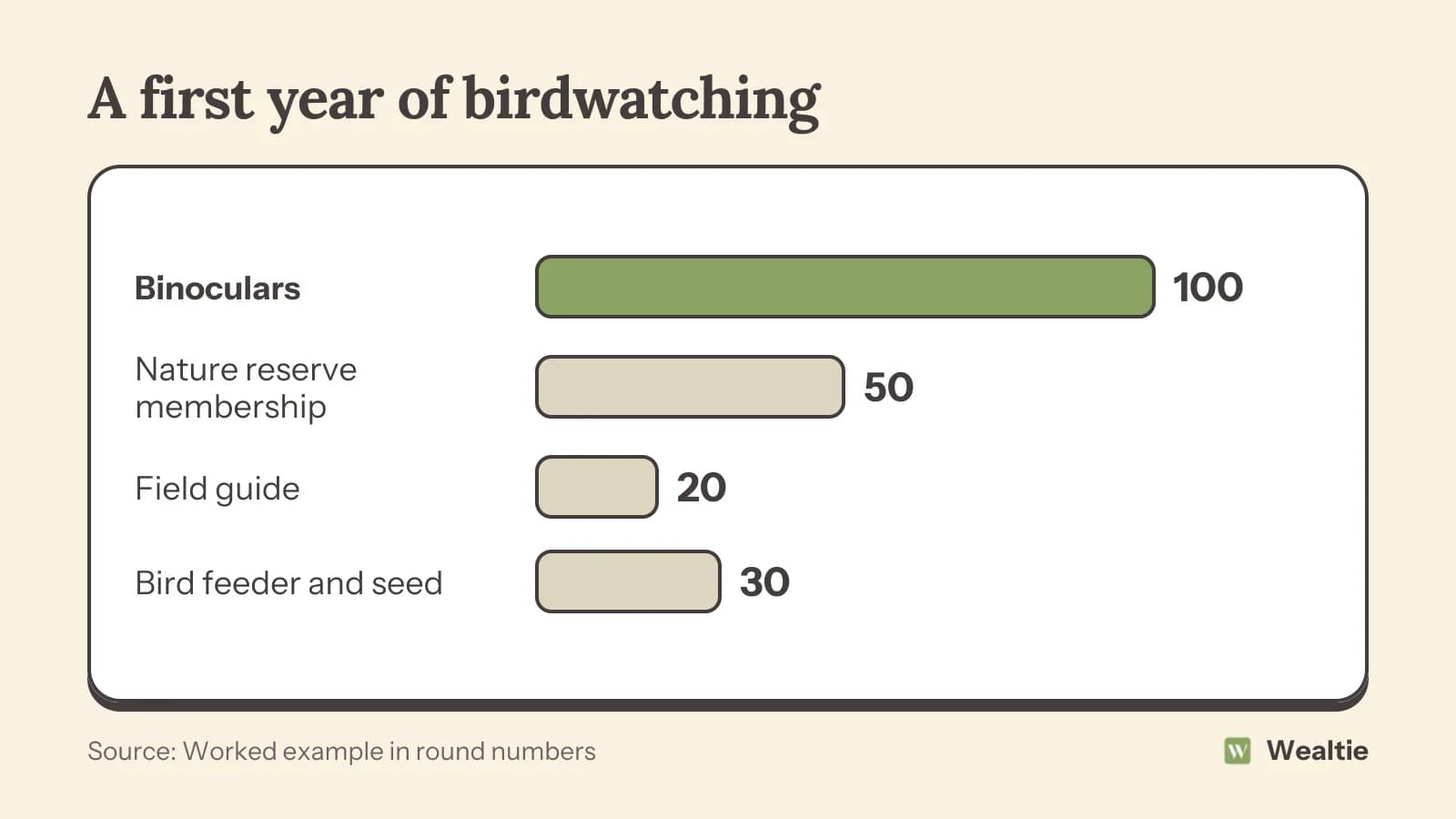
Without a membership, the cost drops to about 150. If you already own binoculars, it's even less.
What are the main birdwatching costs?
Binoculars
Binoculars are the one item worth spending a little on. A decent pair makes birds sharper and brighter, which makes identifying them far easier and more fun. Very cheap binoculars can be blurry and tiring to use. Mid-range pairs, or good second-hand ones, are often the best value. Try a few pairs before buying if you can, since comfort and weight matter when you carry them for hours.
Field guides and apps
A field guide helps you identify birds by their shape, colours and habits. Free apps can identify birds by photo or song, which is very helpful for beginners. Libraries often have field guides to borrow. A guide for your own region is more useful than a big book covering the whole world, since it shows only the birds you're likely to see. Learning the common birds well first makes the rarer ones easier to spot later.
Feeders and seed
A feeder in the garden brings birds close enough to learn them well. Seed is an ongoing cost, but a small one. Planting native shrubs and leaving some areas a bit wild attracts birds for free.
Memberships
Nature reserves and wildlife charities often charge a yearly membership, which gives free entry to reserves and supports conservation. Many reserves are free to visit anyway.
What else adds to the cost of birdwatching?
Travel is the main extra cost. Trips to the coast, wetlands or famous birding spots add fuel and sometimes overnight stays. A telescope for watching distant birds on estuaries and lakes is a big step up in cost. Cameras with long lenses for bird photography can cost far more than everything else combined. Outdoor clothing and waterproof boots help on long days. Birding holidays abroad are wonderful but expensive. None of these is needed to enjoy the hobby, so add them only if you find you want them.
How can you enjoy birdwatching for very little?
Start in your garden or local park. Use a free app and borrow a field guide from the library. Buy a good second-hand pair of binoculars. Join free guided walks run by local wildlife groups, where experienced birders help you learn. Visit free reserves, and combine birding with walks you'd take anyway. How to save money on a hobby has more tips, and the staycation budget covers planning cheap breaks close to home, which can include good birding spots.
Make your garden bird-friendly
Native plants, a small pond and a few feeders bring more birds without much cost. How to save money on gardening covers growing on a budget. Work out the cost per use of binoculars you use every week: even a mid-range pair costs very little per outing over a few years.
How do you track birdwatching costs in Wealtie?
Add a hobby category to your expense categories and set a budget for it, so you can see what you spend on equipment, memberships and trips over a year.
Questions people ask
In a worked example, a first year costs about 200 for binoculars, a field guide, a bird feeder and a nature reserve membership.
A pair of binoculars and a field guide or free app. You can start in your garden or local park.
Enough for a decent mid-range pair, since very cheap ones can be blurry. Good second-hand pairs are often the best value.
No. It can cost very little. Costs rise only with travel, telescopes, cameras and birding holidays.
This article is general information, not financial, tax or legal advice. Your situation is your own; check the numbers that apply to you before you act on them.