Budgeting: The cost of astronomy as a hobby: telescopes and what to buy first
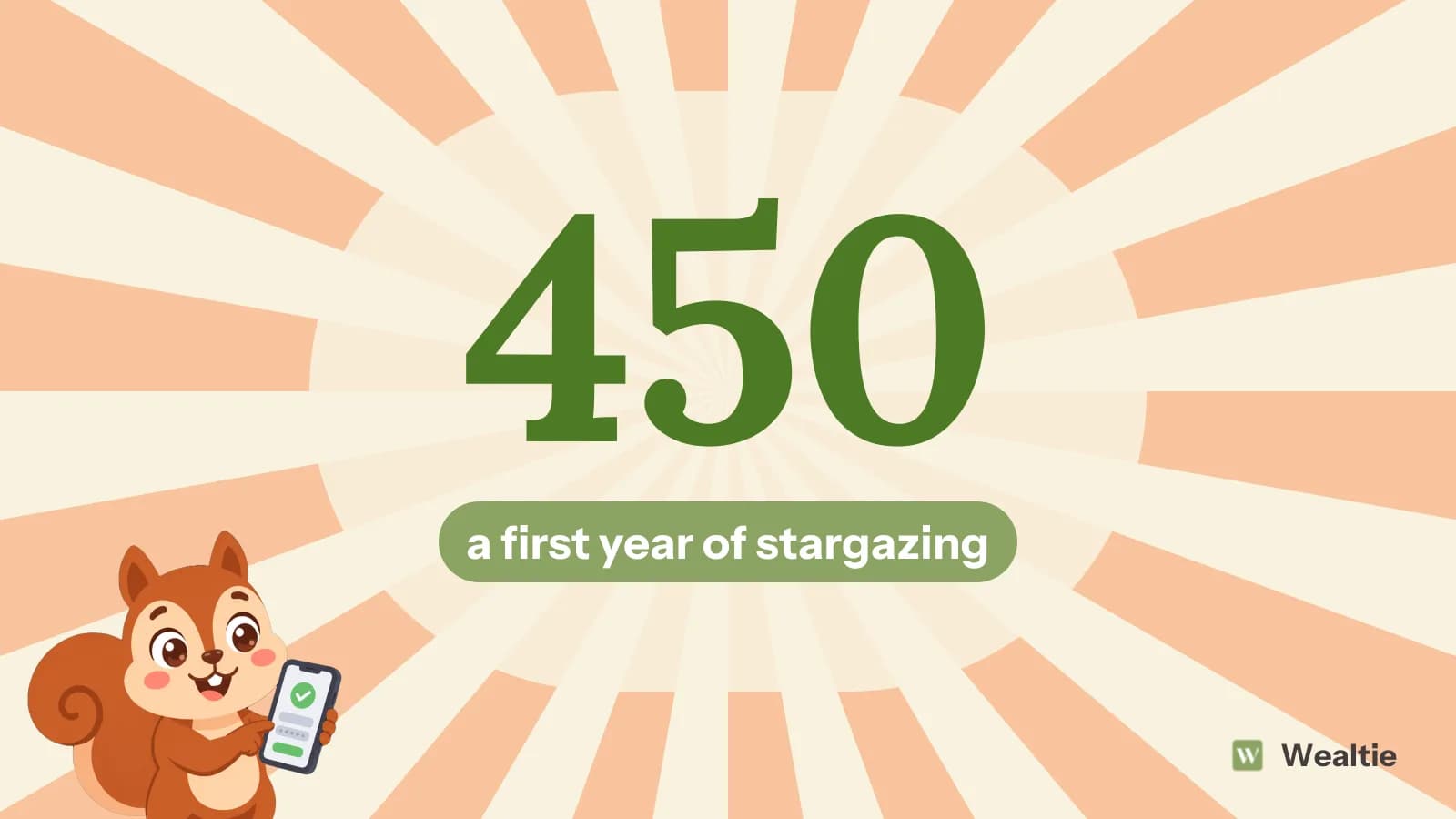
The cost of astronomy as a hobby can start at almost nothing with your eyes, a free app and a pair of binoculars, and grows once you buy a telescope. In a worked example, a first year with binoculars and a beginner telescope costs about 450.
 By Wealtie Team · 3 min read
Key takeaways
- The cost of astronomy as a hobby can start at almost nothing.
- In a worked example, a first year with binoculars and a beginner telescope costs about 450.
- Binoculars are a cheap, useful first step before a telescope.
- A local astronomy club lets you try telescopes before buying.
What is the cost of astronomy as a hobby?
Astronomy is one of the few hobbies you can start for free. Step outside on a clear night, let your eyes adjust to the dark, and use a free app or a star chart to find constellations, planets and the Moon. From there, a pair of binoculars shows far more, and a telescope opens up craters, the rings of Saturn and distant galaxies. In a worked example, a first year with binoculars and a beginner telescope costs about 450.
The biggest risk is spending too much too soon. Expensive telescopes can be complicated to set up and heavy to carry, and many end up unused in a cupboard. Starting simple and building up as you learn is cheaper and often more enjoyable.
Learning the sky is free and makes any equipment you buy later far more useful. Spend a few months finding the main constellations, following the Moon through its phases and spotting the brighter planets. Once you know where to look, a telescope becomes a tool for seeing more, rather than a puzzle you can't work out. Many people find that a pair of binoculars and a good chart keep them busy for a year or more before they feel the need for anything bigger.
What does a first year of astronomy cost?
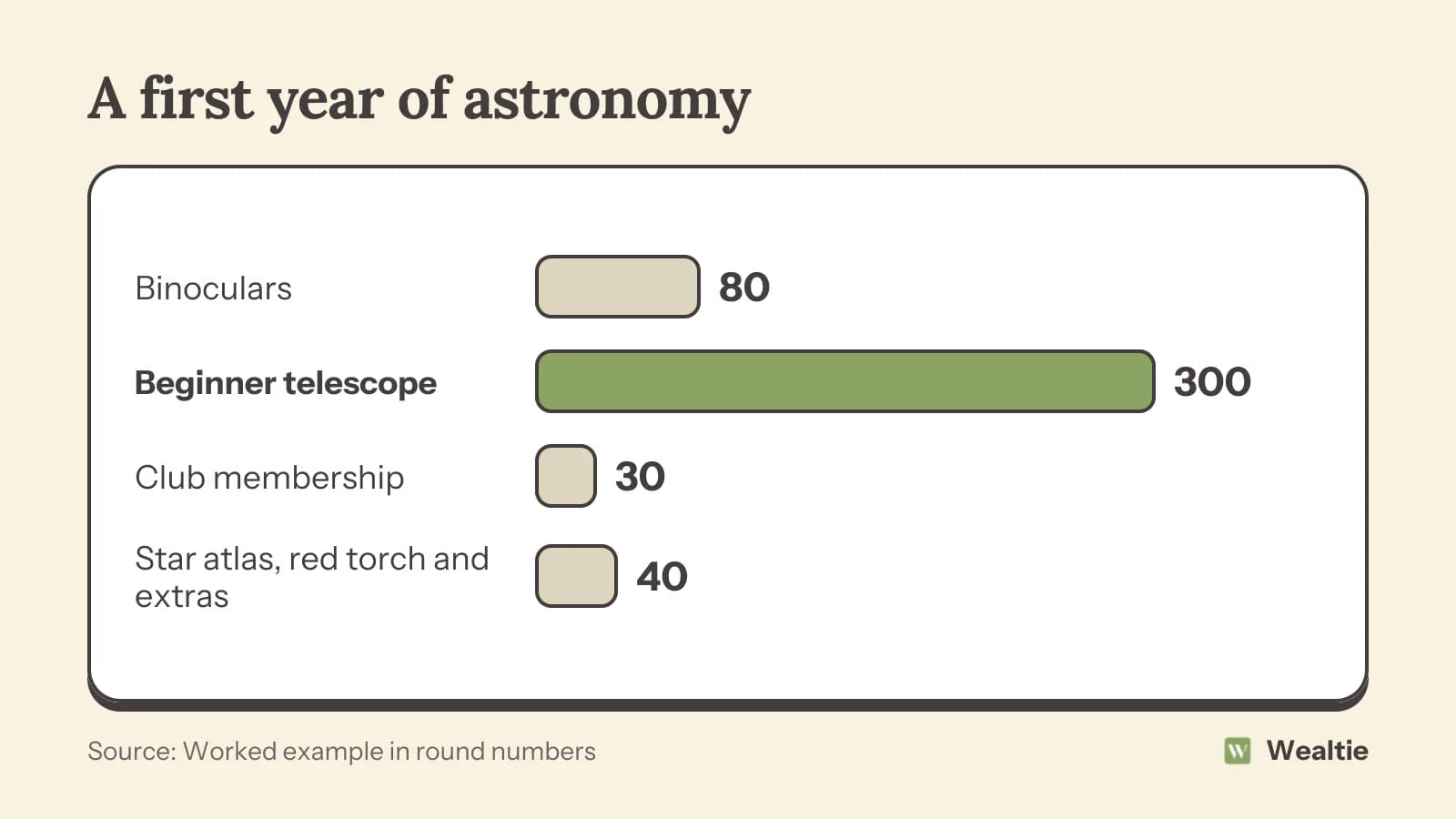
Here's a worked example, in round numbers that work in any currency:
| Item | First year |
|---|---|
| Binoculars | 80 |
| Beginner telescope | 300 |
| Club membership | 30 |
| Star atlas, red torch and extras | 40 |
| Total | 450 |
A red torch keeps your night vision while you read charts. A star atlas or a paid app helps you find objects.
What are the main costs of astronomy?
Binoculars
Binoculars are often the best first purchase. They're easy to use, show the Moon's craters, star clusters and Jupiter's moons, and are useful for birdwatching and travel too. A good pair costs much less than a telescope.
A first telescope
Beginner telescopes come in several designs. Simple, sturdy ones that are easy to set up and point tend to get used most. Very cheap telescopes with shaky mounts can be frustrating, so it's worth spending a little more on a solid one, or buying a good second-hand model.
Accessories
Extra eyepieces, filters and a finder scope can improve what you see. Add them slowly, once you know what you want to look at.
Clubs and events
Astronomy clubs are often cheap to join and hold observing evenings where members share telescopes. It's the best way to try different types before buying.
What else adds to the cost of astronomy as a hobby?
Travel to dark-sky sites away from city lights can add fuel and sometimes overnight stays. Warm clothing matters, since you'll be standing still outside on cold nights. Astrophotography, taking pictures of the night sky, is a big step up in cost, with cameras, tracking mounts and software. Larger telescopes need storage space and can be hard to move. Upgrades are tempting, so a yearly budget helps keep spending in check.
Weather is a cost of a different kind. Clear nights can be rare in some places and seasons, so an expensive telescope may get less use than you expect. It's another reason to start small and see how often you head outside before spending more. Portable equipment that's quick to set up tends to get used more on those short gaps between clouds.
How can you enjoy astronomy for less?
Start with your eyes, a free app and binoculars. Join a local club to use members' telescopes and learn from experienced observers. Buy a telescope second-hand from a club member or a reputable dealer. Look out for free public stargazing events, which many observatories and clubs run during meteor showers and eclipses. Combining stargazing with a camping trip to a dark place makes a cheap night out. The camping trip budget covers planning one.
Avoid gear creep
It's easy to keep buying eyepieces, filters and gadgets. Use what you have for a few months before adding more. How to save money on a hobby and how to save money on electronics have more tips. Work out the cost per use before buying a big telescope: one you'll use often is better value than an impressive one that's hard to set up.
How do you track astronomy costs in Wealtie?
Add a hobby category to your expense categories and set a budget for it, so you can see what you spend on equipment, clubs and trips over a year.
Questions people ask
In a worked example, a first year with binoculars, a beginner telescope, club membership and a few extras costs about 450.
Binoculars are often the best first step. They're cheap, easy to use and show a lot.
Enough for a sturdy, easy-to-use model. Very cheap telescopes with shaky mounts can be frustrating.
Join a local astronomy club, where members share telescopes at observing evenings.
This article is general information, not financial, tax or legal advice. Your situation is your own; check the numbers that apply to you before you act on them.