Budgeting: The cost of cooking classes, and whether they pay off
The cost of cooking classes ranges from free online videos to pricey one-off experiences, and better skills can save money on takeaways. In a worked example, a six-week course costs 240 and helps cut 20 a week in takeaways.
 By Wealtie Team · 3 min read
Key takeaways
- The cost of cooking classes ranges from free videos to expensive experiences.
- Community and adult education courses are often the best value.
- Better cooking skills can cut takeaway and ready meal spending.
- Choose practical classes you'll use every week.
What is the cost of cooking classes?
Cooking classes can teach you new recipes, build confidence in the kitchen and make cheap, healthy meals easier to prepare. The cost of cooking classes varies a lot, from free online videos to one-off experiences with well-known chefs. Courses that run over several weeks often give the best value for learning practical skills.
Here's a worked example of common options, in round numbers that work in any currency:
| Option | Cost |
|---|---|
| Free online videos | 0 |
| Community course, 6 weeks | 120 |
| Cookery school course, 6 weeks | 240 |
| One-off chef experience | 150 |
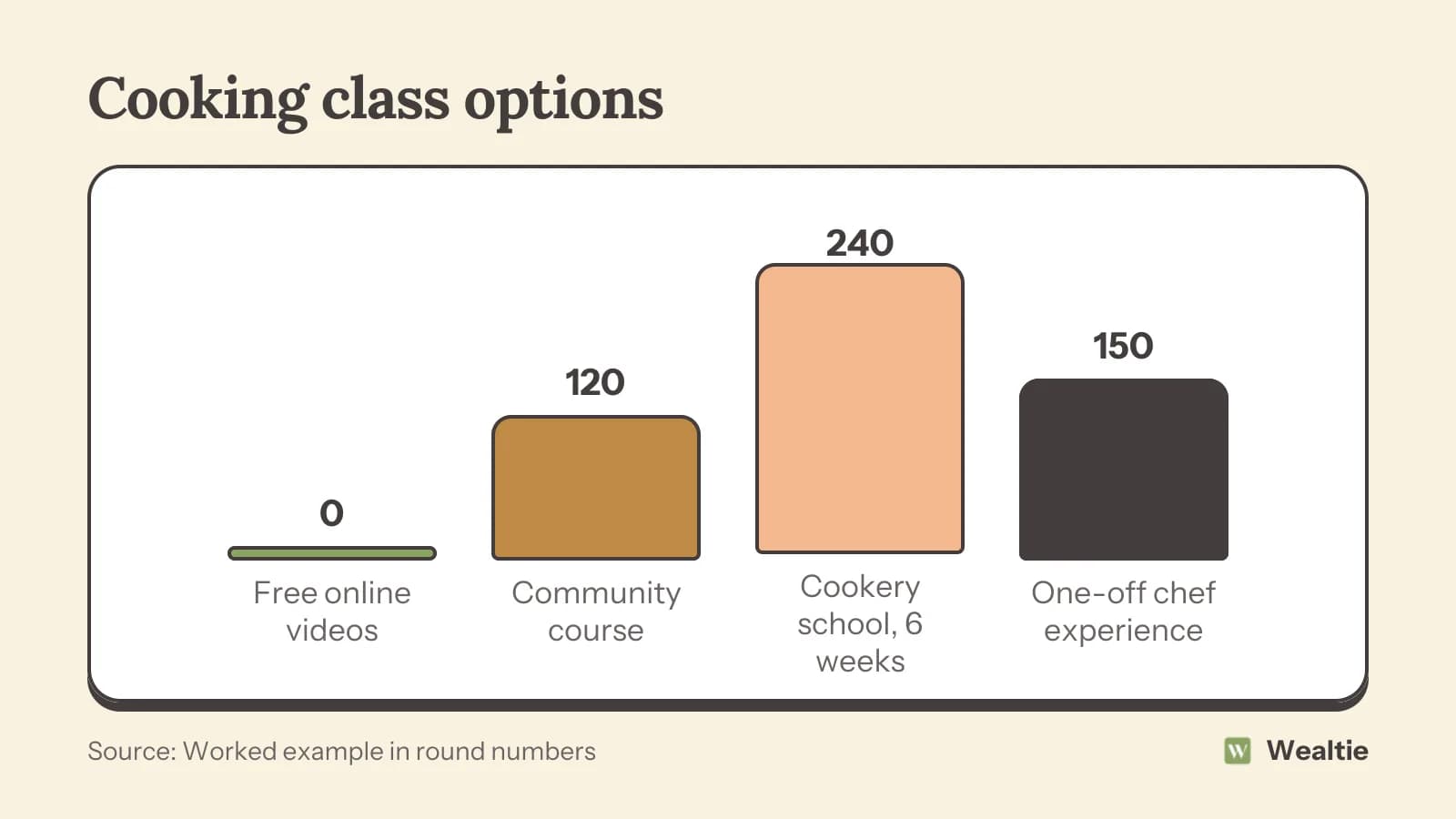
A six-week community or adult education course might cost around 120, while a cookery school course might cost 240. A one-off experience with a chef can cost 150 for a single session, which is fun but teaches less. Free online videos can be enough for confident learners.
Can cooking classes save money?
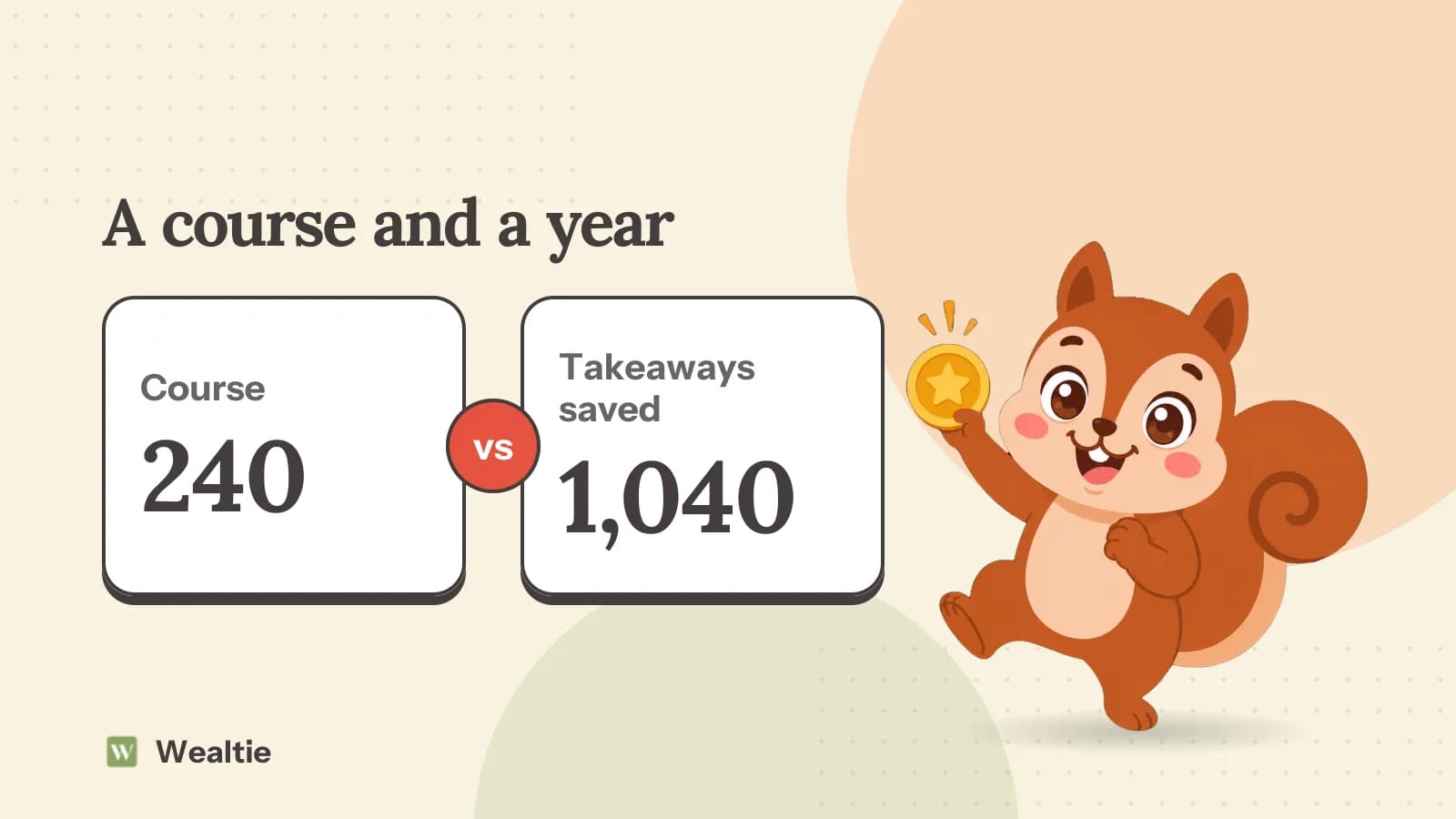
If better cooking skills help you swap two takeaways a week for homemade meals, saving around 20 a week, that's about 1,040 a year. A 240 course would pay for itself in a few months. The key is choosing practical classes you'll use regularly, like batch cooking, budget meals or basic techniques. How to plan meals on a budget and how to save money eating out cover putting those skills to work.
What types of classes are there?
One-off sessions
Single classes on a theme, like pasta, bread or a cuisine. Fun as a treat or gift, but limited for building skills.
Courses
Weekly classes over several weeks that build skills step by step. Often the best value for learning.
Community and adult education classes
Often cheaper than private cookery schools, sometimes with discounts for people on lower incomes.
Online classes
Free videos and paid online courses let you learn at home at your own pace.
Specialist classes
Baking, knife skills, plant-based cooking and international cuisines can help you focus on what you enjoy.
How do you find cheap cooking classes?
Check community centres and colleges
Local adult education programmes often offer affordable courses.
Look for free online content
Many chefs and home cooks share free recipes and techniques online.
Learn with friends or family
Cooking together with someone more experienced costs nothing.
Choose practical topics
Budget cooking, batch cooking and basic skills give the best return.
Watch for offers
Some cookery schools offer discounts on weekday classes or gift vouchers in sales.
Are cooking classes a good gift?
A cooking class can be a memorable gift for a birthday or anniversary, and it's an experience you can share. For a cheaper option, cooking a special meal together at home can be just as enjoyable. How to host a dinner on a budget has ideas.
How do you make the most of a class?
Practise what you learn at home within a week, while it's fresh. Writing down recipes and cooking them again builds confidence. Cost per use is a good way to think about it: the more you use the skills, the better value the class.
Think about what you want to learn before booking. If your goal is to save money and eat better, classes on budget meals, batch cooking or basic knife skills will pay off quickly. If you love a particular cuisine, a specialist class can be a great treat, but it may not change your everyday cooking as much. Matching the class to your goal helps you get the best value.
Cooking with others can make learning more fun and affordable. Some friends take turns hosting cooking nights, where one person teaches a dish they're good at while everyone else helps and shares the cost of ingredients. It's a cheap night in and a way to pick up new recipes.
Children and teenagers benefit from learning to cook too. Simple classes or cooking together at home teach skills that save money for life, especially when they leave home.
Keep a notebook or digital file of recipes you've learned and enjoyed. Cooking them regularly builds confidence and turns a one-off class into a lasting habit.
Finally, track your takeaway and eating-out spending before and after a course. Seeing the difference shows whether the class has paid for itself and motivates you to keep cooking.
Some supermarkets, food halls and community kitchens run free or very cheap demonstrations and workshops, which are worth looking out for.
How can Wealtie help you see the savings?
Log cooking classes and groceries in their own expense categories, and track takeaway spending alongside them. Setting a monthly budget for eating out shows whether new skills are helping you spend less.
Questions people ask
In a worked example, a six-week community course cost about 120 and a cookery school course 240, while a one-off chef experience cost 150.
They can if they help you cook instead of buying takeaways. In a worked example, swapping two takeaways a week saved about 1,040 a year.
Community centres, adult education colleges, free online videos and cooking with experienced friends or family.
Practical courses you use every week are often worth it. One-off experiences are fun but teach less.
This article is general information, not financial, tax or legal advice. Your situation is your own; check the numbers that apply to you before you act on them.