Income & freelancing: Contractor or employee? How to compare the money
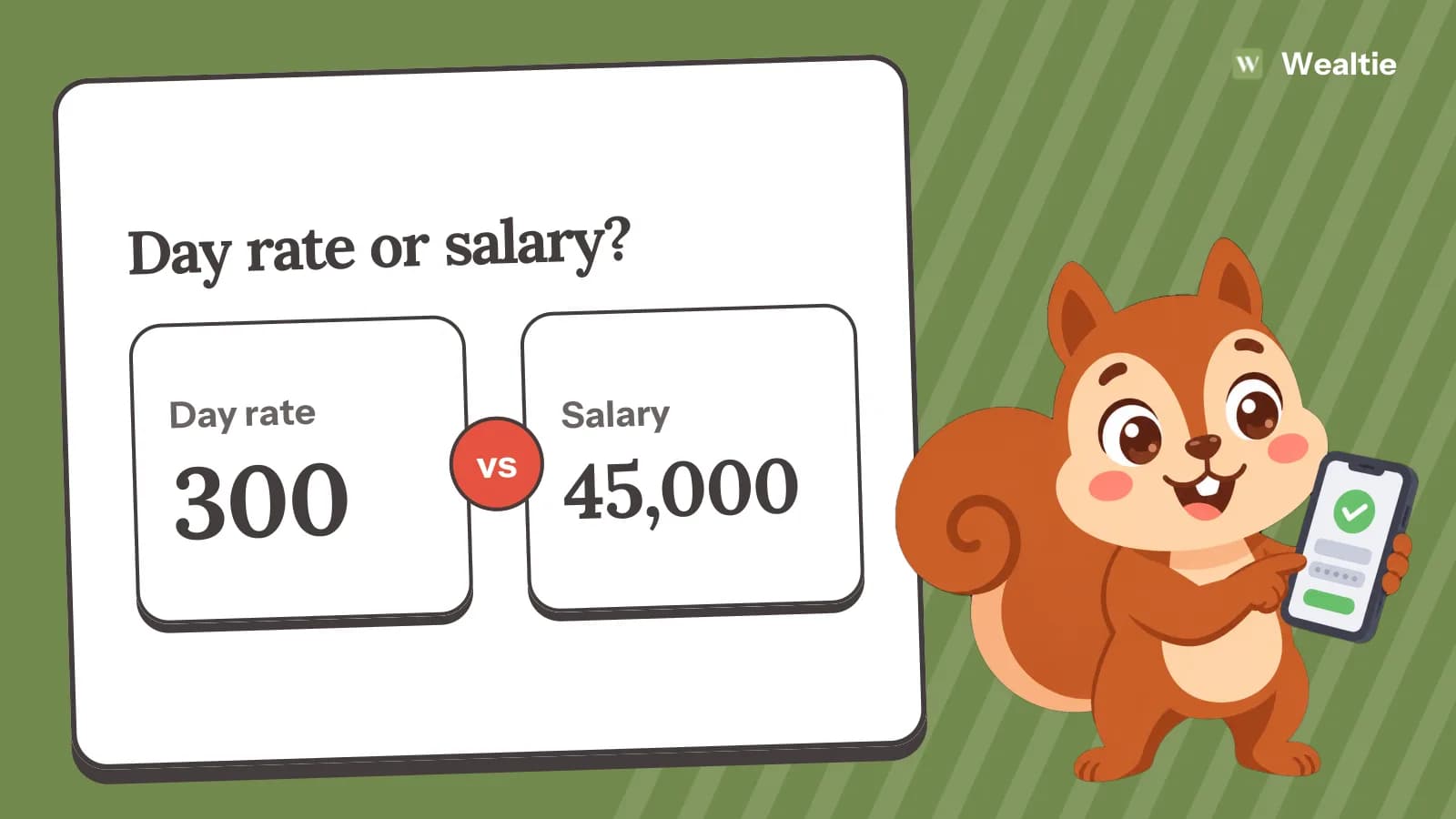
To compare contractor vs employee pay, convert the day rate into a yearly figure after unpaid days, tax and business costs, then compare it with a salary plus benefits. In a worked example, a 300 day rate works out similar to a 45,000 salary once holidays, gaps and costs are counted.
 By Wealtie Team · 3 min read
Key takeaways
- Compare contractor vs employee pay on a yearly basis, after unpaid days and costs.
- In a worked example, a 300 day rate works out similar to a 45,000 salary.
- Contractors don't get paid holiday, sick pay or employer pension, so the rate must cover them.
- Plan for gaps between contracts with a bigger buffer than an employee would need.
How do you compare contractor vs employee pay?
Turn the day rate into a yearly figure, then subtract what an employer would normally pay for. A contractor's day rate often looks much higher than an employee's salary, but contractors don't get paid holiday, sick pay, employer pension contributions or paid training, and they usually have gaps between contracts. Comparing contractor vs employee pay properly shows whether the higher rate is worth it. It also helps you set a day rate that leaves you better off, not just busier.
Tax rules for contractors vary a lot between countries and business structures, so get advice on your own situation. Some countries also have rules about when contractors are treated as employees for tax, which can change the numbers.
How does a day rate compare with a salary?
Here's a worked example for a 300 day rate, in round numbers that work in any currency:
| Amount | |
|---|---|
| Billed days in a year | 200 |
| Income from 300 a day | 60,000 |
| Business costs, like insurance, software and accounting | 3,000 |
| Own pension and income protection | 6,000 |
| Left before tax | 51,000 |
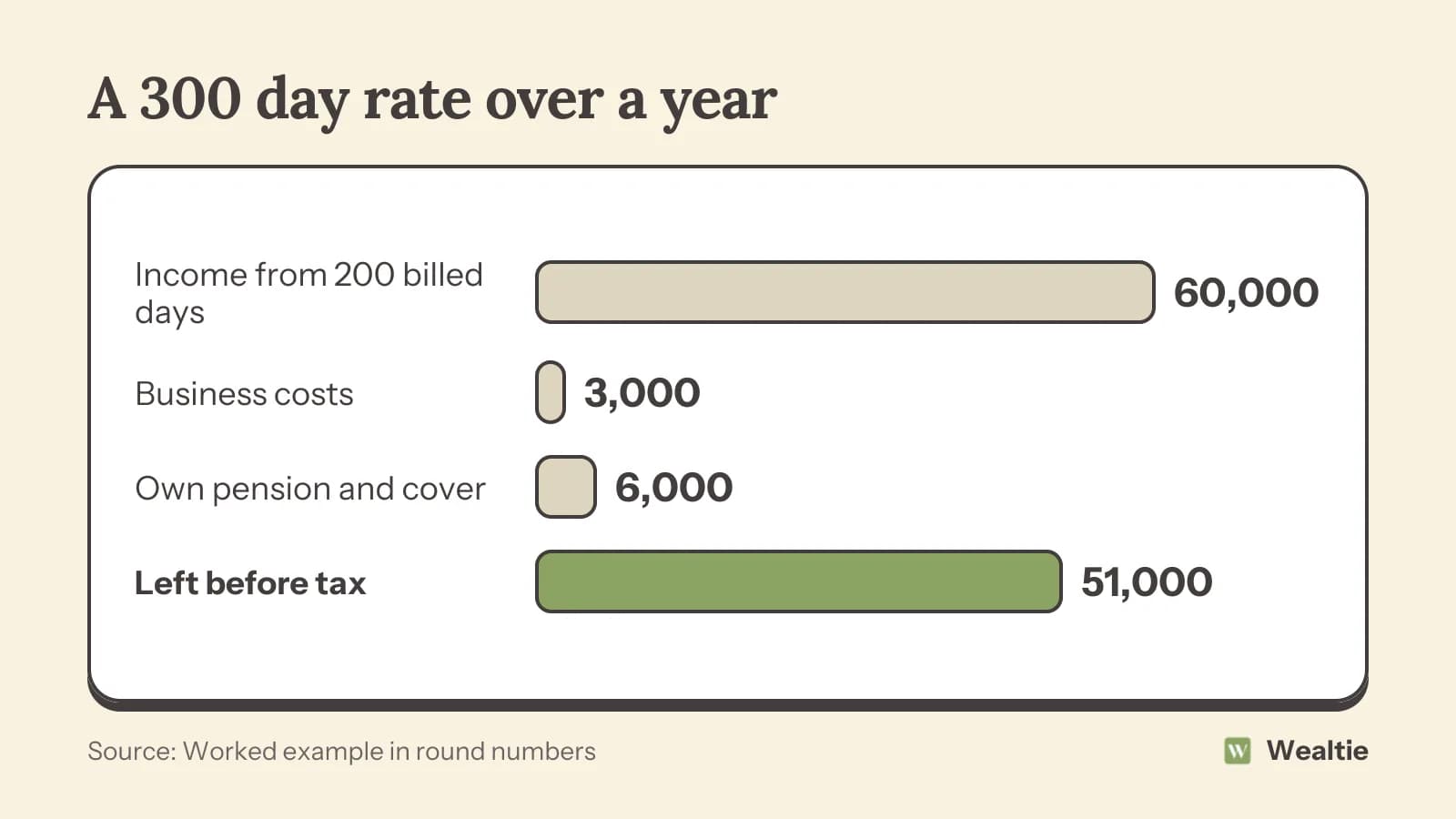
An employee with a 45,000 salary might also get employer pension, paid holiday and sick pay. In this example, the two are fairly close, though tax differences can change the picture. The contractor also carries more risk, which is part of why rates are higher. Freelance rate to salary covers the conversion in more detail.
Why only 200 days?
A year has about 260 working days. Take off holidays, public holidays, sick days, training and gaps between contracts, and many contractors bill around 200 days or fewer. Using 260 days in your sums makes a day rate look far better than it is. If you're new to contracting, a cautious estimate, like 180 days, is safer for the first year.
What does an employee get that a contractor doesn't?
Usually:
- Paid holiday and public holidays
- Sick pay
- Employer pension contributions
- Benefits like health cover or life insurance
- Job security and notice periods
- Paid training and equipment
Each has a value. A contractor's rate needs to cover these, or the contractor needs to accept going without them. Writing down what each would cost you to replace shows how much higher your rate needs to be.
What are the advantages of contracting?
Contracting can offer higher pay for in-demand skills, more control over your work, variety and the freedom to take breaks between contracts. Some contractors can also claim business costs against tax, depending on the rules where they live. For people who like change and are confident of finding work, it can be a good fit. Contracting can also build a wide network and experience across different organisations.
What are the risks?
Income is less certain. Contracts end, sometimes early, and finding the next one can take time. There's no sick pay if you're ill, and you're responsible for your own tax, pension and admin. Late payments from clients can also leave you waiting for money you've earned. How to set aside money for taxes covers one of the biggest responsibilities. Many contractors use an accountant, which is another cost to include, but can save money and stress.
Build a bigger buffer
Contractors usually need a larger emergency fund than employees, often several months of costs, to cover gaps between contracts. How to save before going freelance covers building one. Keeping your rate and skills up to date, and staying in touch with past clients, helps shorten gaps.
How do you decide?
Do the sums for your own rate and likely days, then think about what matters to you: security, flexibility, variety or pay. Some people move between contracting and employment at different stages of life. A mortgage application, for example, can be easier with a few years of steady contracting history or a permanent job. How to set your freelance rate helps if you're choosing a rate.
Try it in stages
Some people take a short contract between permanent jobs to test contracting before committing. Others keep a small amount of contract work alongside employment. Both let you see the money and lifestyle before making a big change.
How do you track contract income in Wealtie?
Log each payment in the income tracker, and move a share into separate accounts for tax and pension as soon as it arrives. Track business costs in their own expense categories. Pro adds income analytics to compare months and contracts.
Questions people ask
Multiply the rate by realistic billed days, often about 200, then subtract business costs, pension and insurance.
Often on paper, but once unpaid days and costs are counted, the gap can be small. In a worked example, a 300 day rate is similar to a 45,000 salary.
Usually paid holiday, sick pay, employer pension, benefits and job security.
Usually several months of costs, to cover gaps between contracts.
This article is general information, not financial, tax or legal advice. Your situation is your own; check the numbers that apply to you before you act on them.