Budgeting: How to budget with a chronic illness when costs and income change
To budget with a chronic illness, plan for regular medical costs, set aside a fund for flare-ups and build a budget that still works on low-energy days. In a worked example, someone sets aside 150 a month for health costs on top of essential bills.
 By Wealtie Team · 3 min read
Key takeaways
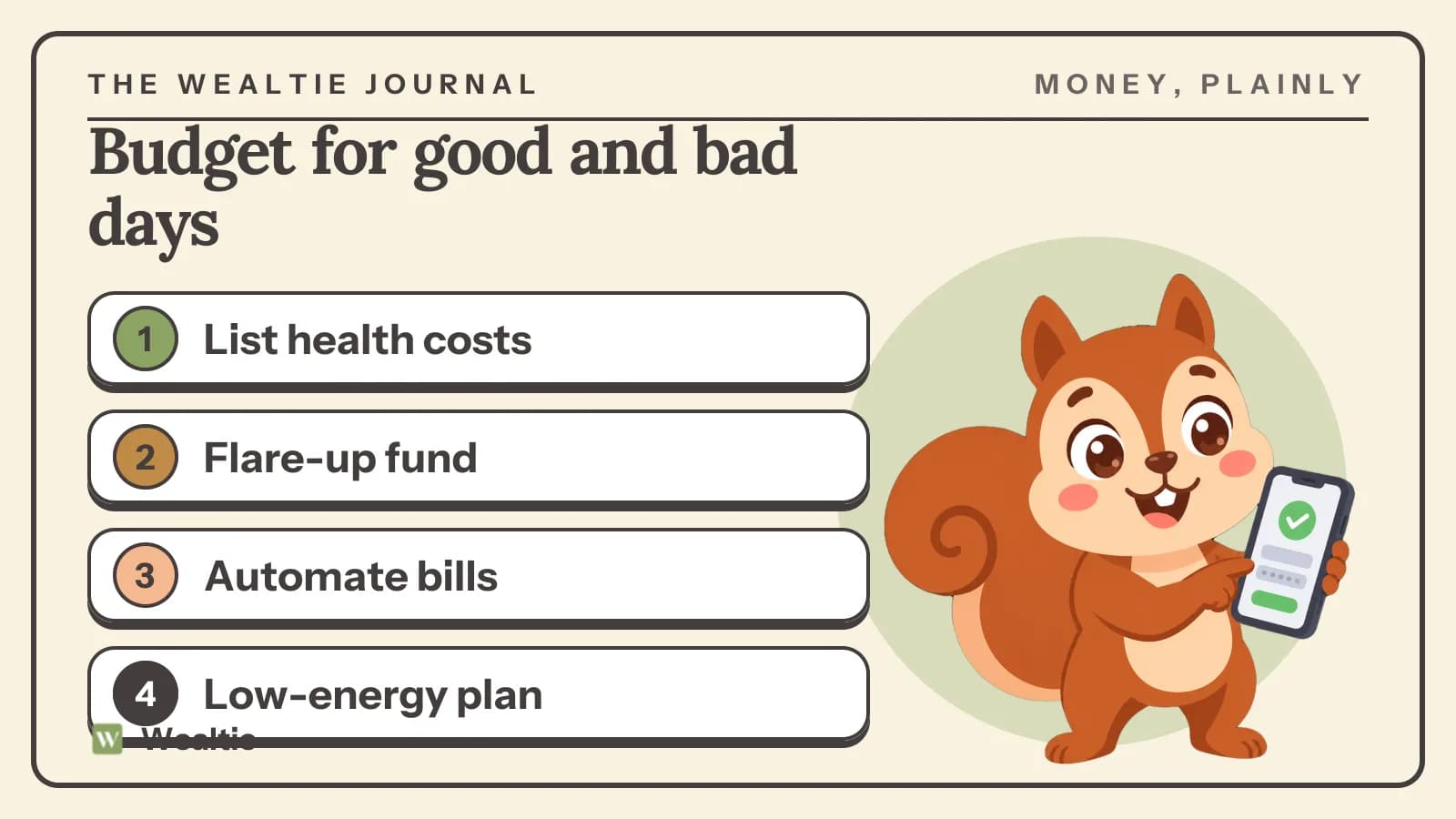
- To budget with a chronic illness, list regular health costs and plan for them each month.
- A flare-up fund covers the extra costs of bad spells.
- Automating bills and keeping the budget simple saves energy as well as money.
- Check what support, discounts and benefits you might be entitled to.
Why is budgeting with a chronic illness different?
Living with a long-term health condition often brings costs that other people don't have: medicines, appointments, travel to clinics, special food, equipment and help around the home. Income can change too, if you need to reduce your hours, take time off or stop working for a while. On top of that, energy can be limited, so a budget that needs constant attention may not be realistic on difficult days.
A budget that works for you plans for health costs, has room for bad spells and is simple enough to manage when you're tired.
It also helps to accept that some months will look different from others. A month with a flare-up might mean more taxis, more deliveries and less income. A good month might leave money to top up savings. Seeing the budget as something that flexes across the year, rather than a fixed plan you must hit every month, takes away some of the pressure. Looking at the average over several months gives a fairer picture than any single month.
Keeping a simple note of what each bad spell cost, like extra travel or help at home, makes it easier to plan the size of your fund over time.
What health costs should you plan for?
Start by listing the costs your condition brings, even the small ones. Here's a worked example, in round numbers that work in any currency:
| Cost | Each month |
|---|---|
| Medicines and supplies | 60 |
| Appointments and travel | 40 |
| Flare-up fund | 30 |
| Convenience on bad days | 20 |
| Total | 150 |
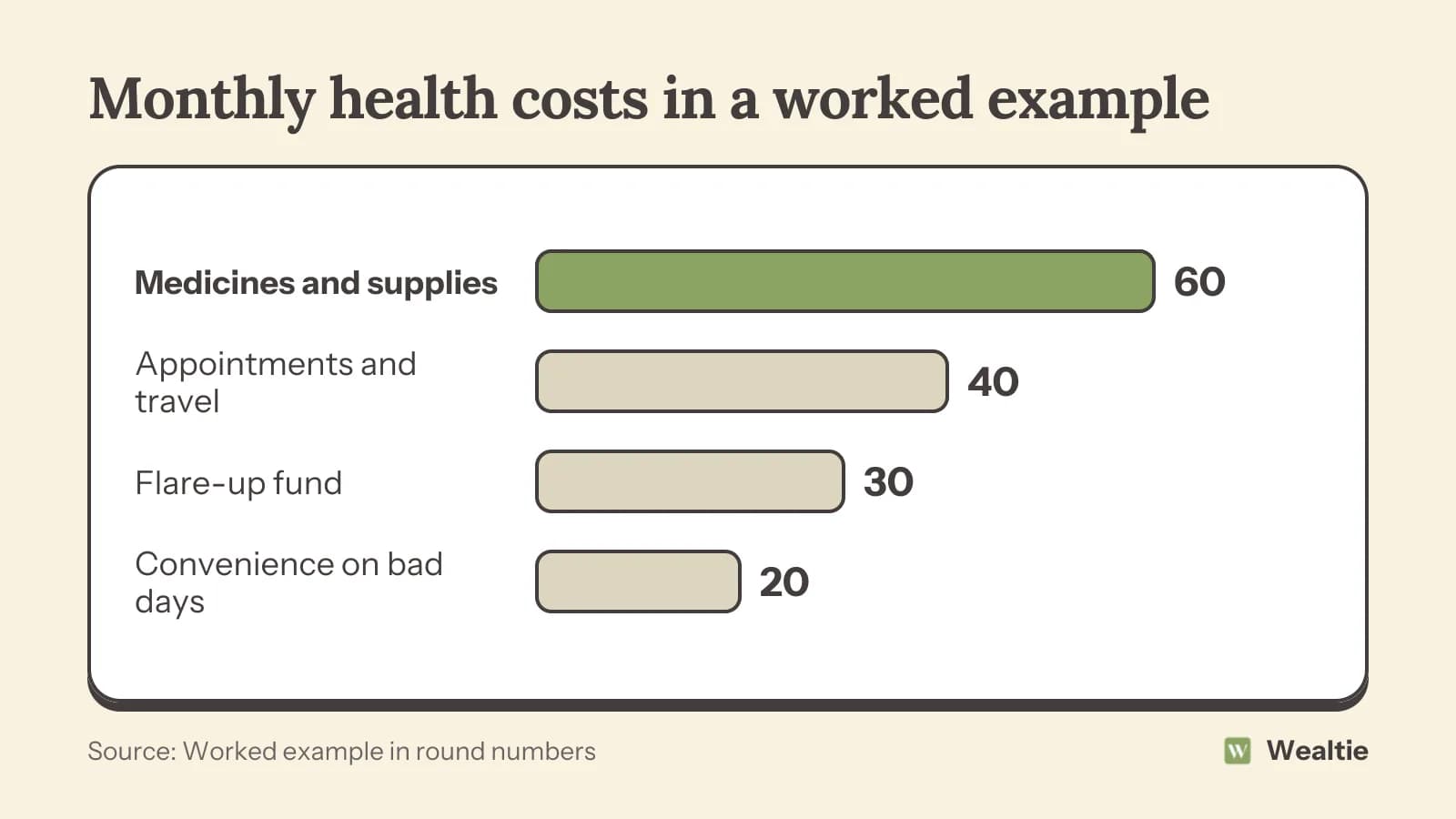
Convenience costs, like ready meals, deliveries or taxis on days when you can't manage otherwise, are real health costs. Planning for them means you don't feel guilty when you need them. The flare-up fund builds to 360 a year for the extra costs of bad spells.
How do you budget with a chronic illness?
Treat health costs as essentials
Put medicines, appointments and other health costs in your essential bills, alongside rent and food. They're not optional, and budgeting for them upfront avoids surprises.
Set up a flare-up fund
Bad spells can bring extra costs and sometimes less income. A small amount set aside each month builds a fund to cover them. How to budget for medical bills covers planning for larger health costs.
Automate what you can
Set bills and savings to pay automatically, so they happen even on days you can't think about money. Fewer tasks mean less energy spent on admin.
Keep the budget simple
A few categories and a quick weekly check are easier to keep up than a detailed system. On low-energy days, a glance at your balance is enough.
Plan for changing income
If your income varies with your health, budget based on a lower month, and save any extra in good months. How to budget for time off sick covers planning for gaps in pay.
How can you cut health-related costs?
Check whether you qualify for help with prescription costs, travel to appointments or equipment. How to save money on prescriptions covers some options. Ask about prepayment schemes, which can cut the cost if you need regular medicines. Charities for your condition often have advice, grants or discounts. Benefits and support vary a lot by country, so look up what applies to you, or ask an advice service to help.
Look after your mental health too
Money worries and long-term illness often go together, and each can make the other harder. Talking to someone you trust, or a professional, can help. Money anxiety and how to afford therapy cover ways to get support.
What about work and income?
If your condition affects your work, talk to your employer about adjustments, like flexible hours or working from home. Check what sick pay and support your job offers. If you're self-employed, a bigger emergency fund helps cover gaps. Keep track of income month by month so you can spot patterns and plan for quieter times.
Ask for help with admin
Managing money takes energy. If a partner, family member or friend can help with tasks like sorting paperwork or making calls, it can free up energy for other things. Some advice services can also help with forms and applications.
How do you track health costs in Wealtie?
Add regular medicines and appointments as recurring transactions, so they log themselves on their date. Keep health costs in their own expense categories and include them in your monthly budget. If your income varies, log it in the income tracker to see patterns over the year.
Questions people ask
List your regular health costs, treat them as essentials, set up a flare-up fund, automate bills and keep the budget simple enough for low-energy days.
Money set aside each month for the extra costs of bad spells. In a worked example, 30 a month builds to 360 a year.
Check for help with prescriptions, travel and equipment, ask about prepayment schemes and contact charities for your condition.
Budget based on a lower month, save extra in good months and keep an emergency fund for gaps in pay.
This article is general information, not financial, tax or legal advice. Your situation is your own; check the numbers that apply to you before you act on them.