Budgeting: How to afford therapy, and fit it into your budget
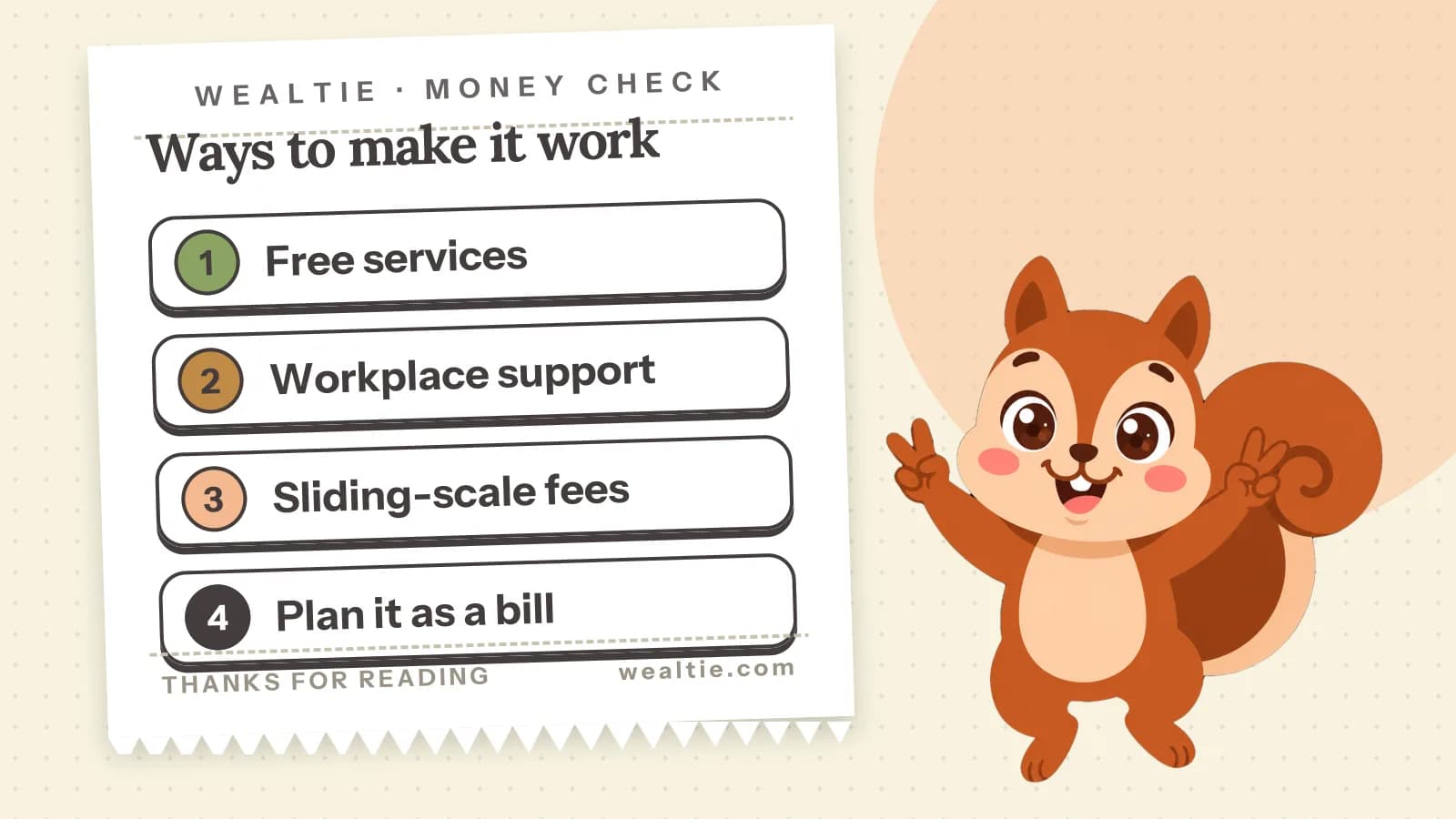
To afford therapy, start by checking free and lower-cost options, like public health services, workplace support and sliding-scale fees, then plan regular sessions as a fixed cost in your budget. In a worked example, weekly private sessions at 60 cost about 260 a month, so knowing the alternatives matters.
 By Wealtie Team · 3 min read
Key takeaways
- There are often free or lower-cost ways to afford therapy, so check those first.
- In a worked example, weekly private sessions at 60 cost about 260 a month.
- Sliding-scale fees, trainee therapists and group therapy can cost much less.
- Treat sessions as a fixed bill in your budget, so they're protected from other spending.
How do you afford therapy?
Start with the options that cost little or nothing, then plan any paid sessions as a regular bill. Therapy can make a real difference to how you feel and cope, and cost shouldn't stop you from getting support. There are often more affordable routes than people realise, and a little planning makes regular sessions easier to keep up. Looking after your wellbeing can also help with work, relationships and money habits, which makes it one of the more valuable things to budget for.
If you're in crisis or worried about your safety, contact emergency services or a crisis line straight away. This guide is about planning ongoing support.
What does therapy cost?
Private session prices vary a lot by country, city and type of therapy. Here's a worked example of monthly costs, in round numbers that work in any currency:
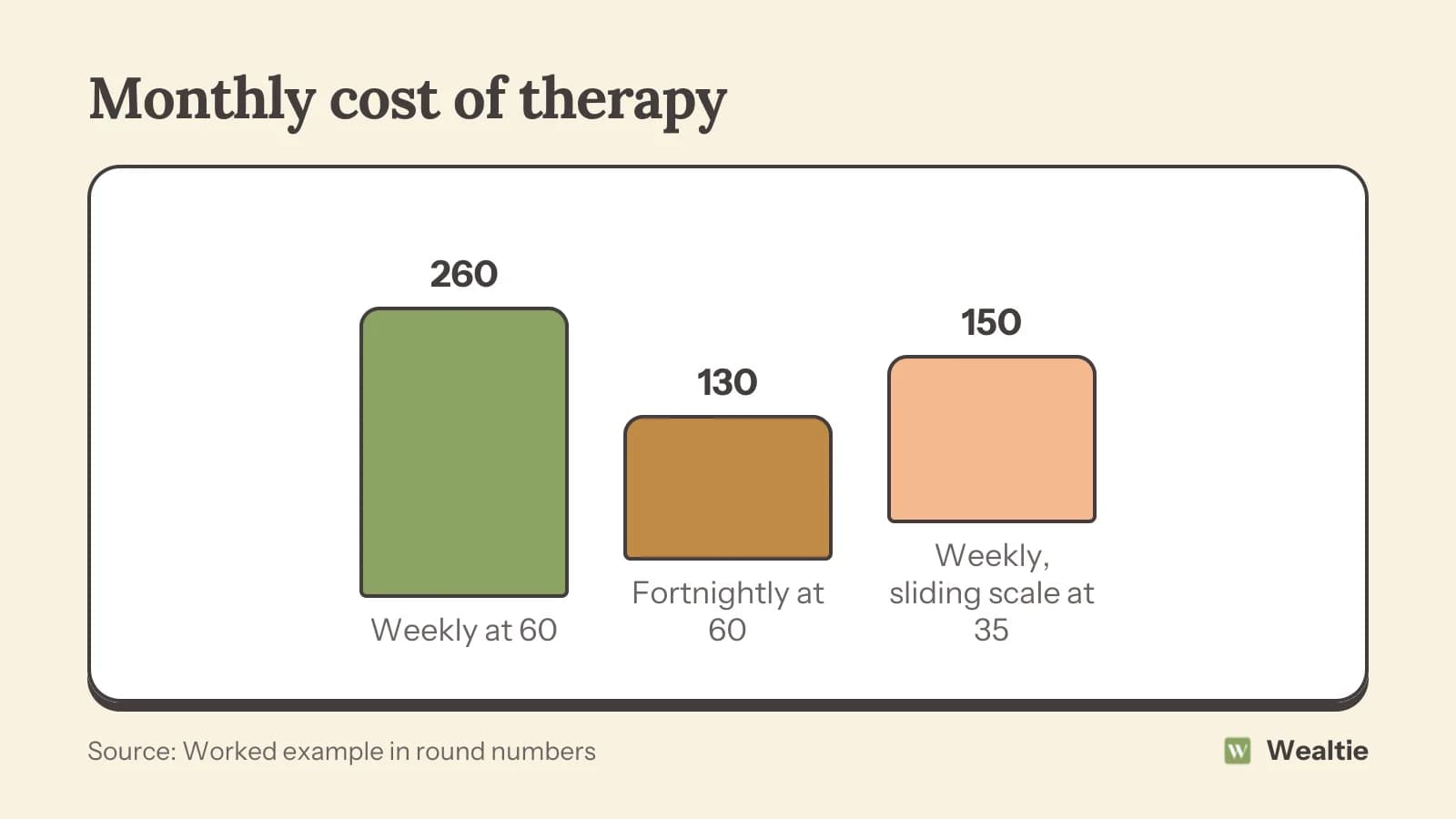
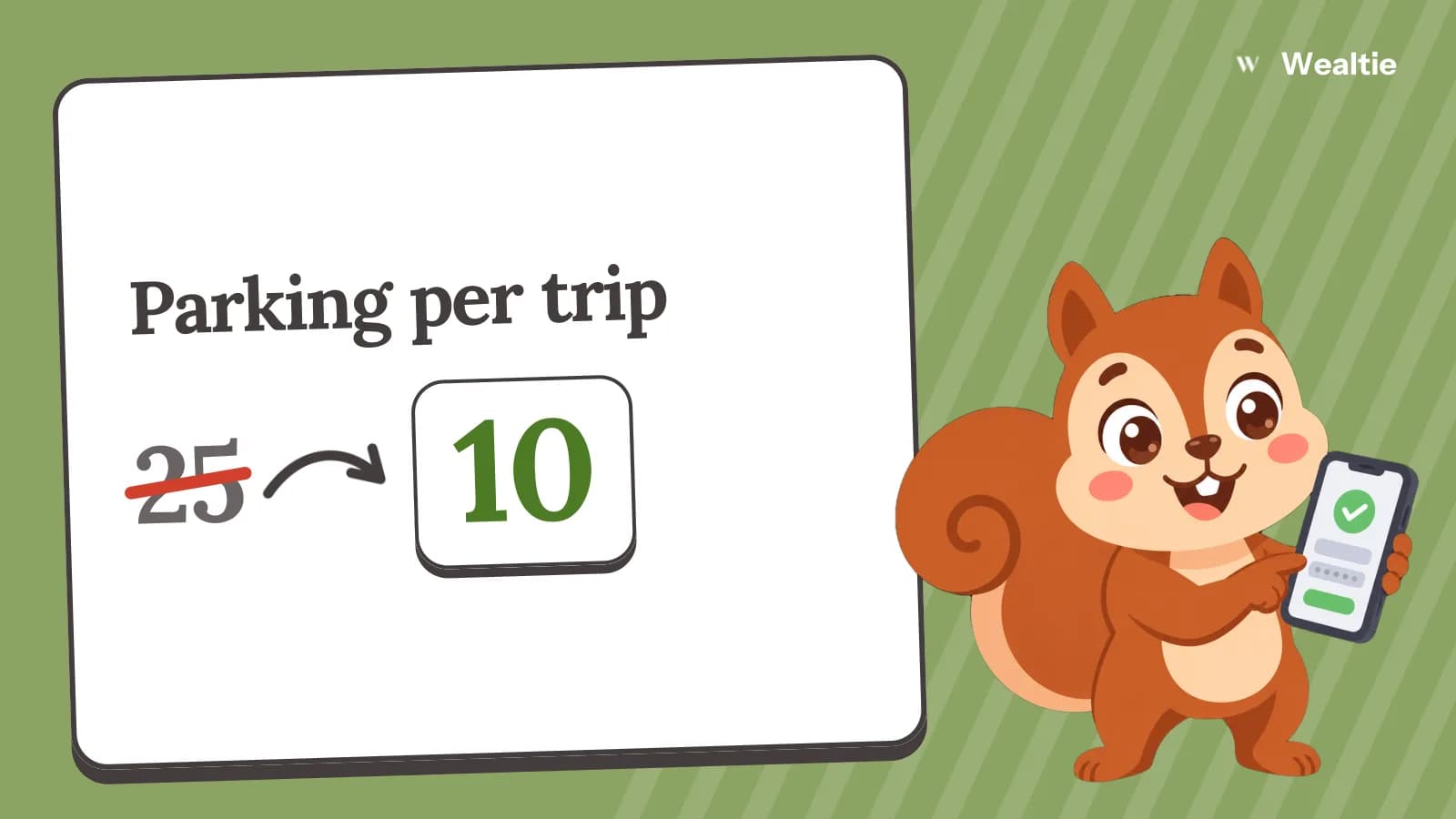
At 60 a session, weekly therapy costs about 260 a month, while fortnightly sessions halve that. A sliding-scale fee of 35 brings weekly sessions down to about 150. Your own costs could be quite different.
What free or lower-cost options are there?
Check these before paying full private rates:
- Public health services: in many countries, talking therapies are available free through your doctor or self-referral, sometimes after a wait.
- Workplace support: many employers offer employee assistance programmes with a number of free, confidential sessions.
- University and college services: students often have free counselling.
- Charities: some offer free or low-cost counselling for specific needs, like bereavement or addiction.
- Training clinics: therapists in training, supervised by qualified professionals, often charge much less.
- Group therapy and support groups: usually cheaper than one-to-one sessions, and some are free.
Your doctor can tell you what's available locally, and is a good first step.
Sliding-scale fees
Many private therapists offer reduced fees for people on lower incomes. It's fine to ask whether a therapist has a sliding scale or lower-cost places. Most won't be offended, and some keep a few spaces for this. Waiting lists for free services can be long, so some people pay for a few private sessions while they wait, then switch.
Does insurance cover therapy?
Sometimes. Some health insurance policies cover a set number of sessions, often with conditions. Check your policy, or your employer's, to see what's included and how to claim. Some require a referral from a doctor first. Keep receipts and session records, since you may need them to claim.
How do you fit therapy into your budget?
Treat it as a fixed bill. Once you've chosen a therapist and frequency, add the monthly cost to your budget alongside rent and utilities, so it's protected from other spending. If it's a stretch, look for small savings elsewhere, like subscriptions or eating out, to make room.
Saving before you start
If you'd like to start therapy in a few months, setting aside the monthly cost now builds a small cushion and lets you check that it fits your budget before the first session.
Adjusting frequency
If weekly sessions are too expensive, ask your therapist whether fortnightly sessions would work for you, or whether you could move to less frequent sessions after an initial period. Some people also use short courses of therapy with a set number of sessions, and some therapists offer shorter sessions at a lower price.
Is online therapy cheaper?
Often, a little. Online sessions save travel time and costs, and some online services charge less than in-person therapists. Make sure any online therapist is properly qualified and registered with a recognised professional body where you live. Text-based or app services can be cheaper again, though they suit some people better than others.
What if money worries are part of the problem?
Money and mental health are closely linked. Worry about money can affect your wellbeing, and difficult times can make money harder to manage. If money stress is weighing on you, how to deal with money anxiety has practical steps, and free debt advice services can help with financial problems. Tackling both together often helps. Some therapists specialise in money-related stress, if that's a big part of what you're dealing with. How to budget for medical bills covers planning for health costs more broadly.
How do you track therapy costs in Wealtie?
Set up sessions as a recurring transaction with the bill tracker, so the cost is logged regularly and included in your monthly picture. Give health costs their own line in your expense categories. A monthly limit in the budget tracker helps you see how therapy fits alongside everything else.
Questions people ask
Prices vary widely. In a worked example, weekly sessions at 60 cost about 260 a month, or about 130 fortnightly.
Check public health services, workplace assistance programmes, student services and charities. Your doctor can advise on local options.
A reduced fee some therapists offer to people on lower incomes. It's fine to ask whether one is available.
Treat it as a fixed monthly bill, and look for small savings elsewhere if it's a stretch.
This article is general information, not financial, tax or legal advice. Your situation is your own; check the numbers that apply to you before you act on them.