Budgeting: Choice overload: why too many options cost you money
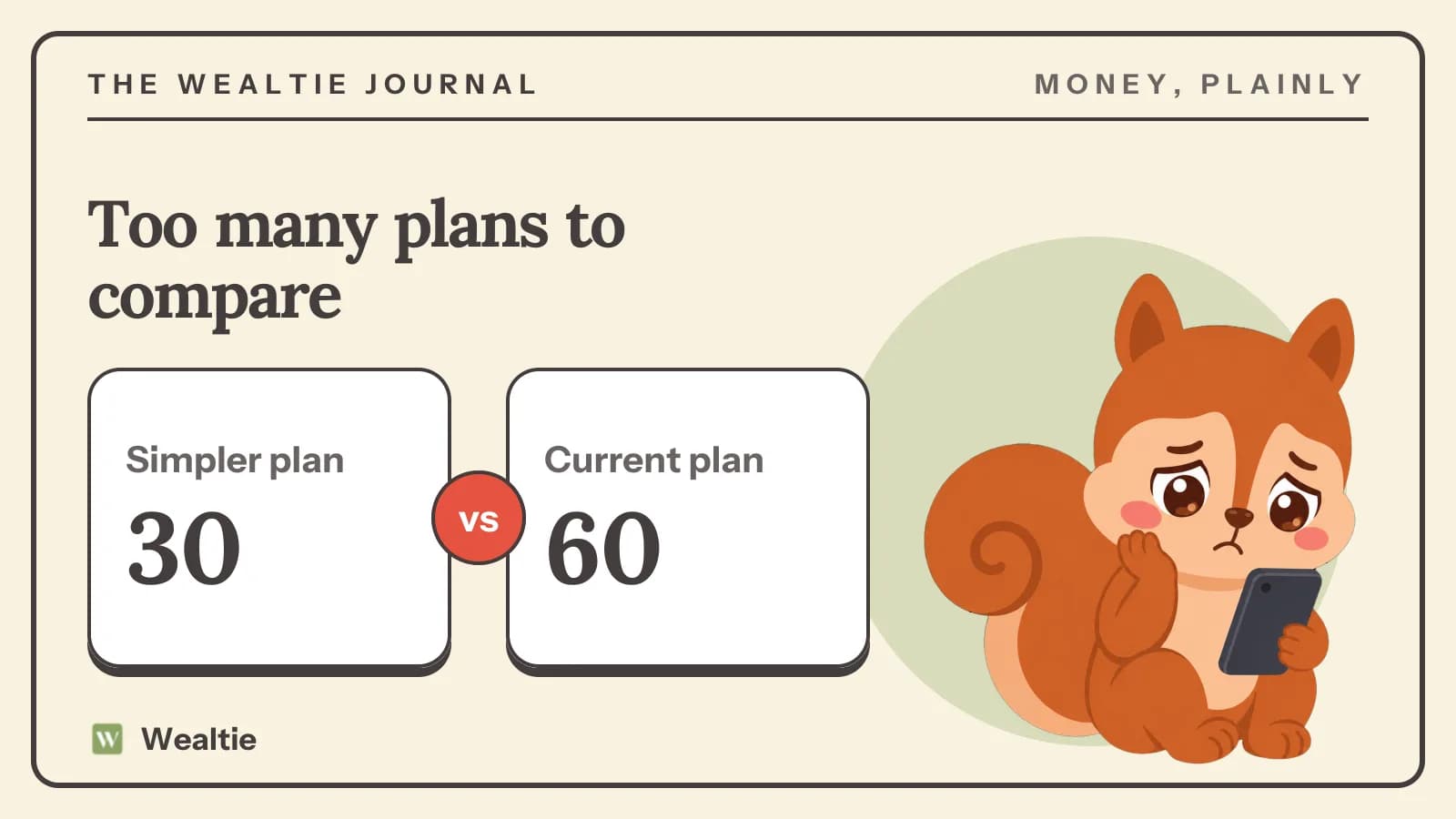
Choice overload happens when too many options make it harder to decide, so you put off good decisions or grab the most expensive option to feel safe. In a worked example, staying on a 60 phone plan because comparing is overwhelming costs 360 a year more than a 30 plan.
 By Wealtie Team · 4 min read
Key takeaways
- Choice overload makes decisions harder, so people delay, pick defaults or overpay.
- Putting off a comparison can cost more than choosing imperfectly.
- Narrowing options to three and setting a deadline makes deciding easier.
- Good enough is often better than perfect for everyday money choices.
What is choice overload?
Choice overload is what happens when there are so many options that choosing becomes stressful, so people delay deciding, pick whatever's easiest or feel unhappy with what they chose. Psychologists Sheena Iyengar and Mark Lepper showed this in a well-known study where shoppers were offered either a small or a large selection of jams to taste. More people stopped at the big display, but more people bought from the small one. The psychologist Barry Schwartz later popularised the idea in his book The Paradox of Choice.
In everyday money decisions, choice overload shows up whenever you face dozens of similar options: phone plans, energy tariffs, bank accounts, insurance policies, savings accounts and even groceries. The harder the comparison feels, the more likely you are to stick with what you have or leave the decision for another day.
How much can choice overload cost you?
Here's a worked example of three decisions put off for a year because comparing felt overwhelming, in round numbers that work in any currency:
| Decision put off | Yearly cost |
|---|---|
| Phone plan left unchanged | 360 |
| Energy tariff left unchanged | 200 |
| Unused subscriptions kept | 240 |
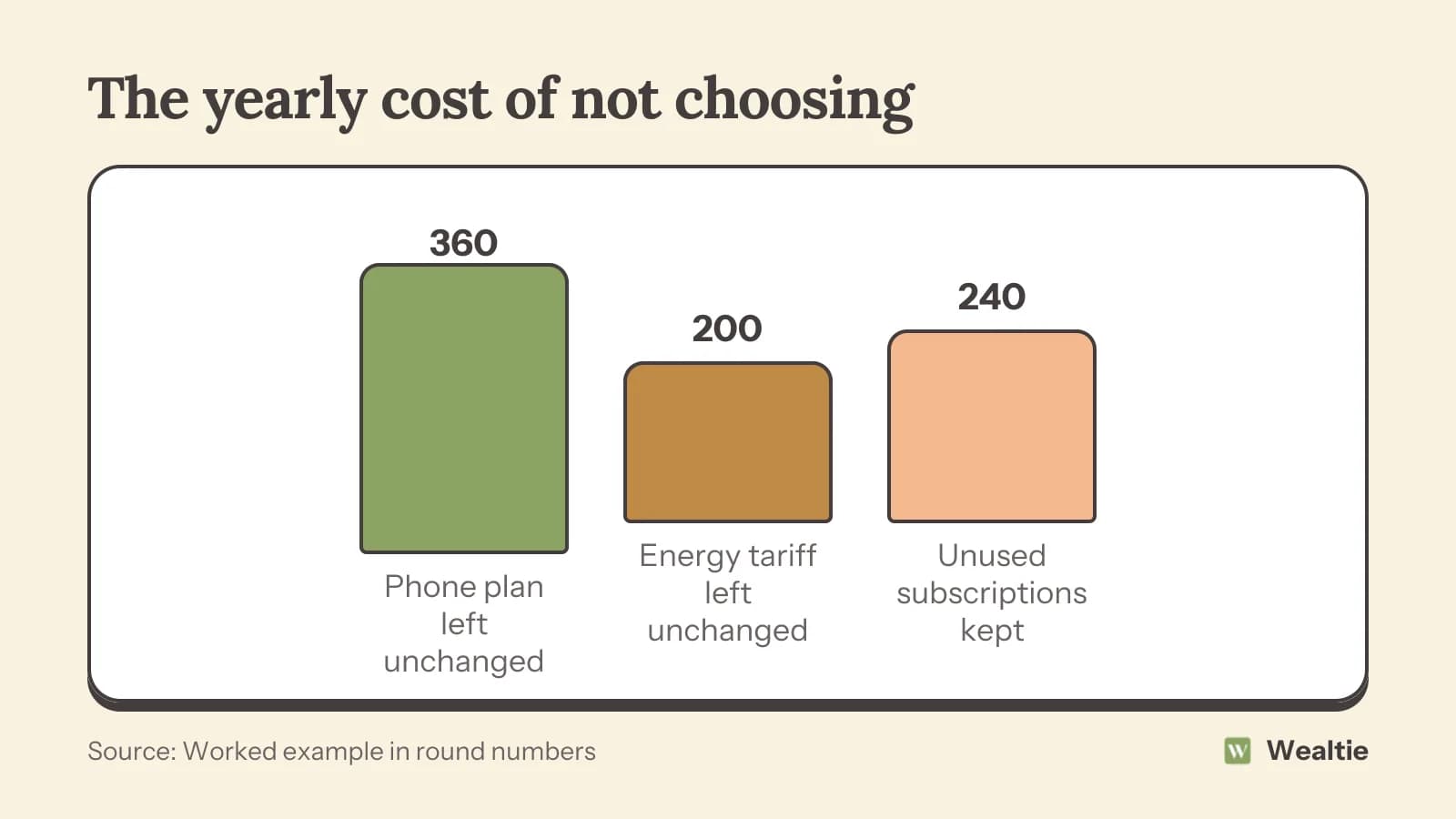
Staying on a 60 phone plan when a 30 plan would do costs 360 a year. Leaving an energy tariff unchecked might cost 200 more than a better deal. Keeping subscriptions because cancelling means deciding which to keep might cost 240. None of these is a dramatic mistake, but together they add up to 800 a year.
Why does choice overload lead to overspending?
We delay decisions
When comparing feels like hard work, it's easy to put it off. Meanwhile, you keep paying for the old option.
We choose the default
Faced with too many options, many people stick with whatever they're given, like the bank's standard account or an automatic renewal.
We pay for safety
When unsure, people often choose the most expensive option, assuming it must be the best, or add extras just in case.
We regret more
With many choices, it's easy to wonder if another option would have been better, which can lead to returns, switching costs or buying a second item.
How do you beat choice overload?
Narrow it down to three
Use a comparison site or a trusted review to shortlist three options, then choose between those. Three is enough to compare without feeling overwhelmed.
Decide what matters first
Before you look, write down the two or three things that matter most, like price, data allowance or customer service. Ignore the rest.
Set a deadline
Give yourself a time limit, like 30 minutes or the end of the week, to decide. A good choice made today often beats a perfect choice made never.
Aim for good enough
The economist Herbert Simon called this satisficing: choosing the first option that meets your needs instead of searching for the best possible one. For most money decisions, good enough saves time and stress.
Use a yearly review
Put one day a year in your calendar to check bills, subscriptions and accounts. How to negotiate bills and how to cut subscription costs cover what to check.
Where does choice overload show up most?
Bank accounts, phone and internet plans, energy, insurance and savings products are some of the most confusing markets. How to switch bank accounts covers making one of these decisions simple. Shopping is another: endless options online can make it hard to choose, and easy to buy more than you need. Needs vs wants is a quick filter before any purchase.
It also helps to notice when choice overload is being used on you. Shops and websites sometimes show huge ranges to keep you browsing, or bundle options in confusing ways so the expensive one looks like the safe choice. Stepping back, closing the tab and coming back later with your shortlist and priorities puts you back in control. Many people find they buy less, and buy better, when they shop with a clear plan.
Sharing decisions can help too. Talking a choice through with a partner or friend often makes the important factors clearer and reduces the fear of getting it wrong. If you share finances, agreeing a simple rule, like reviewing one bill each month together, turns a pile of overwhelming decisions into a manageable routine.
Finally, remember that you can change your mind. Most phone, energy and subscription choices can be switched again later, so a reasonable choice now is rarely locked in forever. Knowing that takes some of the pressure off and makes it easier to act.
Over a few years, making a handful of good-enough decisions instead of putting them off can add up to thousands saved, with far less stress than chasing the perfect option.
How can Wealtie help you see what decisions are costing you?
Add your bills and subscriptions as recurring transactions in Wealtie and log them in their own expense categories. Seeing them all in one place makes it obvious which ones are worth reviewing first, so you can tackle the biggest one rather than all of them at once.
Questions people ask
Choice overload happens when too many options make deciding stressful, so people delay, stick with defaults or overpay.
It leads people to keep old plans, accept automatic renewals and pick expensive options. In a worked example, three delayed decisions cost 800 a year.
Shortlist three options, decide what matters most before you look, set a deadline and aim for good enough rather than perfect.
Satisficing means choosing the first option that meets your needs instead of searching for the best possible one. It saves time and stress.
This article is general information, not financial, tax or legal advice. Your situation is your own; check the numbers that apply to you before you act on them.