Budgeting: Carpet cleaning cost: professional vs renting a machine
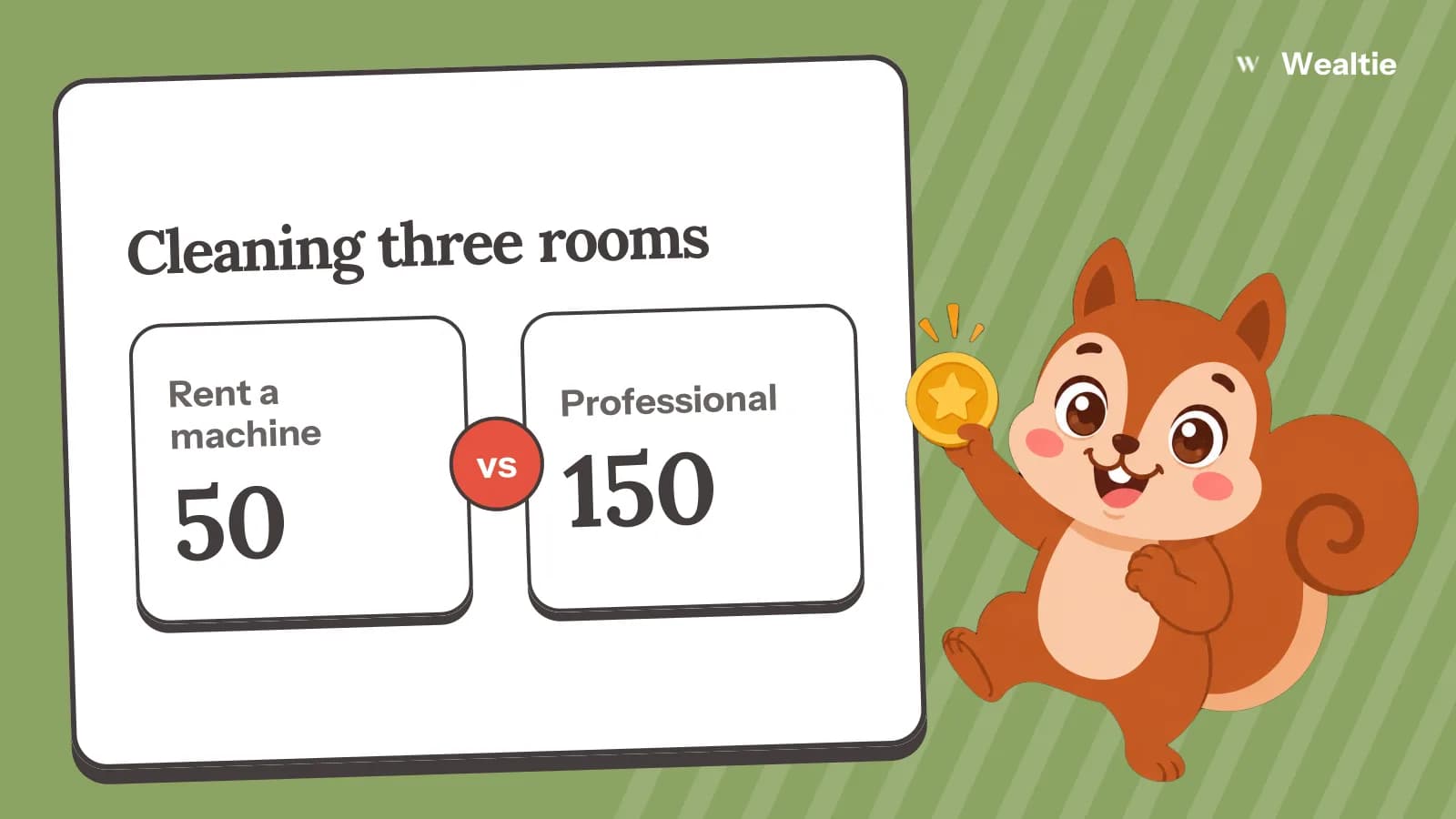
Carpet cleaning cost depends on how many rooms you clean and whether you pay a professional or do it yourself. In a worked example, a professional clean of three rooms costs 150, against 50 to rent a machine for a day.
 By Wealtie Team · 3 min read
Key takeaways
- Carpet cleaning cost depends on the number of rooms and who does it.
- Renting a machine is cheapest for an occasional deep clean.
- Professionals give better results for heavy stains and end of tenancy.
- Regular vacuuming and quick spot cleaning make carpets last longer.
How much does carpet cleaning cost?
Carpets collect dirt, dust and stains over time, and a deep clean can make them look and feel much fresher. Many people clean carpets before moving out of a rental, after a spill, or once a year as part of spring cleaning. Carpet cleaning cost depends on how many rooms you clean, how dirty the carpets are and whether you pay a professional or do it yourself.
Here's a worked example of cleaning three carpeted rooms, in round numbers that work in any currency:
| Option | Cost |
|---|---|
| Rent a machine for a day | 50 |
| Professional clean | 150 |
| Buy a carpet cleaner | 200 |
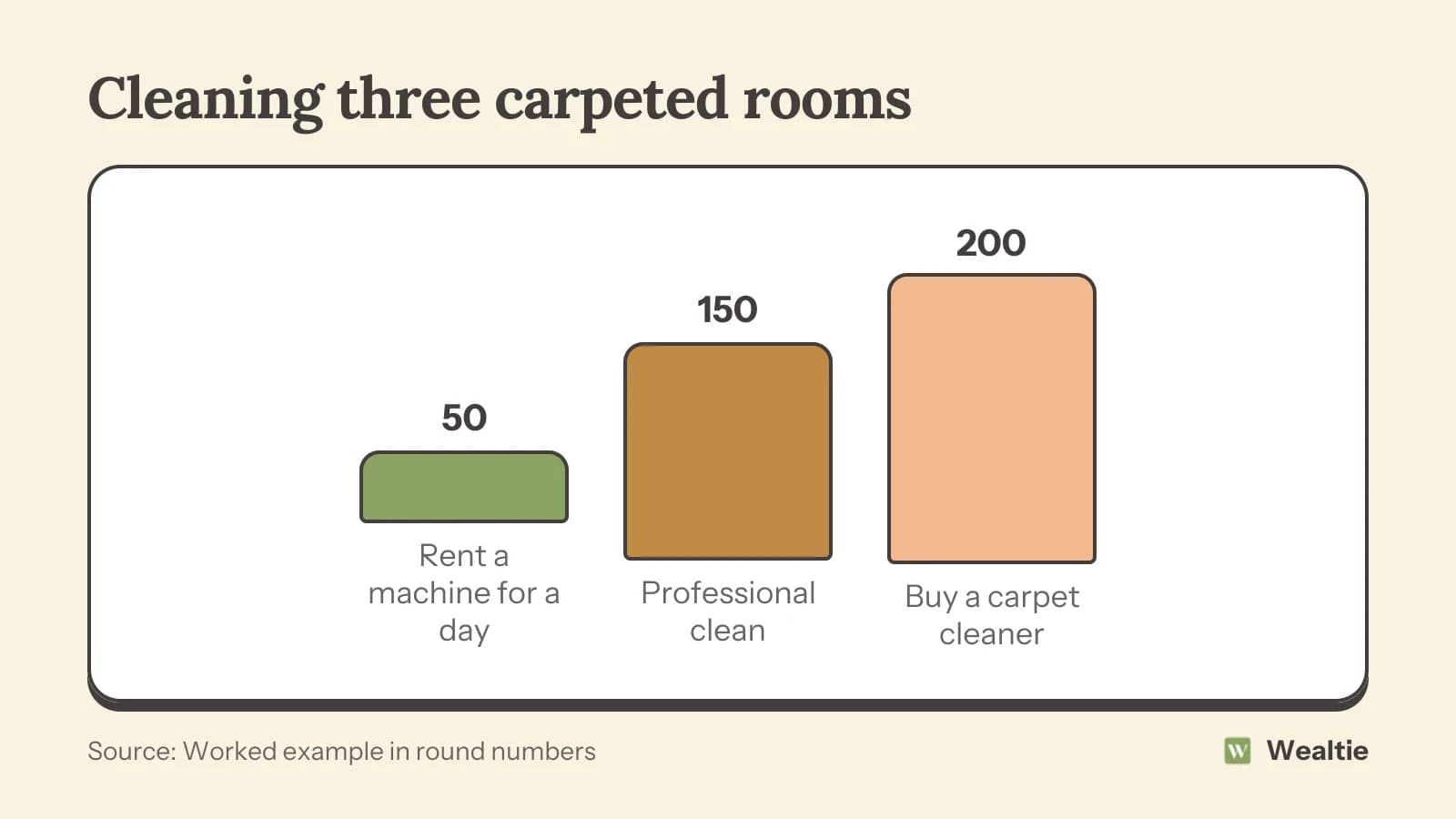
Renting a machine for a day, plus cleaning solution, costs about 50. A professional clean at around 50 a room comes to 150. Buying your own carpet cleaner costs around 200 and may make sense if you clean often, have pets or have young children.
When is a professional worth it?
Heavy stains and deep dirt
Professionals have powerful machines and treatments for stubborn stains and heavy soiling.
End of tenancy
Some tenancy agreements require professional cleaning, and a receipt can help you get your deposit back. How to get your rental deposit back covers what landlords usually look for.
Delicate carpets and rugs
Wool, silk and valuable rugs can be damaged by the wrong method, so a specialist is safer.
Lack of time
A professional can clean several rooms in a few hours while you get on with other things.
When is DIY better?
Occasional freshening up
For carpets that are mostly clean, a rented machine gives good results for much less.
Small spills
Quick spot cleaning with a cloth and the right cleaner stops stains setting.
Frequent cleaning
If you have pets or children and clean often, buying a machine can pay for itself within a few uses. Should you rent, borrow or buy tools? covers how to decide on equipment you use occasionally.
How do you clean carpets yourself?
Vacuum thoroughly first, move furniture where possible, test the cleaner on a hidden area, follow the machine's instructions, avoid soaking the carpet and leave windows open so it dries quickly. Walking on damp carpet can spread dirt again, so give it time to dry.
How do you make carpets last longer?
Vacuum regularly
Removing dirt before it gets ground in is the best way to protect carpets.
Deal with spills quickly
Blot, don't rub, and use the right cleaner for the stain.
Use doormats and remove shoes
Less dirt coming in means less cleaning.
Rotate rugs and furniture
Moving furniture occasionally spreads wear more evenly.
Replacing a carpet in one room might cost around 600, so a little care each week can save a lot. How to plan a home maintenance budget covers planning for both cleaning and replacements, and cost per use can help you decide whether a machine is worth buying.
Ask professional cleaners what method they use. Hot water extraction, sometimes called steam cleaning, is the most common deep-clean method. Dry cleaning methods use less water and dry faster, which suits some carpets and busy households. A good cleaner will check the carpet type, test for colour fastness and tell you how long it will take to dry before they start.
Getting quotes is worth the effort. Some companies charge by room, others by area, and some add extras for stain treatment, stairs or moving furniture. Comparing like for like helps you avoid surprises. Be wary of very cheap offers that add charges once the cleaner arrives.
Timing matters too. Cleaning carpets in warmer, drier weather helps them dry faster, which reduces the risk of damp smells. Opening windows and running fans speeds things up.
If you have pets, an enzyme cleaner for accidents helps remove smells as well as stains, which can delay the need for a full professional clean.
Finally, consider whether a deep clean is needed every year. Many carpets look fine with regular vacuuming and spot cleaning, with a deep clean only every couple of years.
Before booking, measure the rooms and note any heavy stains, stairs or rugs, so quotes are accurate. Asking for a written price that includes everything avoids extra charges on the day and makes it easier to compare companies fairly.
Keep the receipt if you rent, since it helps show the carpets were cleaned when you leave.
How can Wealtie help you track home costs?
Log cleaning, rentals and equipment in a household expense category, and set a monthly budget for home upkeep. Seeing what cleaning costs over a year helps you choose between paying a professional and doing it yourself.
Questions people ask
In a worked example, a professional clean of three rooms cost about 150, while renting a machine for a day cost about 50.
Yes, for an occasional deep clean. If you clean often, buying a machine can pay for itself within a few uses.
For heavy stains, delicate carpets and rugs, end of tenancy cleaning or when you're short of time.
Vacuum regularly, deal with spills quickly, use doormats, remove shoes indoors and rotate rugs and furniture.
This article is general information, not financial, tax or legal advice. Your situation is your own; check the numbers that apply to you before you act on them.