Income & freelancing: Business trip expenses: how to track and claim them
Tracking business trip expenses as you go makes claiming them back quick and stops you paying for work out of your own pocket. In a worked example, a three-day trip comes to 900, and a missing receipt could cost you 60.
 By Wealtie Team · 3 min read
Key takeaways
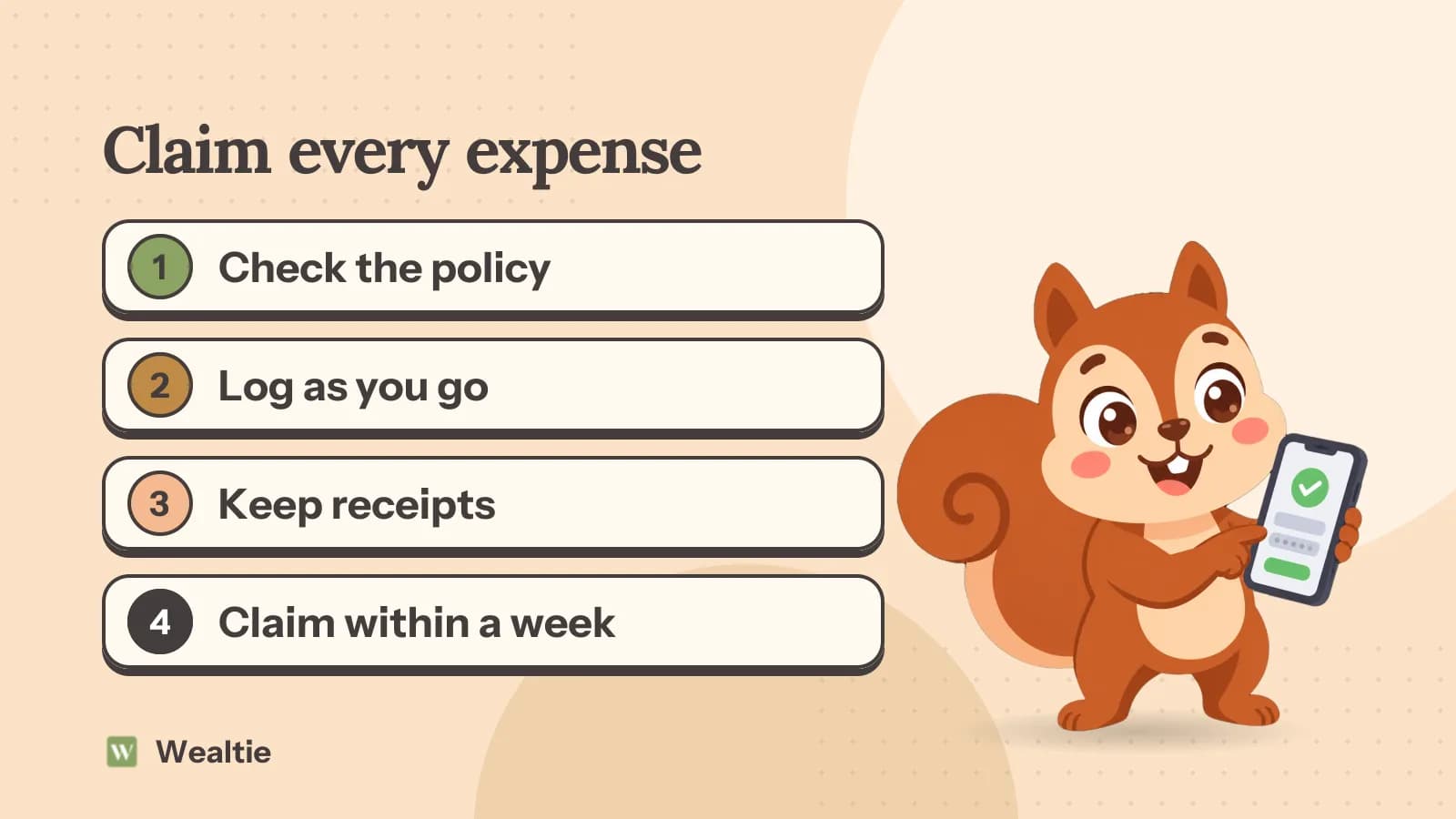
- Business trip expenses are easiest to claim when you log them as you go.
- Check your employer's policy or your tax rules before you travel.
- Keep every receipt, and photograph paper ones straight away.
- Note the currency and exchange rate for foreign spending.
What counts as business trip expenses?
Business trip expenses are the costs you pay while travelling for work, which your employer pays back or which you can usually set against your income if you're self-employed. The exact rules depend on your employer's policy or, for the self-employed, the tax rules where you live. Most cover the same broad areas:
- Travel: flights, train fares, fuel, mileage, parking and tolls
- Accommodation: hotels or other places you stay for the trip
- Meals: food and drink while you're away, often up to a daily limit
- Local transport: taxis, buses and metro tickets
- Other costs: phone or internet charges, conference fees and business supplies
Personal extras, like minibar drinks, sightseeing or a partner's travel, usually aren't covered. If you're not sure, ask before you spend.
How much can a short trip cost?
Here's a worked example of a three-day trip with two nights away, in round numbers that work in any currency:
| Expense | Cost |
|---|---|
| Hotel, 2 nights | 360 |
| Train fare | 220 |
| Meals | 180 |
| Taxis and local transport | 80 |
| Other, like parking | 60 |
| Total | 900 |
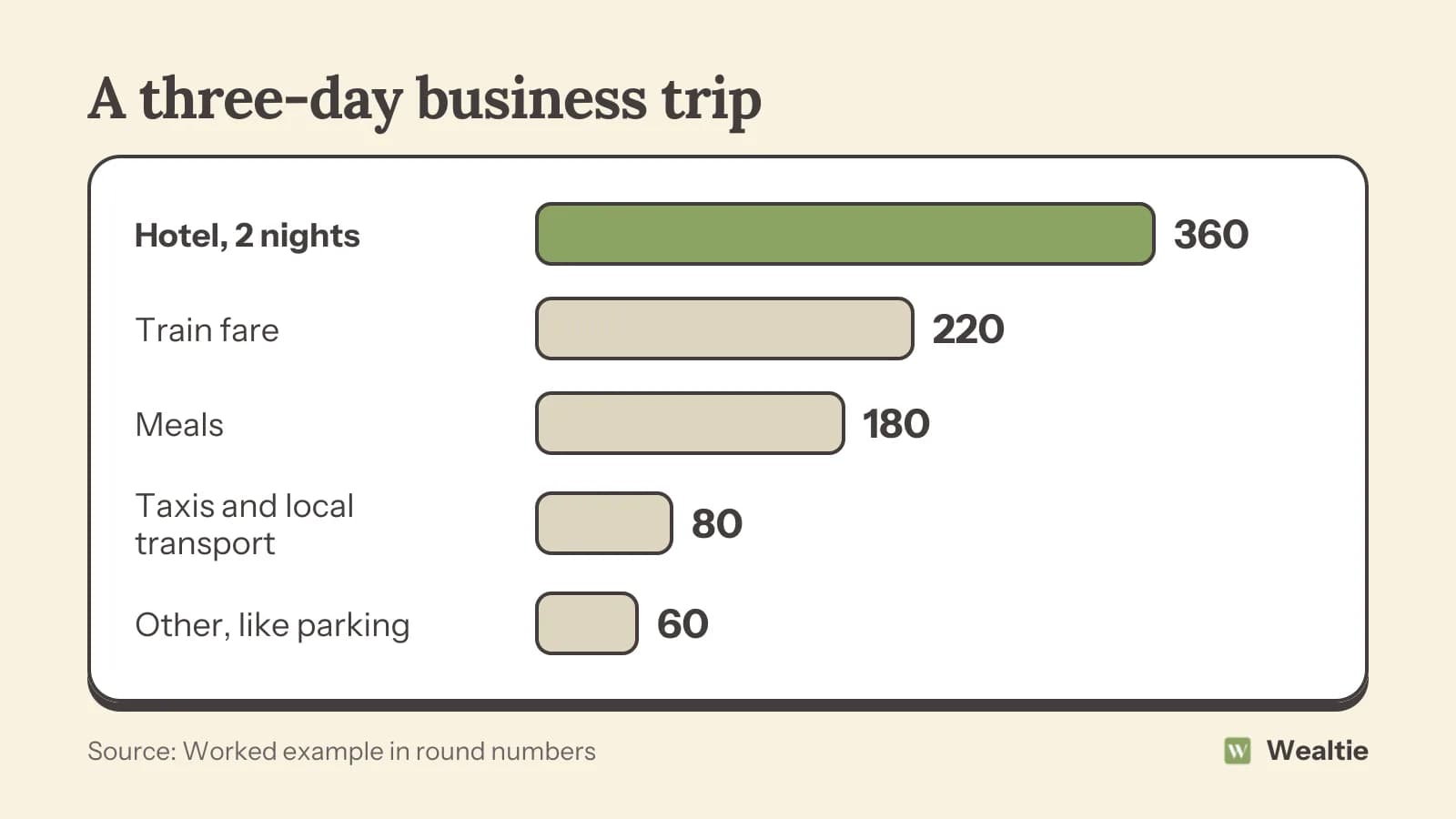
That's 900 that may come out of your own account before it's paid back. If one receipt for 60 goes missing, you might not be able to claim it at all, so keeping track as you go protects your money.
How do you track business trip expenses as you go?
Check the policy before you leave
Read your employer's expenses policy, or check your tax rules if you're self-employed. Note any daily meal limits, hotel caps, preferred booking tools and what needs approval in advance.
Use one card for work costs
Paying all trip costs with one card makes them easier to find later. Some employers provide a company card. If you're self-employed, a separate business account helps. How to separate business and personal money covers setting one up.
Log each expense on the day
Record the amount, what it was for and the date as soon as you pay, ideally on your phone. Waiting until you're home means forgotten taxis and coffees.
Keep every receipt
Photograph paper receipts straight away and store them together. Ask for itemised receipts for hotels and meals, since card slips alone may not be accepted.
Note who was there for business meals
If you pay for a meal with clients or colleagues, write down who attended and why. Many policies require it.
What about spending in another currency?
When you travel abroad, your card may charge foreign transaction fees and your bank's exchange rate may differ from the one your employer uses. Note the amount in the local currency and what it cost in your home currency. Foreign transaction fees covers how to avoid them, and how to track spending in two currencies covers keeping records straight.
How do daily allowances work?
Some employers pay a fixed daily allowance, often called a per diem, for meals and small costs instead of reimbursing receipts. If you spend less, you may keep the difference. If you spend more, the extra comes out of your pocket. Tracking what you spend each day shows whether the allowance covers your real costs.
How do you claim expenses without losing money?
Claim quickly
Submit your claim within a few days of getting back, while details are fresh. Some employers set deadlines, and late claims may be refused.
Match claims to records
Compare your claim with your logged expenses and card statement, so nothing is missed or claimed twice.
Track what's owed to you
Keep a note of money you've paid out and haven't yet been reimbursed, so you can chase it if payment is slow.
For the self-employed, keep records for tax
Keep receipts and a list of trip costs for as long as your tax rules require. The self-employed expenses list covers what's usually allowable, and an accountant can confirm what applies to you.
If you travel for work often, keep a short checklist on your phone with the policy's main limits, the documents you need and the steps for claiming. Running through it before each trip saves time and avoids the common mistakes, like booking a hotel above the limit or forgetting to ask for an itemised bill at checkout. Over a year, those small habits can make a real difference to how much you get back.
How can Wealtie help with business trip expenses?
Log trip costs in Wealtie as you go, in their own expense categories like travel, hotel and meals. Wealtie records spending in multiple currencies, so foreign costs sit alongside your home currency, and a CSV export gives you a clean list to match against your claim.
Questions people ask
Travel, accommodation, meals, local transport and work-related costs like conference fees usually count. Personal extras usually don't.
Check the policy first, use one card for work costs, log each expense on the day and photograph every receipt straight away.
A per diem is a fixed daily allowance for meals and small costs. If you spend less, you may keep the difference.
Within a few days of returning, while details are fresh. Some employers set deadlines and may refuse late claims.
This article is general information, not financial, tax or legal advice. Your situation is your own; check the numbers that apply to you before you act on them.