Budgeting: How to budget for a night out
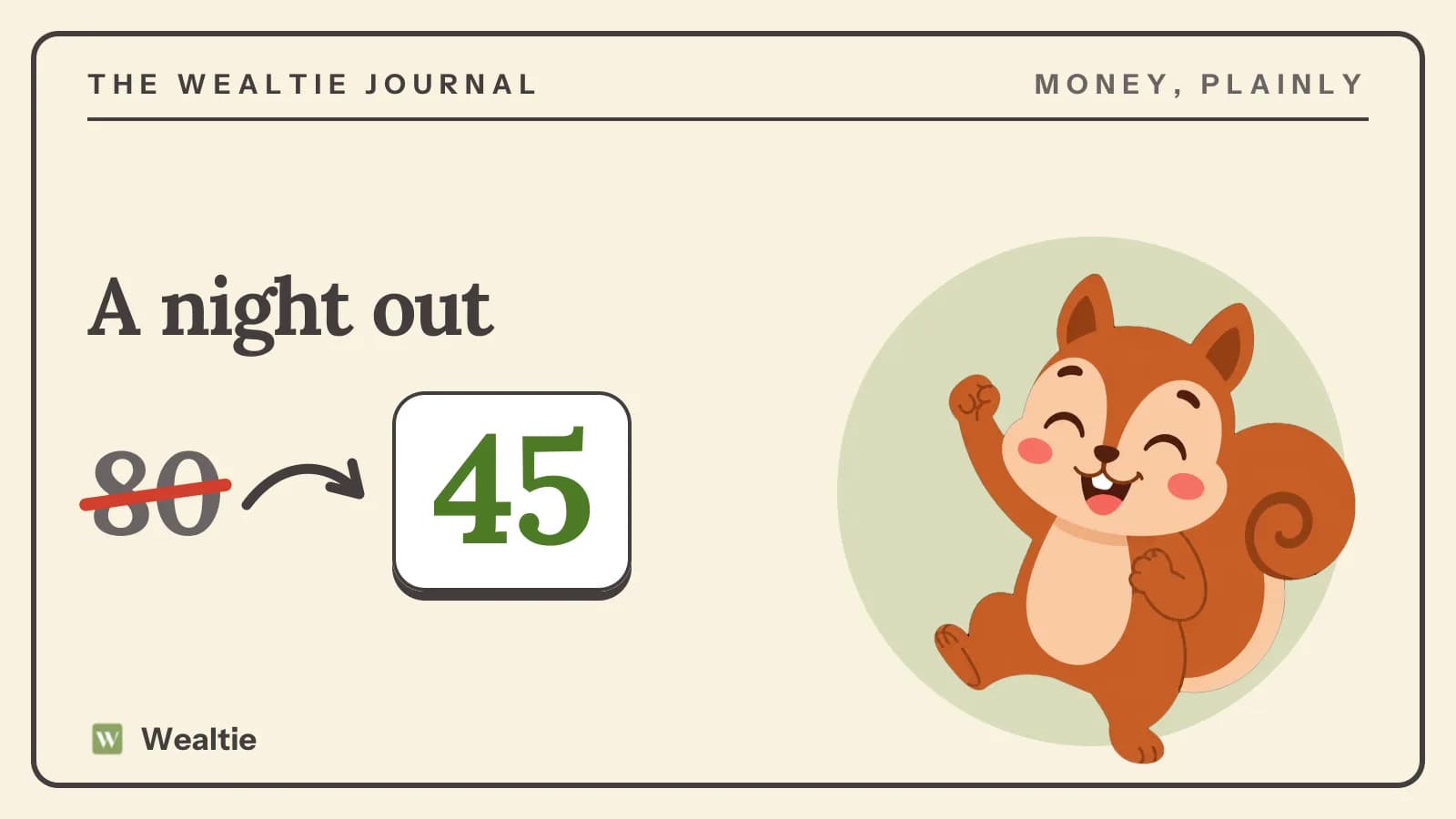
To budget for a night out, set a limit before you leave, plan how you'll get home and decide how you'll handle drinks and rounds. In a worked example, a night out costs about 80 unplanned, but 45 with a limit, food beforehand and a planned way home.
 By Wealtie Team · 3 min read
Key takeaways
- To budget for a night out, set a limit before you leave and plan your way home.
- In a worked example, a night out falls from about 80 to 45 with a plan.
- Eating before you go and skipping big rounds save the most.
- Late taxis and late-night food are the costs most likely to surprise you.
How do you budget for a night out?
Decide what you'll spend before you leave, and plan the parts that usually catch you out. Most overspending on nights out happens late in the evening, when decisions are harder, so planning early matters most. Nights out are a great way to relax and see friends, but costs can rise fast: drinks, rounds, entry fees, late-night food and a taxi home. Without a plan, it's easy to wake up to a bigger bill than you expected. A budget for a night out lets you enjoy yourself without regret the next day. It also helps you say yes to more plans over a month, since each one costs less.
What does a night out cost?
Here's a worked example, in round numbers that work in any currency:
| Cost | Unplanned | With a plan |
|---|---|---|
| Drinks | 45 | 25 |
| Getting home | 20 | 5 |
| Late-night food | 15 | 0 |
| Entry and extras | 0 | 15 |
| Total | 80 | 45 |
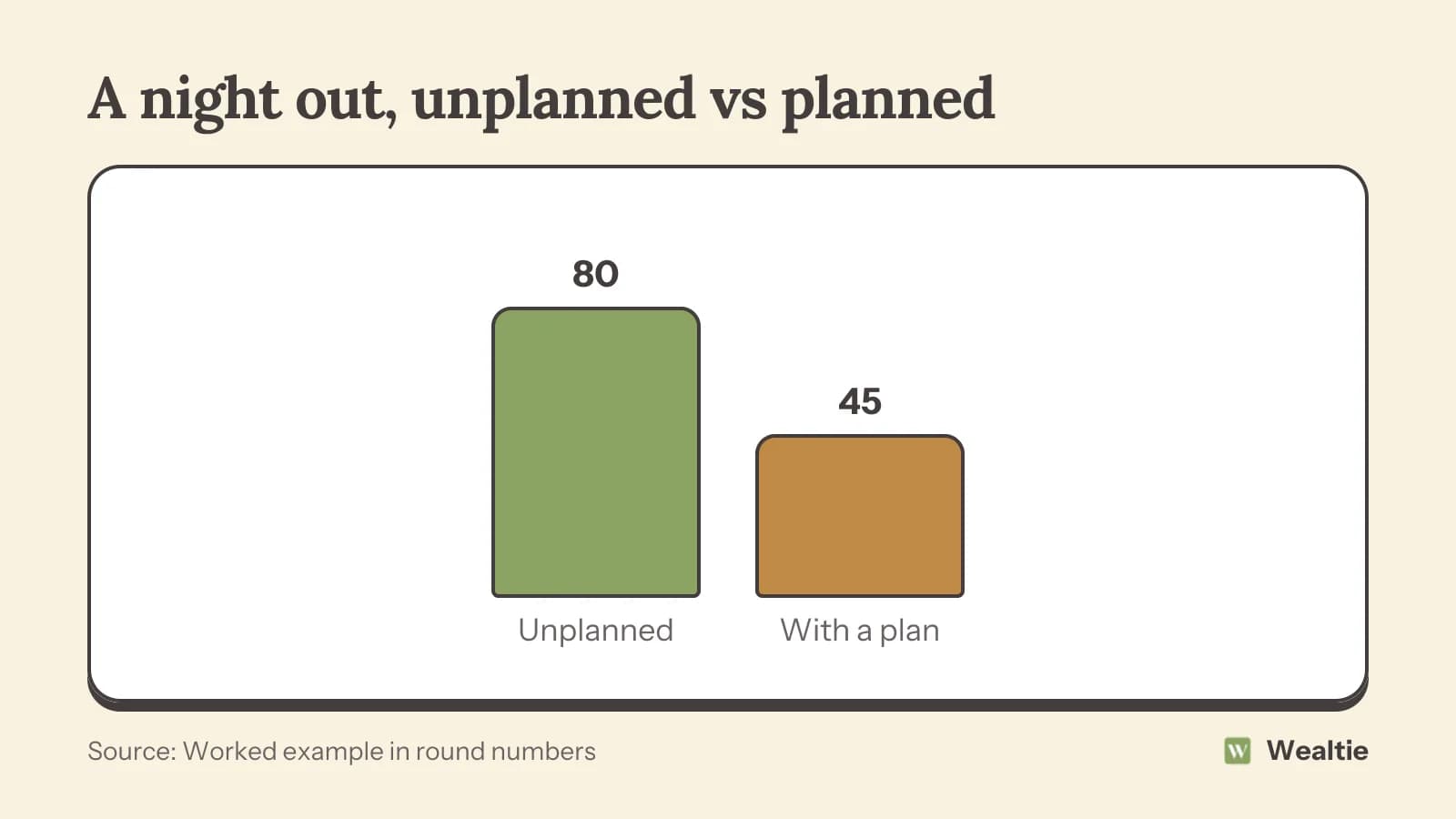
In this example, the planned night includes a paid event but still costs much less, thanks to fewer drinks, the last bus home and food beforehand. Your own costs depend on where you go and who you're with. Cities, special occasions and late nights all push costs up.
How do you set a limit?
Choose an amount before you go, based on your budget for the month. Some people take that amount in cash and leave cards at home, or move it into a separate spending account. When it's gone, the night is over. Checking your balance on your phone during the evening also helps. Turning off saved cards in payment apps makes impulse rounds a little harder.
How do you handle drinks and rounds?
Drinks are usually the biggest cost. A few ideas:
- Pace yourself, with water or soft drinks in between
- Avoid big rounds, which can mean buying drinks for lots of people; suggest everyone buys their own, or join a smaller round
- Choose cheaper venues or happy hours
- Have a drink at home first, with friends, before heading out
There's no need to keep up with others. How to say no to spending with friends has tips for handling social pressure.
Eat before you go
Having a proper meal before you go out saves on expensive bar food and late-night takeaways. Keeping a snack at home for when you get back stops the late-night food stop. It also helps you pace drinks.
How do you get home cheaply?
Plan it before you leave. Check the last train or bus, share a taxi with friends going the same way, or arrange a lift. Late-night taxis, especially with surge pricing, can cost as much as the rest of the night. How to save money on taxis has more ideas. Setting a reminder for the last train before you go out helps you leave in time.
What are cheaper ways to go out?
- Choose events with free entry or early bird tickets
- Go out earlier, when prices are often lower
- Pick one or two venues instead of moving around all night
- Try alternatives, like a comedy night, quiz night or live music at a local pub, which often cost less than clubs
If you're going to a concert or gig, the concert budget covers the extra costs of a big night. Splitting costs with friends through a shared app makes it easy to settle up without anyone overpaying.
Celebrations and special nights
Birthdays, leaving drinks and celebrations often cost more, with gifts, shared bills and bigger rounds. Setting aside a little extra in months with known celebrations stops them pushing you over budget. It's fine to join for part of the evening if the whole night would be too much.
How often should you go out?
That's up to you and your budget. Deciding how many nights out you'll have a month, and the amount for each, helps you enjoy them without worrying. Swapping some nights out for evenings in with friends saves money and can be just as fun. A month off, like a dry January, shows how much nights out usually cost. Many people find they enjoy fewer, better nights out more than lots of expensive ones.
Taking a set amount of cash, or moving a fixed sum to a separate card, makes the budget easy to stick to. When it's gone, the night is over, and there's no surprise on your statement the next morning.
How do you track nights out in Wealtie?
Give going out its own line in your expense categories, so you can see what nights out cost each month. A monthly limit in the budget tracker, with Budget Health, shows whether there's room for another night out this month.
Questions people ask
An amount that fits your monthly budget. In a worked example, about 45 with a plan, against 80 unplanned.
Set a limit, eat before you go, pace drinks, avoid big rounds and plan a cheap way home.
Suggest everyone buys their own, join a smaller round or alternate with soft drinks.
Late taxis, late-night food and big rounds of drinks.
This article is general information, not financial, tax or legal advice. Your situation is your own; check the numbers that apply to you before you act on them.