Budgeting: How to budget for concerts and gigs
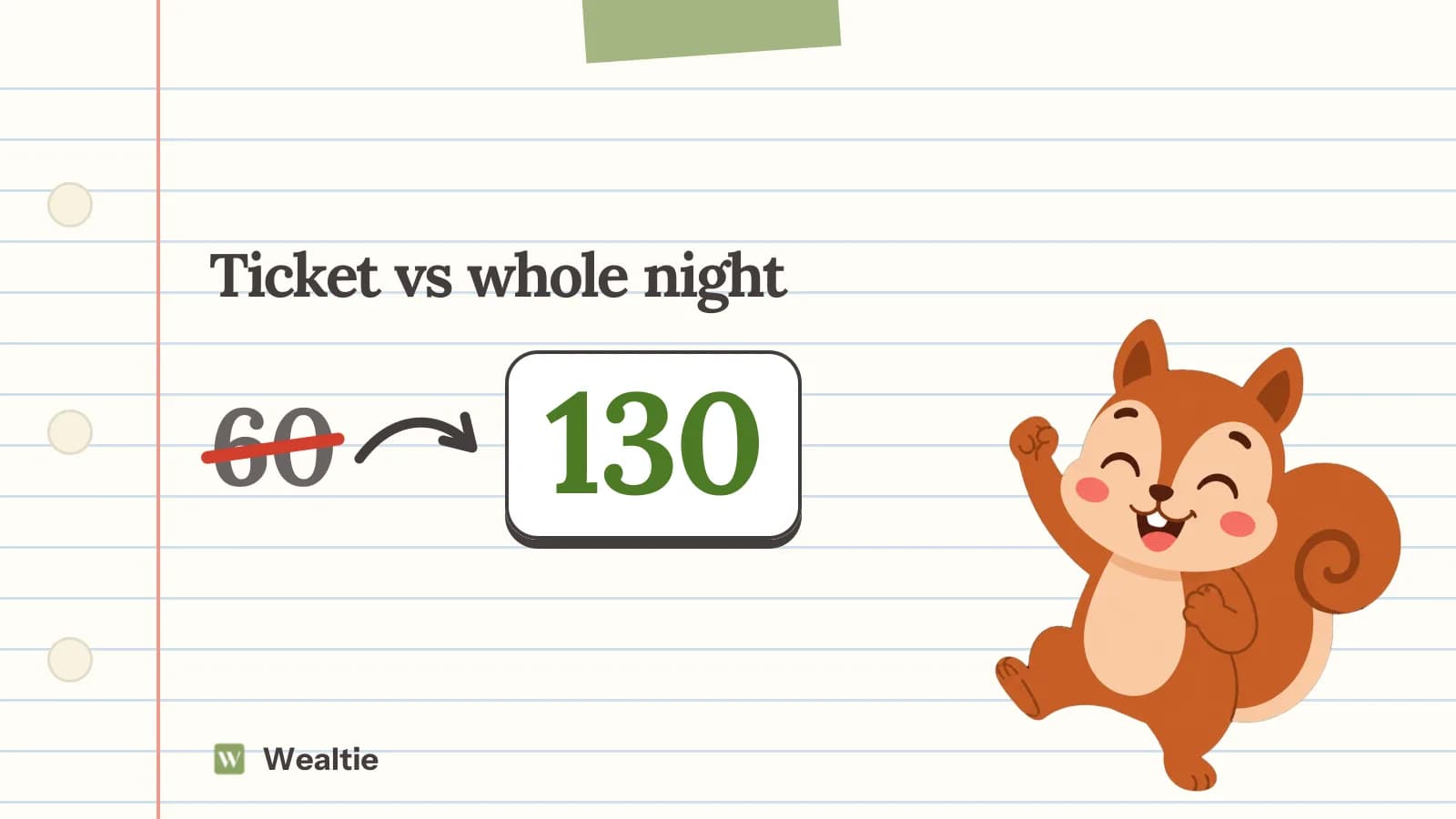
A budget for concerts and gigs needs to cover more than the ticket, with booking fees, travel, food, drinks and merchandise often adding as much again. In a worked example, a 60 ticket becomes a night costing about 130, so planning the whole night keeps live music affordable.
 By Wealtie Team · 3 min read
Key takeaways
- A budget for concerts should cover tickets, fees, travel, food, drinks and merchandise.
- In a worked example, a 60 ticket becomes a night costing about 130.
- Setting a yearly live music budget helps when several big shows go on sale at once.
- Buy only from official sellers to avoid fake tickets and inflated resale prices.
How do you budget for concerts?
Plan for the whole night, not just the ticket. Seeing a favourite artist live is worth a lot to many people, and it's a great thing to spend money on. But booking fees, travel, food, drinks and a t-shirt can almost double the cost of a night out. A budget for concerts that includes all of this means you can enjoy the show without a surprise afterwards.
What does a concert cost?
Here's a worked example for one night, in round numbers that work in any currency:
| Cost | Amount |
|---|---|
| Ticket | 60 |
| Booking fees | 10 |
| Travel | 20 |
| Food and drinks | 25 |
| Merchandise | 15 |
| Total | 130 |
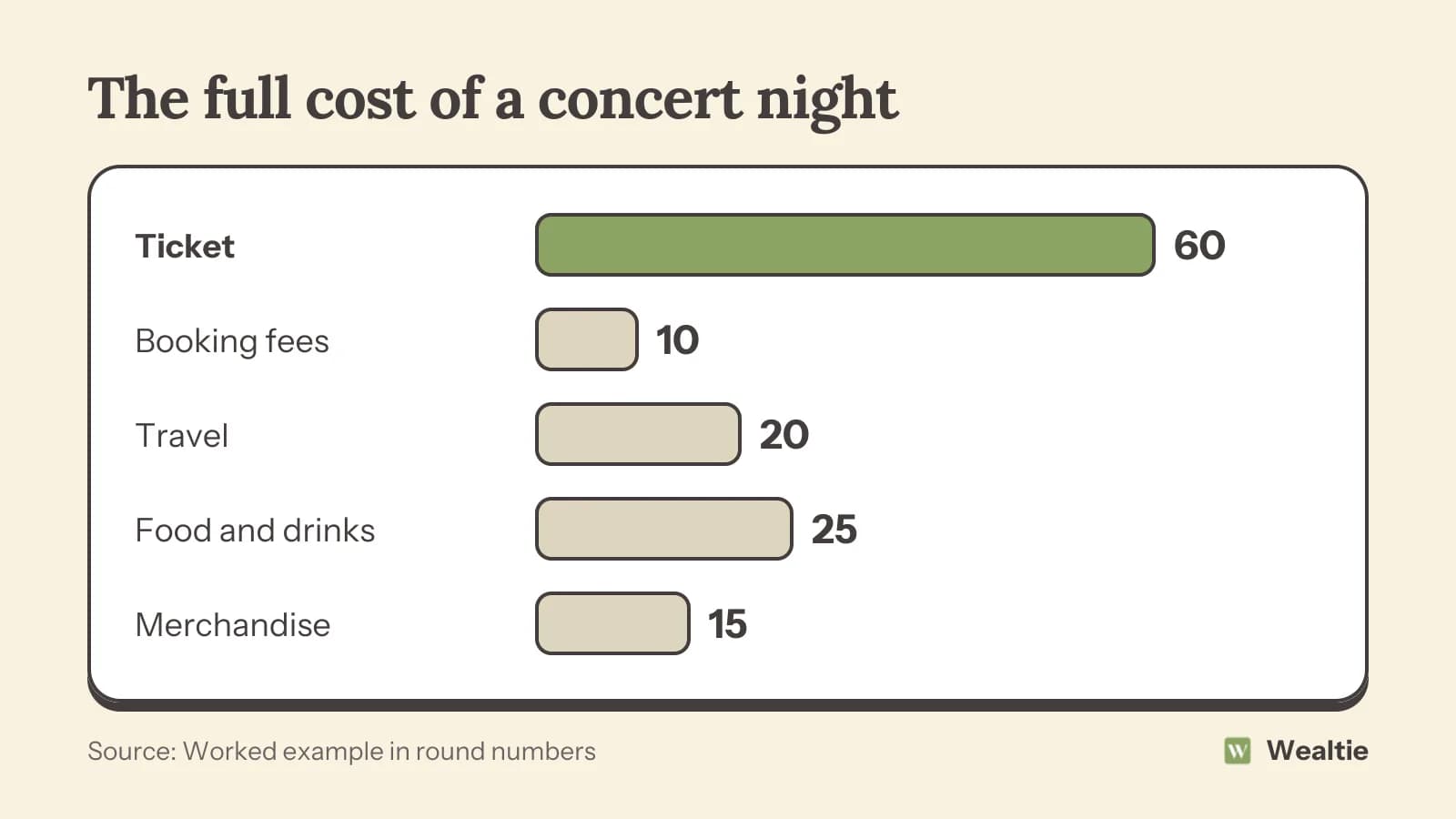
A local gig in a small venue might cost far less. A stadium show in another city, with a hotel and train, can cost much more. Your own figures depend on the artist, the venue and how far you travel.
How do you deal with ticket fees?
Check the full price before you buy. Many ticket sellers add booking, service or delivery fees at checkout, which can add a lot to a cheap ticket. Comparing the final price, rather than the headline price, helps you choose. Buying several tickets in one order sometimes reduces the fees per ticket, and buying at the venue box office, where possible, can avoid some fees altogether.
Avoid inflated resale
When big shows sell out fast, tickets often reappear on resale sites at much higher prices. Buy from official sellers or official resale platforms, where prices are often capped. Unofficial sellers can charge far more, and fake tickets are a real risk. If it seems too good to be true, it probably is.
How do you plan for big shows going on sale?
Set a yearly live music budget. Big tours are often announced months in advance, and tickets for several shows can go on sale around the same time. Deciding in advance how many concerts you'll go to in a year, and roughly what each will cost, stops you buying every ticket in the excitement of an announcement.
In a worked example, four concerts at 130 each come to 520 a year, or about 45 a month. Saving that each month means the money's ready when tickets go on sale. A sinking fund keeps it separate from everyday spending.
Pre-sales and queues
Pre-sales give fans early access, often through a newsletter, a fan club or a card provider. They can help you get tickets at face value before general sale. Decide your maximum price before the queue opens, since premium or demand-priced tickets can tempt you to spend more in the moment.
How do you save on the night itself?
Small choices make a big difference:
- Eat before you go, since venue food is usually expensive.
- Take public transport, or share a lift, instead of paying for parking or taxis.
- Set a drinks budget, and stick to it.
- Decide on merchandise before you arrive, rather than at the stall.
- Bring a refillable water bottle if the venue allows it.
If you're travelling to another city, booking travel and a room as soon as you have tickets usually costs less than waiting. If the show finishes late, check the last train or bus home before you buy, since a late taxi can cost more than the ticket.
How do you see more live music for less?
Look beyond the biggest shows. Smaller venues, local bands, free events in parks, student and community concerts and early support slots can be just as enjoyable for a fraction of the cost. Some venues offer cheaper tickets for standing areas or restricted views. Signing up to venue newsletters gives you early notice of shows and pre-sales.
If you love festivals, the music festival budget covers the costs of a full weekend. How to save money on entertainment has more ideas for nights out.
What if you can't go after buying?
Check the refund and resale policy before you buy. Many official sellers let you resell tickets you can't use at face value through their own platform. Ticket protection can sometimes be added for a fee, but read what it covers. Knowing your options means you're not stuck with a ticket you can't use. Keep the booking email and order number somewhere easy to find, since you'll need them for any resale or refund.
How do you track concert spending in Wealtie?
Give live music its own line in your expense categories, so tickets, travel and nights out add up in one place. Add a savings account for concerts and move money into it each month as a transfer, which isn't counted as spending. A monthly limit in the budget tracker keeps the rest of the month on track.
Questions people ask
In a worked example, a 60 ticket becomes a night costing about 130, with fees, travel, food, drinks and merchandise.
Compare the final price at checkout, buy at the box office where possible and buy several tickets in one order.
Use official sellers or official resale platforms. Unofficial sellers may charge far more or sell fake tickets.
Decide how many you'll attend, estimate the cost of each and save the total in monthly amounts.
This article is general information, not financial, tax or legal advice. Your situation is your own; check the numbers that apply to you before you act on them.