Saving: Should you pay off your mortgage early? What overpaying saves
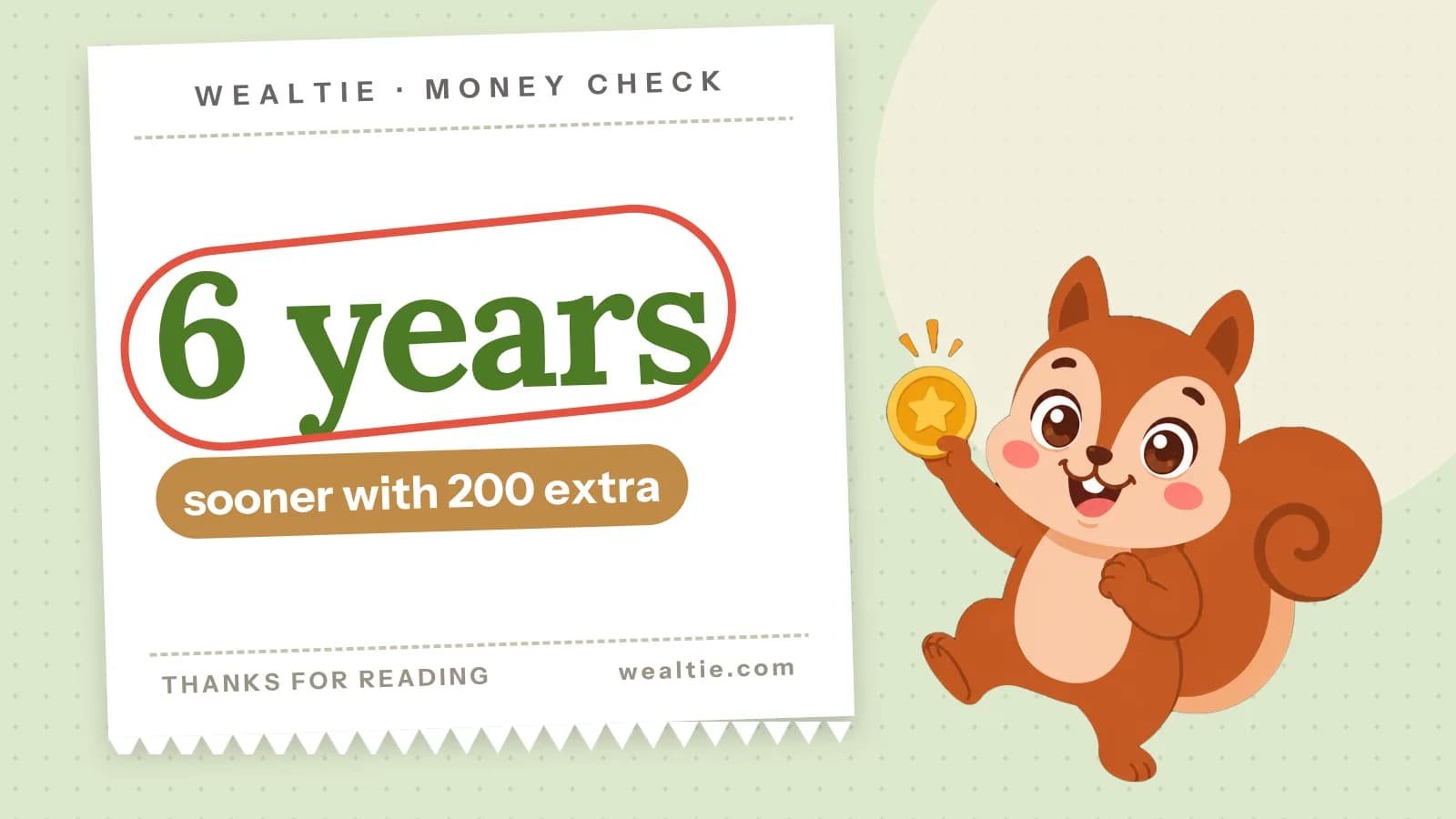
Should you pay off your mortgage early? It saves interest and gets you debt-free sooner: On a 200,000 mortgage at four percent over 25 years, an extra 200 a month saves about 31,000 in interest and six years, in a worked example.
 By Wealtie Team · 3 min read
Key takeaways
- Overpaying a mortgage reduces the interest you pay and shortens the loan.
- On 200,000 at four percent over 25 years, the payment is about 1,056 a month and the total interest about 116,700.
- Adding 200 a month cuts the term to about 19 years and the interest to about 85,600, a saving of about 31,000.
- Check for overpayment limits and charges, and clear costlier debt and build an emergency fund first.
Should you pay off your mortgage early?
It can be a good use of spare money, but only after a few other things are in place. Overpaying reduces the interest you pay over the life of the loan and gets you debt-free sooner. The trade-off is that money paid into a house is hard to get back if you need it.
What does overpaying save?
More than people expect, because interest is charged on the balance for years. Here's a worked example in round numbers that work in any currency: a 200,000 mortgage at a fixed four percent over 25 years.
| Regular payments | 200 extra a month | |
|---|---|---|
| Monthly payment | About 1,056 | About 1,256 |
| Years to pay off | 25 | About 19 |
| Total interest | About 116,700 | About 85,600 |
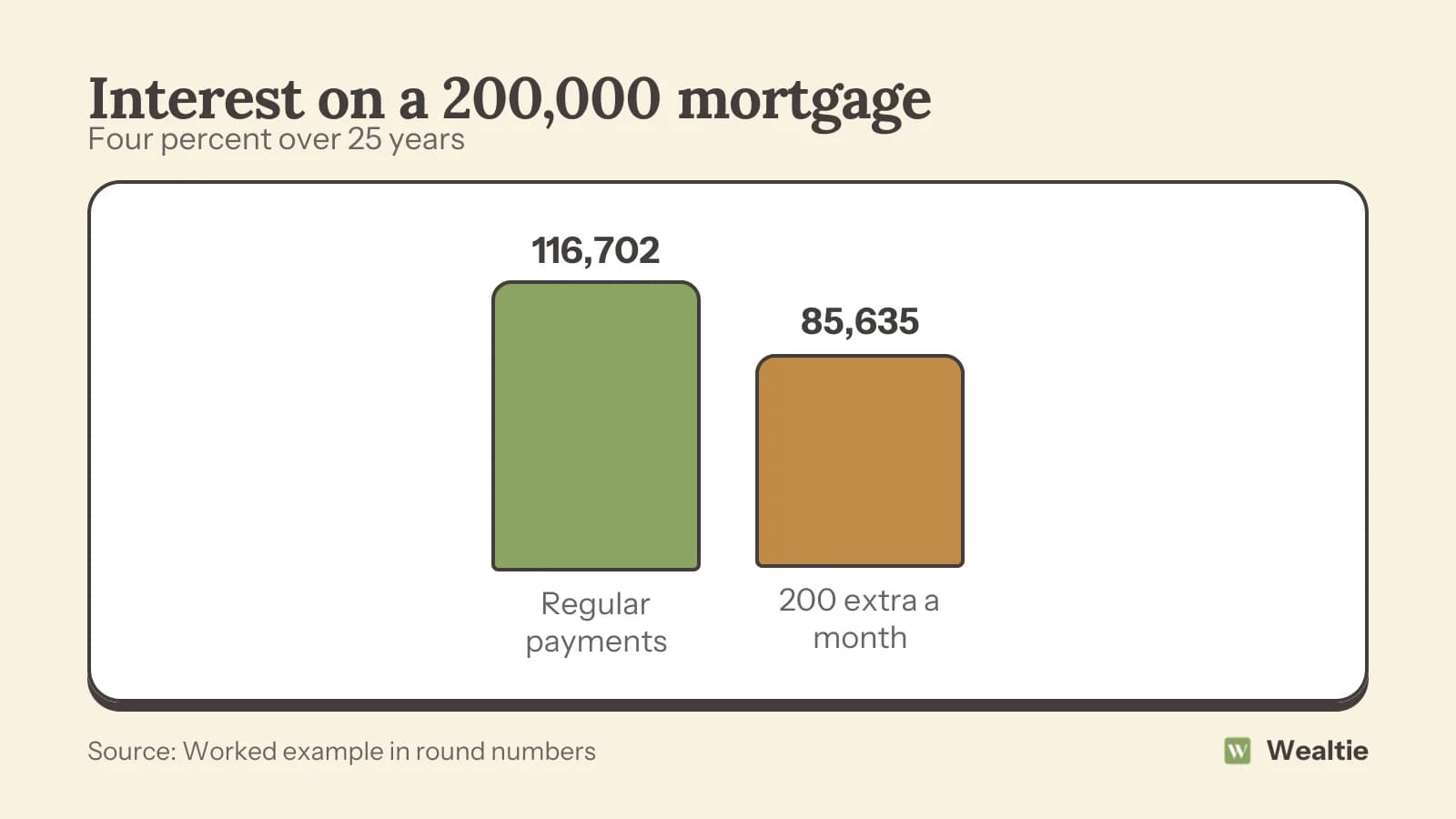
The extra 200 a month saves about 31,000 in interest and six years of payments. It works because each overpayment reduces the balance that interest is charged on, every month for the rest of the loan. That's why an overpayment in year two saves far more than the same amount in year twenty. Your own numbers depend on your rate, balance and term, so use your lender's calculator or ask them for figures.
What should you do before overpaying?
Check these first:
-
An emergency fund. Money in your house isn't available for a job loss or a repair. How much should be in an emergency fund helps set the target.
-
Costlier debt. Credit cards and personal loans usually charge more than a mortgage, so pay them first. Paying your credit card in full shows why.
-
Your mortgage terms. Many lenders limit how much you can overpay each year without a charge, especially on fixed-rate deals. Check before you start. If you're on a variable rate, overpaying also helps if rates rise, since a smaller balance means a smaller increase in payments.
-
Pension contributions. If your employer matches pension contributions, that match is often worth more than the interest saved on a mortgage.
When is overpaying not the best move?
When your mortgage rate is low and you could earn more elsewhere over a long period, or when it would leave you without a cushion. If your rate is lower than what savings pay, keeping the money in savings can come out ahead, and it stays available.
Tax can change the sum as well. In some countries mortgage interest is tax-deductible, which makes overpaying less valuable, so check what applies to you. It also depends on how you feel about debt. Some people value being mortgage-free so much that a slightly lower return doesn't matter to them. That's a reasonable choice, as long as the emergency fund comes first.
Should you shorten the term or lower the payment?
Many lenders let you choose what an overpayment does: reduce the monthly payment and keep the same end date, or keep the payment and finish sooner. Finishing sooner usually saves more interest. A lower payment gives you more room each month. Ask your lender which applies, since some decide for you.
Lump sums or monthly overpayments?
Either works. Monthly overpayments are easy to automate and add up steadily. Lump sums, like a bonus or a tax refund, can make a big dent at once. What to do with a tax refund puts the mortgage in the order with other uses.
The earlier in the mortgage you overpay, the more you save, because the balance is highest then. Keep a record of each overpayment and check your annual statement to make sure it was applied to the balance.
What about when your fixed rate ends?
That's often a good moment to make bigger changes. Many lenders allow larger overpayments or a lump-sum reduction when you remortgage, without charges. If you've built up savings, putting some toward the balance can also get you a better rate on the new deal. Remortgaging brings fees of its own, so compare the total cost of each deal, not only the rate.
How do you track a mortgage in Wealtie?
Set the monthly payment up as a recurring transaction with the bill tracker, so it logs itself on the due date. Overpayments can go down as their own expense, so you can see what you've put in. Your net worth tracker adds up the accounts you've entered; it doesn't value your home, so add the house and mortgage only if you want to track them by hand.
Questions people ask
It can be, once you have an emergency fund, no costlier debt and you've checked your lender's overpayment rules. On a 200,000 loan at four percent, 200 extra a month saves about 31,000 in interest in a worked example.
About 31,000 of interest and six years in a worked example with 200 extra a month on a 200,000 mortgage at four percent. Your own figure depends on your rate, balance and term.
Sometimes. Many lenders limit how much you can overpay each year without a charge, especially on fixed-rate deals, so check your terms.
Build an emergency fund and clear costlier debt first. After that, compare your mortgage rate with what savings pay and decide how much you value being debt-free.
This article is general information, not financial, tax or legal advice. Your situation is your own; check the numbers that apply to you before you act on them.