Budgeting: Is breakdown cover worth it? Costs, levels and when to skip it
Is breakdown cover worth it? For many drivers it is, since one roadside call-out or tow without cover can cost more than a year of protection, and in a worked example basic cover costs about 60 a year.
 By Wealtie Team · 3 min read
Key takeaways
- Breakdown cover can be worth it if one call-out would cost more than a year of cover.
- In a worked example, basic roadside cover costs about 60 a year.
- Check whether you already have cover through your bank account, car or insurance.
- Older cars and long journeys make cover more valuable.
Is breakdown cover worth it?
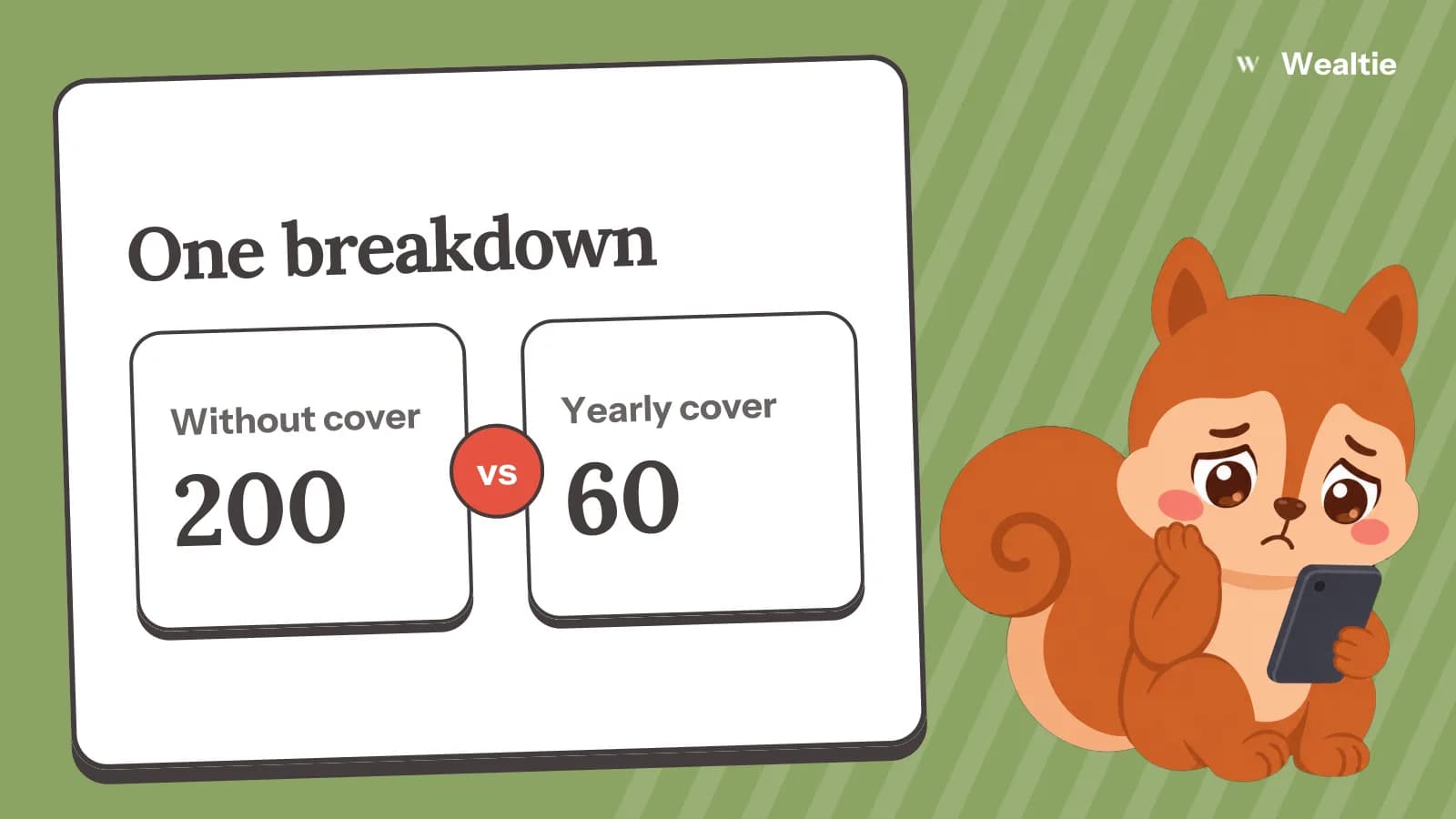
For many drivers, yes. Breakdown cover pays for help if your car breaks down: a mechanic to fix it at the roadside, or a tow to a garage if it can't be fixed. Without cover, paying for a call-out or tow on the spot can be expensive, especially at night, on a motorway or far from home. In a worked example, one call-out without cover costs about 200, while basic roadside cover costs about 60 a year.
Whether it's worth it depends on your car, how far you drive and whether you already have cover through something else. Many people pay for breakdown cover twice without realising.
It also buys peace of mind. Knowing that one phone call will get help, without worrying about the cost, makes long journeys and night driving less stressful, especially for people driving alone or with children.
The most common reasons for breakdowns are often simple: flat batteries, flat tyres, running out of fuel and minor electrical faults. Many of these can be prevented with regular checks, a well-maintained car and keeping the tank from running too low. Good maintenance doesn't replace breakdown cover, but it makes call-outs less likely, which is better for your time and your stress levels.
What does breakdown cover cost?
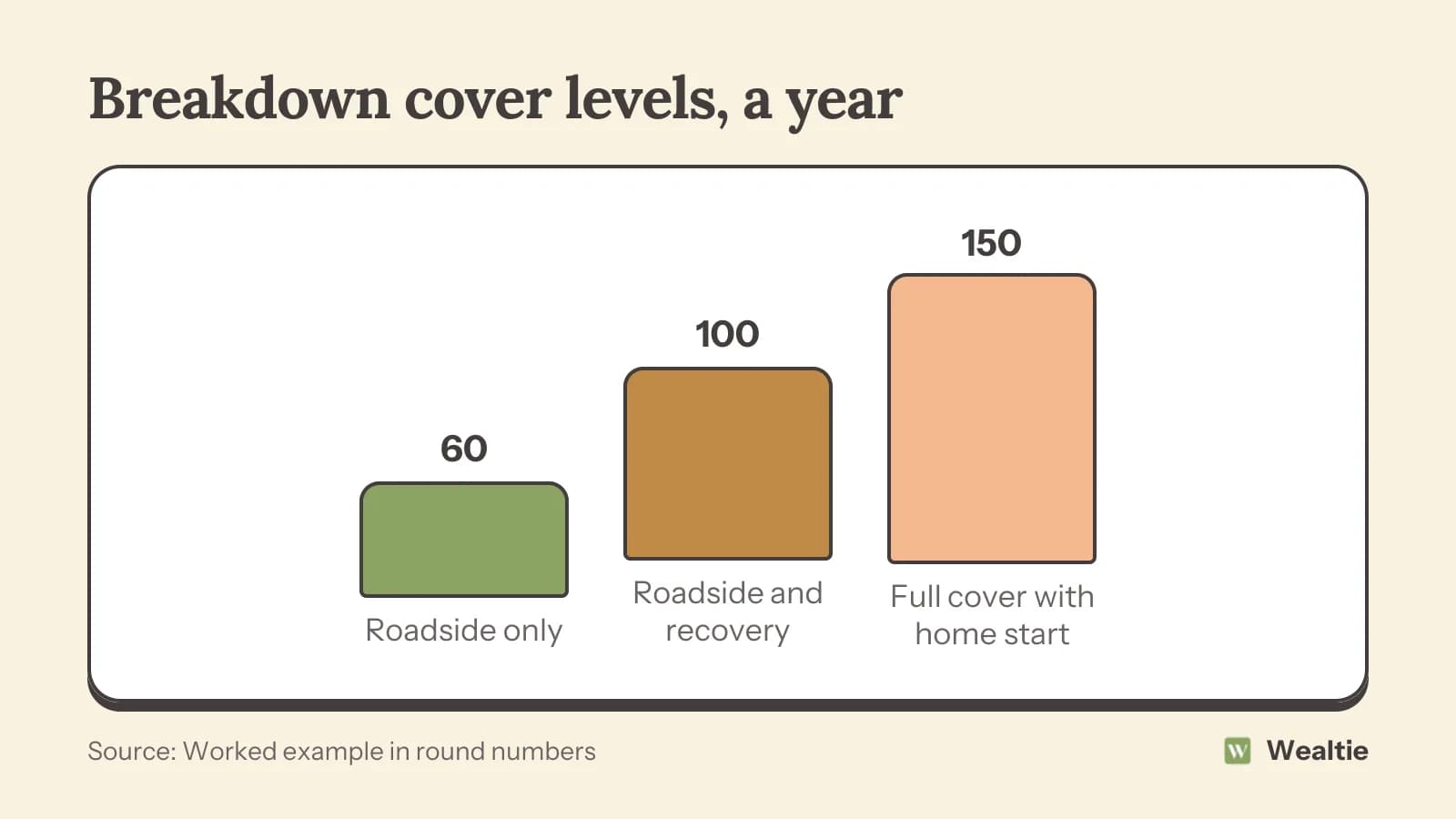
Here's a worked example of yearly cover levels, in round numbers that work in any currency:
| Cover level | A year |
|---|---|
| Roadside only | 60 |
| Roadside and recovery | 100 |
| Full cover with home start | 150 |
Prices vary by provider, your car and whether the cover follows you or the vehicle. Cover for driving abroad usually costs extra. Some providers charge more for older cars or limit the number of call-outs a year, so read the terms before choosing on price alone.
What do the different levels cover?
Roadside assistance
A mechanic comes to fix the car where it broke down, as long as you're away from home. If it can't be fixed, you may get a short tow to a nearby garage.
Recovery
Takes you, your passengers and your car to a destination of your choice, such as home or your own garage, if the car can't be fixed at the roadside.
Home start
Covers breakdowns at or near your home, like a flat battery on a cold morning. It's one of the most used parts of cover, since many breakdowns happen at home.
Onward travel
Some policies include a hire car, train fares or a hotel if you're stranded far from home.
Do you already have breakdown cover?
Check before you buy. Some bank accounts include breakdown cover as a perk. New and some used cars come with cover from the manufacturer or dealer for a set time. Some car insurance policies include basic cover or offer it as an add-on. Paying for two policies that cover the same thing wastes money. Which insurance do you need? covers checking for overlaps across all your policies.
When is breakdown cover most worth it?
It's most valuable for older cars, people who drive long distances or at night, drivers who travel with children, and anyone who'd struggle to pay a large call-out bill unexpectedly. It may matter less if you drive a new car with manufacturer cover, rarely drive far from home and have savings to cover a one-off call-out.
How can you pay less for breakdown cover?
Compare prices each year, since renewal prices are often higher than new-customer deals. Choose the level you need, not the most expensive. If you rarely drive far from home, roadside cover may be enough, while frequent long journeys make recovery more useful. Personal cover, which follows you in any car, can suit people who drive different cars, while vehicle cover suits households sharing one car. Paying yearly is often cheaper than monthly. How to save money on car insurance covers similar tactics for your main policy, and how to cut subscription costs helps you review regular payments.
Keep a car fund too
Breakdown cover pays for help getting going, but not usually for parts and repairs. A car repair fund covers the garage bill afterwards. How much car can I afford? covers the full cost of running a car.
How do you track breakdown cover in Wealtie?
Add the policy as a recurring transaction, so it logs itself on its date and you can see when it renews. Keep it in a car category among your expense categories, and set a budget for car costs.
Questions people ask
For many drivers, yes. In a worked example, one call-out without cover costs about 200, while basic cover costs about 60 a year.
In a worked example, roadside cover costs about 60 a year, roadside and recovery about 100 and full cover about 150.
Possibly. Check your bank account perks, car manufacturer cover and car insurance policy before buying.
Drivers of older cars, people who drive long distances or at night and anyone who couldn't easily pay a large call-out bill.
This article is general information, not financial, tax or legal advice. Your situation is your own; check the numbers that apply to you before you act on them.