Budgeting: Is bills-included rent worth it? The sums compared
Is bills-included rent worth it? It can be for convenience and budgeting, but it often costs more than paying bills yourself, so compare the totals.
 By Wealtie Team · 3 min read
Key takeaways
- Bills-included rent is convenient but often costs more than paying bills yourself.
- Compare the all-in price with rent plus estimated bills.
- Check exactly which bills are included and any fair-use limits.
- Bills-included can suit students, sharers and people who want fixed costs.
Is bills-included rent worth it?
Some rentals include bills in the rent, so you pay one fixed amount each month for rent, energy, water and often internet. It's common in student housing, room lets, house shares and some furnished flats. The appeal is simple budgeting: no separate bills, no splitting with housemates and no surprises in winter. But convenience usually comes at a price.
Here's a worked example for a one-bedroom flat, in round numbers that work in any currency:
| Option | Monthly cost |
|---|---|
| Rent plus bills paid separately | 880 |
| Bills-included rent | 950 |
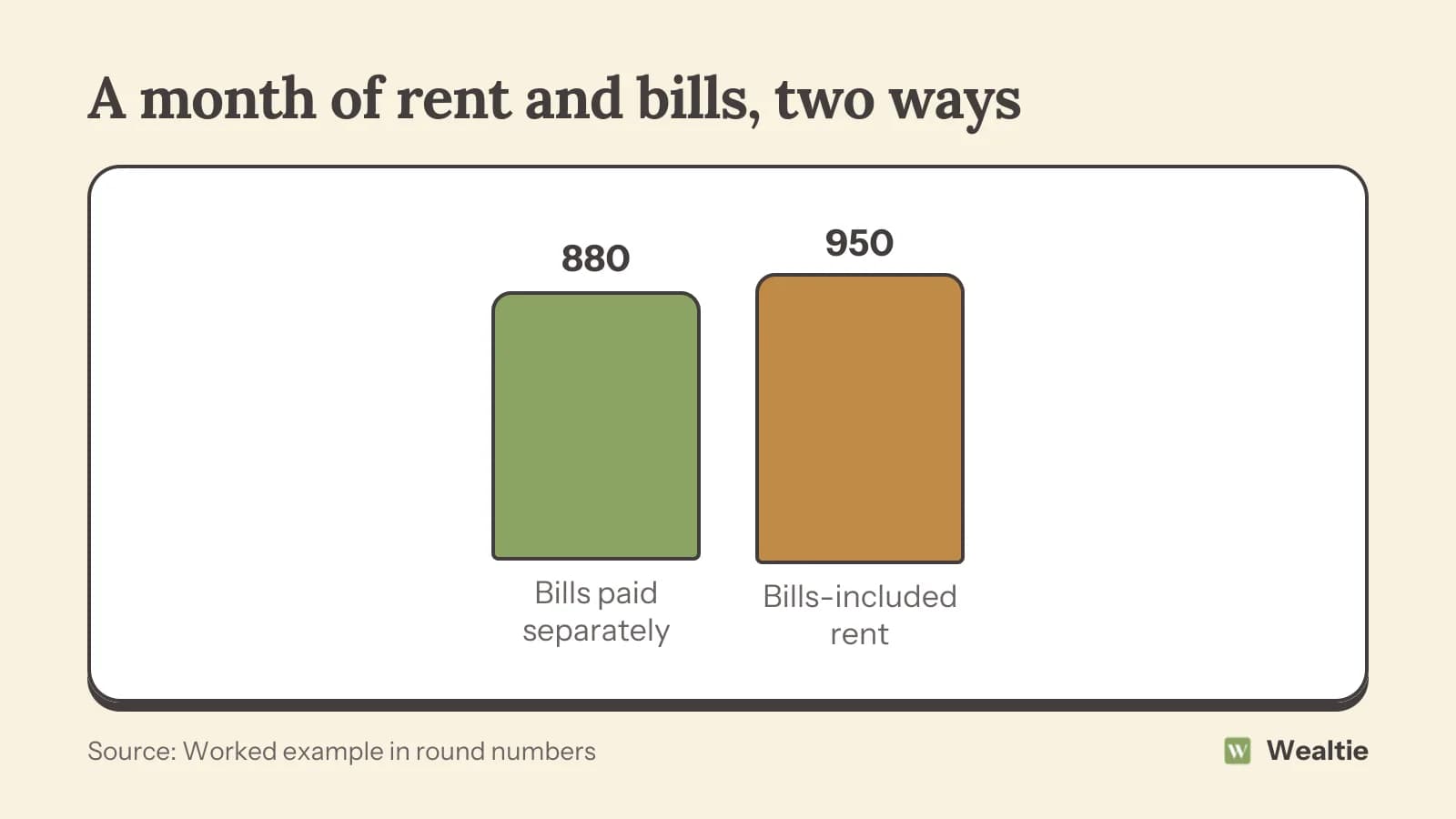
Paying separately, rent of 750 plus energy of 70, water of 25 and internet of 35 comes to 880. The bills-included flat costs 950, so it's 70 a month more, or 840 a year. In some cases, though, bills-included rent works out cheaper, especially in winter or for heavy energy users.
What's usually included?
Energy
Electricity and gas or heating are usually included, sometimes with a fair-use limit.
Water
Water and sewerage are often included.
Internet
Many bills-included rentals include broadband, though speeds vary.
Local taxes
Some include local property taxes, others don't. Check carefully.
TV licences and streaming
These are rarely included. Check if relevant where you live.
Always ask for a list of exactly what's covered, and whether there are any caps on usage. Some landlords charge extra if energy use goes above a set amount.
When is bills-included rent worth it?
You want predictable costs
A fixed monthly amount makes budgeting easier, especially if you're new to paying bills or on a tight budget.
You're sharing with others
Splitting bills between housemates can cause arguments. All-in rent avoids that. How to split utilities with roommates covers the alternative.
You use a lot of energy
If you work from home, feel the cold or live in a poorly insulated home, bills-included can save money, especially in winter.
You're renting short term
For a few months, setting up and closing bill accounts can be more hassle than it's worth.
You're a student
Student accommodation often includes bills, which keeps costs simple. University accommodation costs covers the options.
When is paying bills yourself better?
You use little energy
If you're out a lot or careful with heating, you may pay much less than the bills-included premium.
You want to choose suppliers
Paying yourself lets you shop around for cheaper energy and internet deals.
You're staying long term
Over a year or more, a monthly premium adds up. Shopping around for bills can save more.
How do you compare the two?
Ask the landlord or previous tenants what bills usually cost, or check typical bills for a similar home in the area. Add up rent and estimated bills, including higher winter energy costs, and compare that with the bills-included price. How much rent can you afford? covers working out what fits your budget.
Before signing, ask the landlord or agent a few direct questions. Which bills are included, exactly? Is there a cap on energy use, and what happens if you go over it? Who chooses the internet provider and what speed is it? Are local taxes included? Getting the answers in writing avoids disputes later, especially if energy prices rise during your tenancy.
It's also worth thinking about how energy prices affect each option. When prices rise, bills-included rent can protect you from sudden increases, at least until the landlord raises the rent at renewal. When prices fall, paying bills yourself means you get the benefit straight away. If you value certainty, a fixed all-in price may be worth a small premium.
For shared houses, bills-included rent removes the need for one person to put bills in their name and chase others for money. That can make life easier for everyone, especially among people who don't know each other well. If you do pay bills separately, a shared spreadsheet or app for splitting them fairly helps keep the peace.
Finally, review your choice when you move next. Comparing what you spent on bills with the all-in prices on offer gives you real numbers to decide with, rather than guesses.
If you work from home, factor that in too. Heating and electricity use rise when you are home all day, which can make bills-included rent better value than it first looks.
How can Wealtie help you compare?
Add rent and each bill as recurring transactions in Wealtie, and log them in a housing expense category. After a few months, you'll know what your bills cost, which makes it easy to compare with a bills-included offer when you next move.
Questions people ask
It can be for convenience and predictable costs, but it often costs more than paying bills yourself. Compare the totals.
Energy, water and internet are commonly included. Local taxes and TV licences vary, so always check.
Sometimes, especially for heavy energy users or in winter. Often it costs a little more for the convenience.
It's a cap on how much energy you can use before the landlord charges extra. Ask whether one applies.
This article is general information, not financial, tax or legal advice. Your situation is your own; check the numbers that apply to you before you act on them.