Multi-currency & travel: How to plan a backpacking budget
A backpacking budget starts with a daily amount for where you're going, plus flights, gear, insurance and a buffer for surprises. In a worked example, a three-month trip costs about 5,500, and tracking spending as you go keeps the money lasting as long as the trip.
 By Wealtie Team · 3 min read

Key takeaways
- A backpacking budget combines a daily amount with flights, gear, insurance and a buffer.
- In a worked example, three months costs about 5,500, with daily costs the biggest part.
- Daily costs vary hugely by region, so research where you're going.
- Tracking spending as you go helps the money last the whole trip.
How do you plan a backpacking budget?
Start with a daily amount for each place you'll visit, then add the costs you pay once: flights, gear, insurance and a buffer. Backpacking can be one of the cheapest ways to see the world, but costs vary enormously between regions, and small daily overspends add up over weeks. A clear budget lets you travel longer and with less worry.
Begin with your route, roughly how long you'll spend in each place and what kind of travel you want: hostels and street food, or a mix with some comforts.
What does a backpacking trip cost?
Here's a worked example for three months, in round numbers that work in any currency:
| Cost | Amount |
|---|---|
| Daily costs, 90 days at 40 | 3,600 |
| Flights | 900 |
| Gear | 300 |
| Insurance | 200 |
| Buffer | 500 |
| Total | 5,500 |
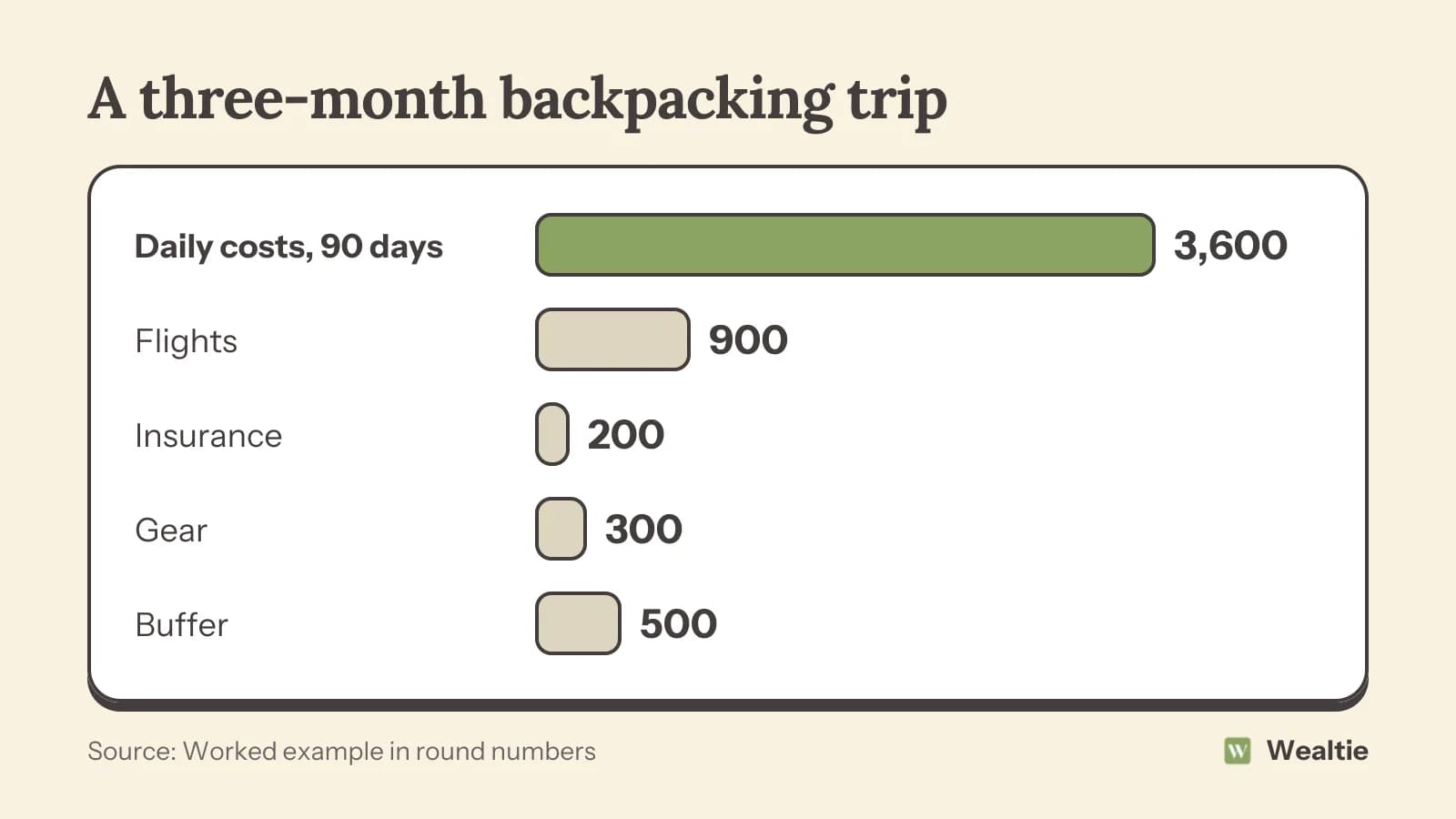
Your own figures depend on where you go and how you travel. In some regions, 40 a day covers a comfortable trip; in others, it barely covers a hostel bed.
How do you set a daily budget?
Research costs for each place, then set a daily figure that covers:
- A bed in a hostel or guesthouse
- Food, mixing cheap meals with the occasional treat
- Local transport
- Activities and entry fees
- Small extras, like laundry, toiletries and data
Use travel forums, recent blogs and hostel booking sites to see current prices. If your route covers several regions, set a different daily amount for each. Sites and apps that list local prices for meals and transport help you check whether your figure is realistic. Spending less in cheaper places can balance out a few expensive days elsewhere.
Big costs that aren't daily
Some costs don't fit a daily figure: a multi-day trek, a diving course, a long overland bus or a visa. List these separately and add them to the total, so they don't eat into everyday money.
How do you save on flights and transport?
Book long-haul flights early and be flexible with dates. A round-the-world ticket or open-jaw flights, arriving in one city and leaving from another, can save backtracking. Overland travel by bus or train is usually cheaper than short flights, and overnight journeys can save a night's accommodation. How to save money on flights has more ideas.
What gear and insurance do you need?
Less than you think. A good backpack, comfortable shoes, a few quick-drying clothes, a basic first aid kit and a padlock for hostel lockers cover most trips. Borrow or buy second-hand where you can, and buy small items at your destination if they're cheaper there. Packing light also saves on baggage fees. A refillable water bottle with a filter can save money in places where bottled water is the norm.
Travel insurance
For most backpackers, yes. Medical costs abroad can be very high, and insurance also covers theft, cancellations and lost bags. Check that the policy covers the activities you'll do, like trekking or diving, and the full length of your trip. Is travel insurance worth it covers what to look for.
How do you handle money on the road?
Carry a mix: a card with low or no foreign fees, a backup card kept separately, and a little cash in local currency. Withdraw larger amounts less often to cut ATM fees, and always choose to pay in local currency when a card machine offers a choice. Keep a note of your cards' emergency numbers somewhere separate, in case they're lost. Is it cheaper to withdraw money abroad covers ATM fees and exchange rates.
Tracking as you go
Logging spending each day, even roughly, shows whether you're on track. If you're over budget after the first week, you can adjust early, with cheaper meals or slower travel, rather than running short at the end. How to track a trip in Wealtie shows a simple way to do it.
How do you save for a backpacking trip?
Divide the total by the months before you leave. A 5,500 trip saved over ten months is 550 a month. Selling things you won't need, picking up extra shifts or cutting a few regular costs before you go all help. Some travellers also work along the way, but don't count on it unless your visa allows it. If you're planning a longer break, the gap year budget covers a full year away.
How do you track a backpacking trip in Wealtie?
Add an account for each currency you'll use, so spending is recorded in the money you paid in, with totals converted into your display currency. Log daily costs in expense categories like accommodation, food and transport, and set a monthly limit in the budget tracker to see whether you're on pace.
Questions people ask
In a worked example, three months costs about 5,500, including daily costs, flights, gear, insurance and a buffer.
It varies hugely by region. Research hostel, food and transport prices for each place and set a daily figure for each.
For most trips, yes, since medical costs abroad can be very high. Check it covers your activities and trip length.
Track spending daily, travel overland, cook or eat cheaply, and balance expensive places with cheaper ones.
This article is general information, not financial, tax or legal advice. Your situation is your own; check the numbers that apply to you before you act on them.