Money as a couple: What to do with your budget when your partner loses their job
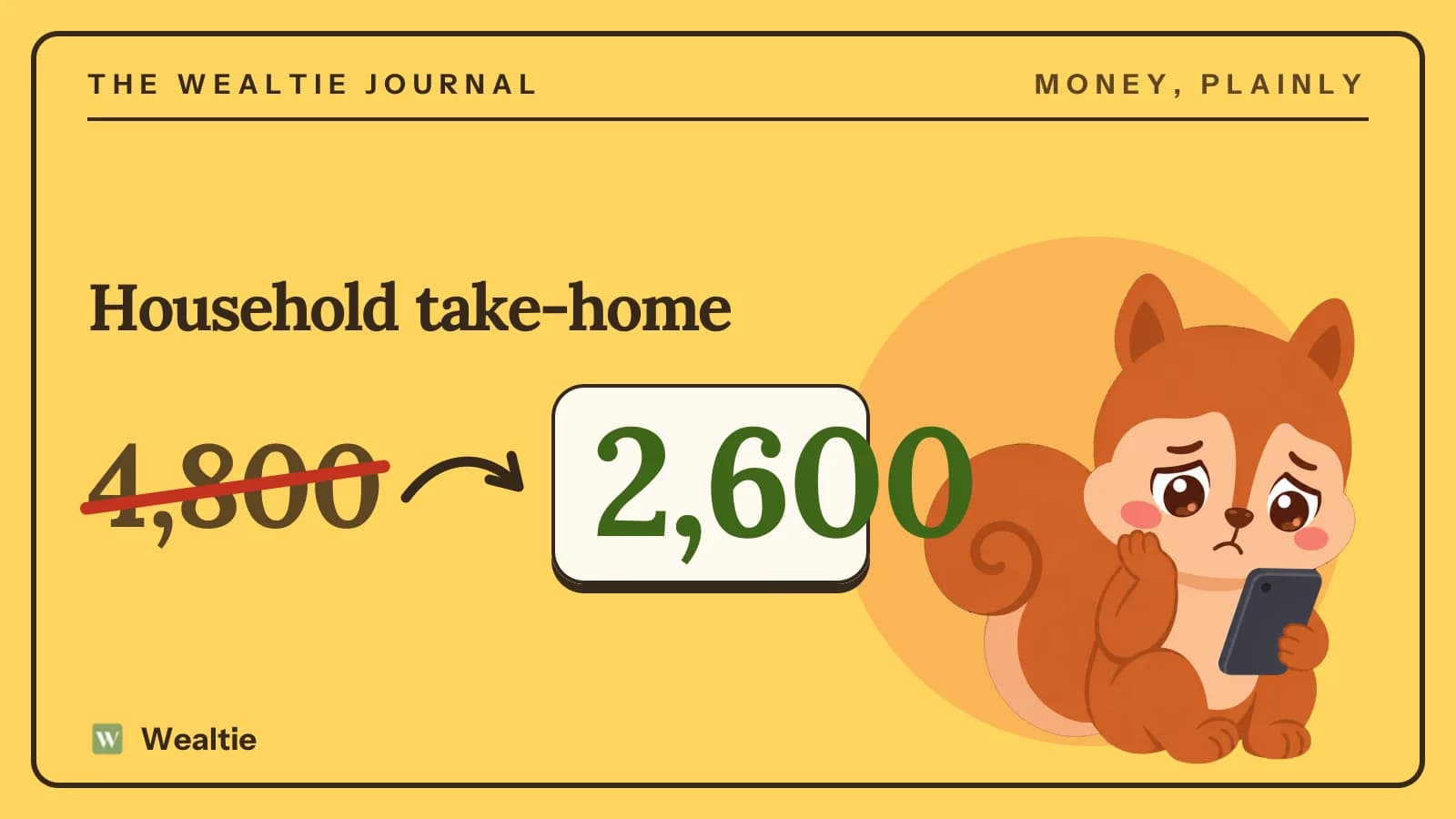
If your partner lost their job, work out the new household income together, cut shared costs to essentials, claim any support and agree how long savings can cover the gap. In a worked example, household take-home falls from 4,800 to 2,600.
 By Wealtie Team · 3 min read
Key takeaways
- Work out the new household income and costs together, as a team.
- In a worked example, household take-home falls from 4,800 to 2,600, and the gap is closed with cuts, paused savings, support and some savings.
- Agree how long savings can cover the gap, so you both know the timeline.
- Support each other emotionally as well as financially, since job loss is stressful for both partners.
What should you do when your partner loses their job?
Sit down together, look at the new numbers and make a plan as a team. A job loss affects the whole household, not just the person who lost the job. Facing it together, with a clear picture of money coming in and going out, makes the weeks ahead much easier for both of you.
How do you work out the new budget?
Start with the new household income and compare it with your costs. Here's a worked example in round numbers that work in any currency. Household take-home falls from 4,800 to 2,600, a gap of 2,200 a month. Here's one way to close it:
| Change | Monthly |
|---|---|
| Cuts to shared spending | 700 |
| Pausing savings transfers | 400 |
| Support claimed by the partner who lost their job | 300 |
| Drawn from savings | 800 |
| Total | 2,200 |
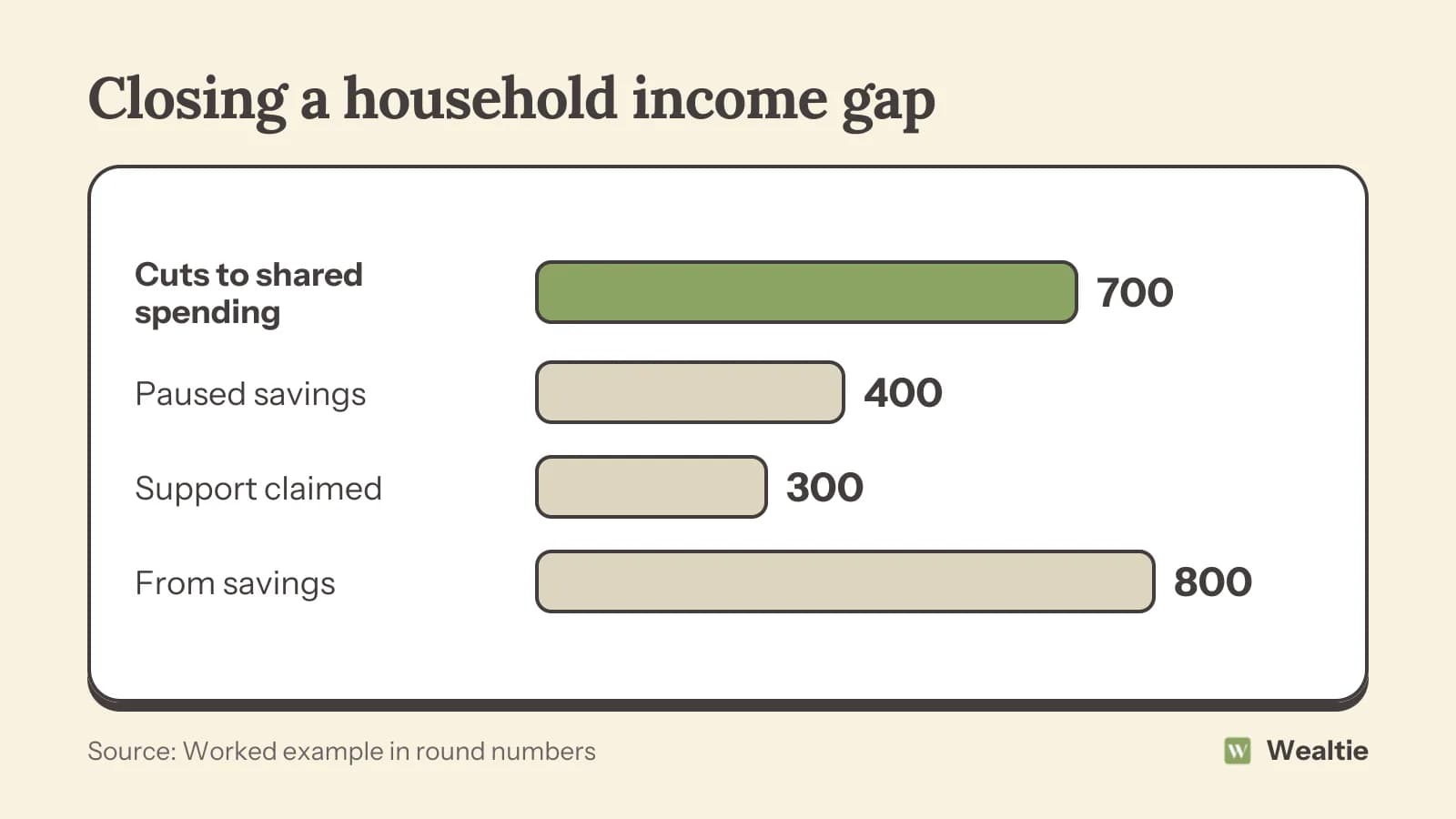
If the household has 8,000 in savings, drawing 800 a month lasts about ten months. Write down the plan, with each change and its amount, so you can both see it and check it each month. It also makes it easier to see which cuts to reverse first when income returns. Knowing that figure gives you both a timeline, which reduces the pressure on a quick job search.
What happens to the budget when your partner lost their job?
Most of the household's fixed costs stay the same, while income drops. Rent, utilities and debt payments still need paying, so the gap has to come from flexible spending, support and savings. Seeing that clearly on paper, together, makes it easier to agree where cuts should come from and stops either partner worrying in silence. Revisit the numbers once support payments start, since they can change the picture.
What should you cut first?
Shared flexible spending: eating out, takeaways, subscriptions, holidays and non-essential shopping. Keep housing, utilities, food, insurance and debt payments. A bare bones budget shows what to keep and what to pause. Agree the cuts together, so neither of you feels the other is making all the sacrifices. Each of you choosing one thing to cut, and one thing to keep, makes it fairer and easier to stick to. Check for annual subscriptions and memberships that could be paused or cancelled for a refund.
What support should you claim?
Your partner should apply for any unemployment support straight away, since it can take weeks to start. Check whether the household is now entitled to other help, like housing support or reduced local taxes, since a lower household income can change eligibility. Check any redundancy pay, notice pay or unused holiday owed. How to budget after losing your job has the full list.
How do you share the remaining costs fairly?
Talk about it openly. If you split costs by income before, the split needs to change. Many couples pool everything during a job search, so the partner without income isn't left with nothing. Make sure both of you have a small amount of personal money, so the partner who lost their job doesn't have to ask for every small purchase.
Living on one income covers how households manage on a single income for longer.
How do you support each other?
Job loss can be hard on confidence and relationships. Keep money conversations calm and regular, like a short weekly check-in, rather than constant. Focus on the plan, not on blame. The partner still working may feel pressure too, so share how you're both feeling. Celebrate small steps, like an interview or a month on budget. Free activities together, like walks or cooking at home, keep life feeling normal while money is tight. Talking to friends or family can help too, so the stress isn't only between the two of you.
What if it takes longer than expected?
Review the plan each month. If savings are running lower than expected, look at bigger changes, like reducing housing costs, picking up temporary work, or speaking to lenders about payment plans. Contact companies before missing payments, since many have hardship options. If your partner takes temporary or part-time work, check how it affects any support they're receiving, and update the plan with the new income.
How do you manage shared money in Wealtie?
A shared account gives both of you the same view of household spending, with owner, editor and viewer roles. Set the household's new monthly limit in the budget tracker, and Budget Health warns you mid-month if spending runs ahead. The account owner needs Pro to invite, and the other person can be on any plan. The shared accounts page has more.
Questions people ask
Work out the new household income together, cut shared costs to essentials, claim any support and agree how long savings can cover the gap.
Pool money if you didn't before, cut flexible spending, keep a small personal amount for both partners and review the plan monthly.
Yes, that's what an emergency fund is for. Work out how many months it covers, so you both know the timeline.
Keep money talks calm and regular, focus on the plan rather than blame and share how you're both feeling.
This article is general information, not financial, tax or legal advice. Your situation is your own; check the numbers that apply to you before you act on them.