Budgeting: How to budget for adopting a child
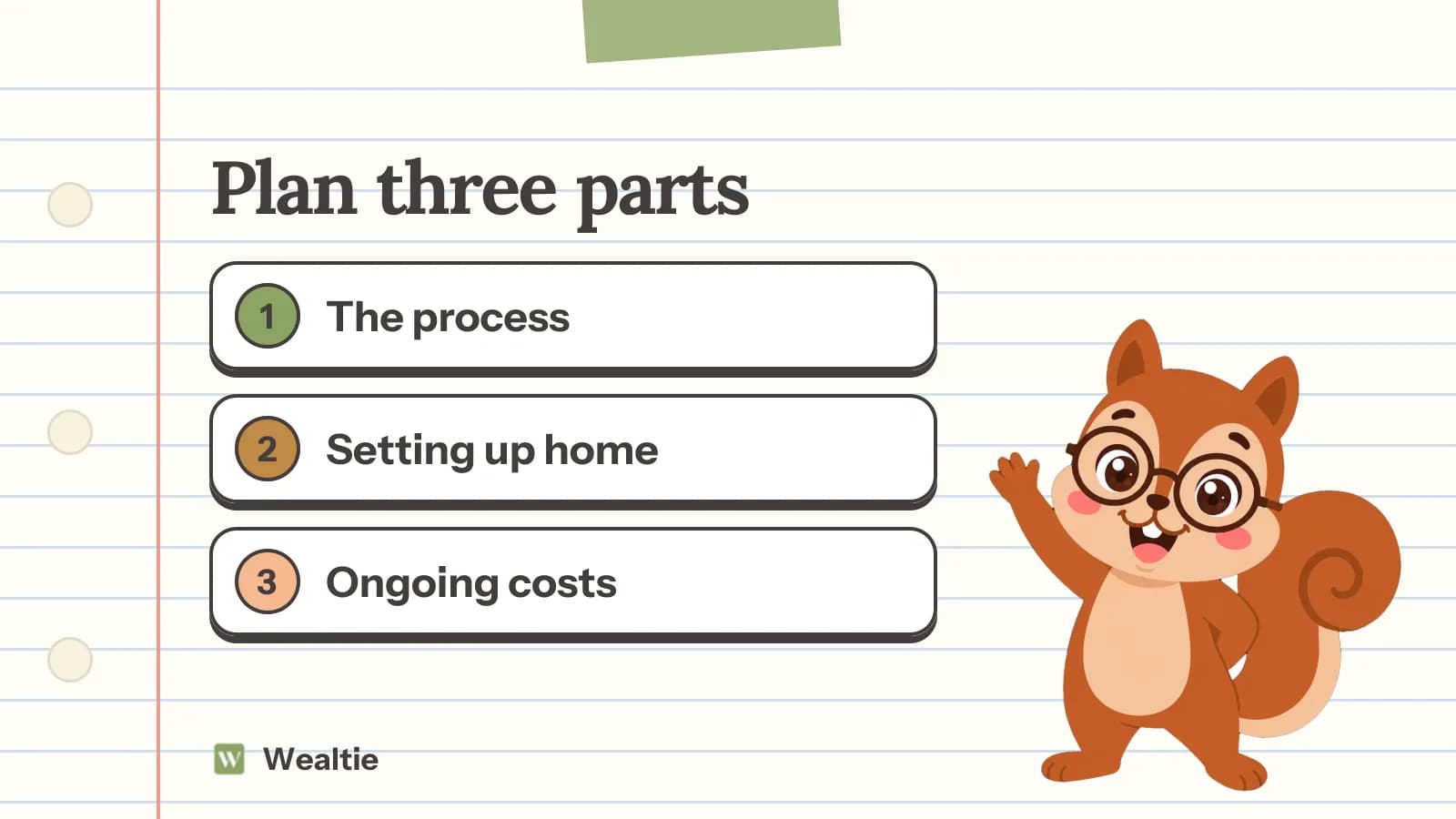
To budget for adopting a child, plan for the process itself, setting up your home and the ongoing costs of a growing family. Costs vary hugely by country and route, from little or nothing through some public agencies to large fees for private or international adoption, so ask for a full breakdown early.
 By Wealtie Team · 3 min read
Key takeaways
- A budget for adopting a child covers the process, setting up your home and ongoing costs.
- Costs vary hugely between countries and between public, private and international routes.
- In a worked example, setting up a home for a child costs about 850.
- Check what financial support, leave and allowances may be available to adoptive families.
How do you budget for adopting a child?
Think about three parts: the adoption process, setting up your home, and the ongoing costs of raising a child. Adoption brings a child into a family who needs one, and for many people, it's the most meaningful decision of their lives. The money side varies more than almost any other family cost, so getting a clear picture early helps you plan with confidence.
The rules and costs depend heavily on your country and the route you take, so check with agencies where you live.
What does the adoption process cost?
It depends on the route. Broadly:
- Public or local authority adoption, in many countries, involves little or no fee, since the focus is on finding homes for children in care.
- Private or agency adoption, where available, can involve fees for assessments, matching and legal work.
- International adoption often costs the most, with agency fees, legal costs in two countries, document translation, visas and travel.
Ask each agency for a full written breakdown of fees and when they're due, and what happens if the process takes longer than expected.
Common process costs
Depending on your route, costs can include home study or assessment fees, medical checks, background checks, legal fees for the court order, document fees and travel to meet the child or attend court. Some are paid upfront and others later, so a timeline helps you plan.
What does setting up your home cost?
Here's a worked example for a school-age child, in round numbers that work in any currency:
| Cost | Amount |
|---|---|
| Bedroom and furniture | 400 |
| Clothes | 200 |
| Car seat and equipment | 150 |
| Toys and books | 100 |
| Total | 850 |
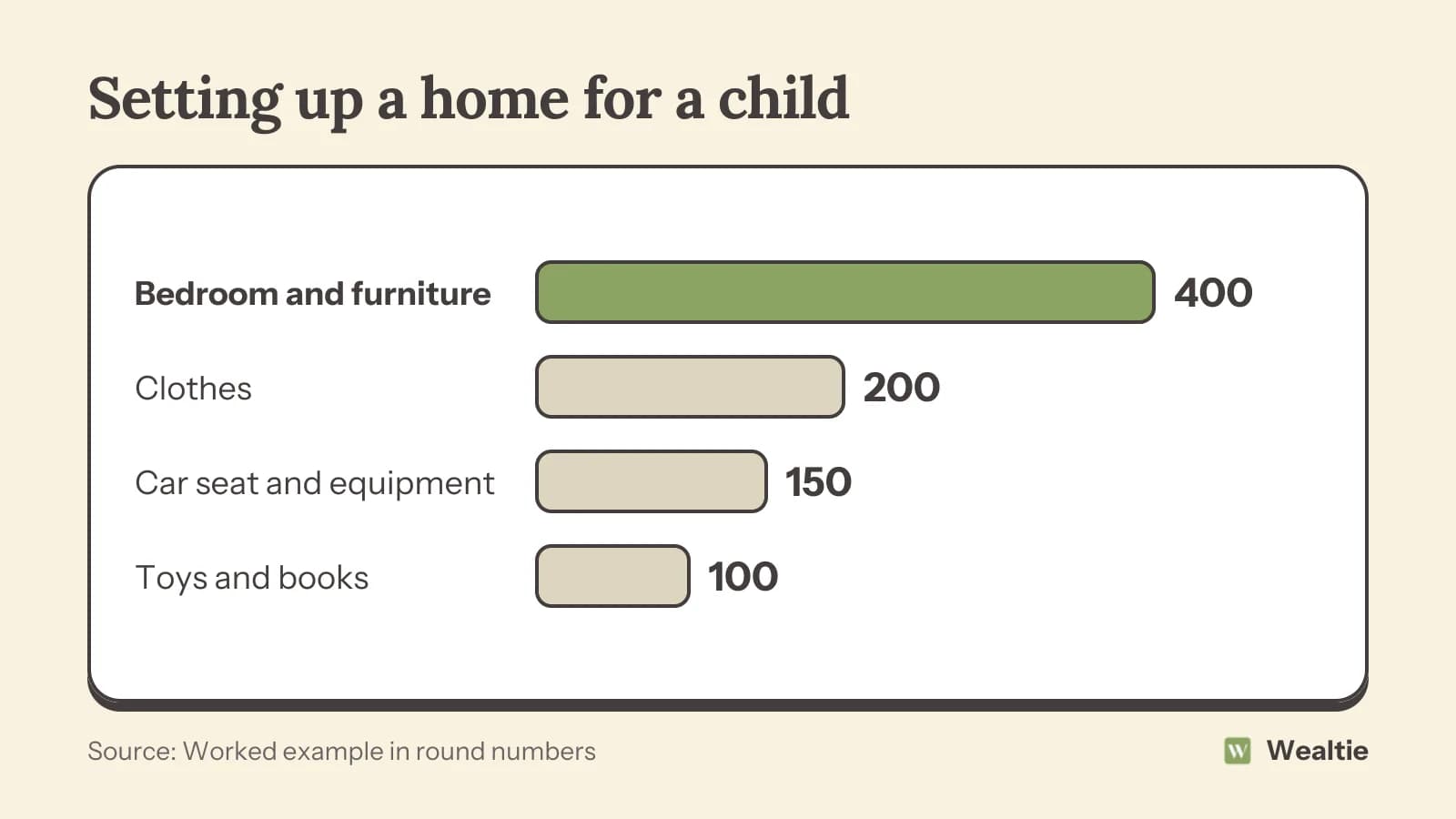
Your costs depend on the child's age and needs. Many families find friends and relatives are glad to help, and second-hand furniture and clothes work well. How to buy second-hand has tips. It's often best to buy some things after the child arrives, so they can help choose and feel at home. Older children may arrive with belongings of their own, and familiar things matter, so plan to add to what they have rather than replace it.
What are the ongoing costs?
The same as any family: food, clothes, school costs, activities, childcare and a larger home over time. Some adopted children have additional needs that bring extra costs, like therapy, specialist support or equipment. Agencies can often tell you what support is available. The family budget covers planning everyday family costs, and how to save money on kids' activities helps with extras.
What support is available?
More than many people realise. Depending on where you live, adoptive families may be entitled to:
- Adoption leave and pay from work, similar to parental leave
- Allowances or payments for children with particular needs
- Tax credits or deductions for adoption costs
- Ongoing support services, sometimes including therapy
- Help with legal fees through some public routes
Ask your agency and employer about what applies to you. Checking early means you can include support in your budget rather than discover it later. Keep records of every adoption expense, since some tax relief schemes need receipts.
How do you plan for time off work?
Adoption leave and pay rules vary, so check your entitlement with your employer. Many adopters take time off to help their child settle, which may mean reduced income for a while. Building a budget on the lower income, and saving the gap before placement, makes that time much less stressful. How to budget for a baby covers planning for parental leave, which works much the same way.
How do you save for adoption?
Start early and keep it separate. Divide your expected costs by the months until you expect to need them, and set that aside each month. Because timelines can be uncertain, keeping a buffer for delays or extra travel is wise. An emergency fund, separate from adoption savings, protects you if other costs come up during the process.
Looking after yourselves
Adoption can take time, and waiting can be hard. Support groups for adoptive parents, run by agencies or charities, offer practical advice, including on costs, from people who've been through it. Being realistic about money takes away one source of stress, so you can focus on preparing to welcome your child.
How do you track adoption costs in Wealtie?
Add a savings account for adoption and move money into it each month as a transfer, which isn't counted as spending. Log process fees, travel and setup costs in their own expense categories, so you can see the full cost. A monthly limit in the budget tracker keeps everyday spending steady while you save.
Questions people ask
Costs vary hugely by country and route, from little or nothing through some public agencies to large fees for private or international adoption.
Assessment fees, checks, legal fees, document fees and travel, plus setting up your home and ongoing family costs.
Often. Depending on where you live, there may be adoption leave and pay, allowances, tax relief and support services.
In a worked example, about 850 for a bedroom, clothes, equipment, toys and books for a school-age child.
This article is general information, not financial, tax or legal advice. Your situation is your own; check the numbers that apply to you before you act on them.