Budgeting: The zero price effect: why free costs you money
The zero price effect is our tendency to overvalue anything free, so we choose it even when a paid option is better value. Adding 15 to a 35 basket to reach free shipping saves 5 but costs 15 more.
 By Wealtie Team · 3 min read
Key takeaways
- The zero price effect makes free offers feel far better than they are.
- Free shipping thresholds often cost more than the shipping.
- Free trials, gifts with purchase and buy-one-get-one deals all use it.
- Judge a free offer by the total you pay, not by what's free.
What is the zero price effect?
The zero price effect is the way "free" pulls us in more than any discount. The researchers Kristina Shampanier, Nina Mazar and Dan Ariely showed this in a well-known experiment with chocolates. When a premium truffle was priced slightly above an ordinary chocolate, most people chose the truffle. When both prices dropped by the same small amount, so the ordinary chocolate became free, most people switched to the free one, even though the difference in price was unchanged.
Free feels like an offer with no downside. There's no risk of a bad deal, so we stop weighing costs and benefits the way we do with any other price. That's useful to know, because many free offers come with a cost attached, in money, time or future spending.
How does free shipping cost you more?
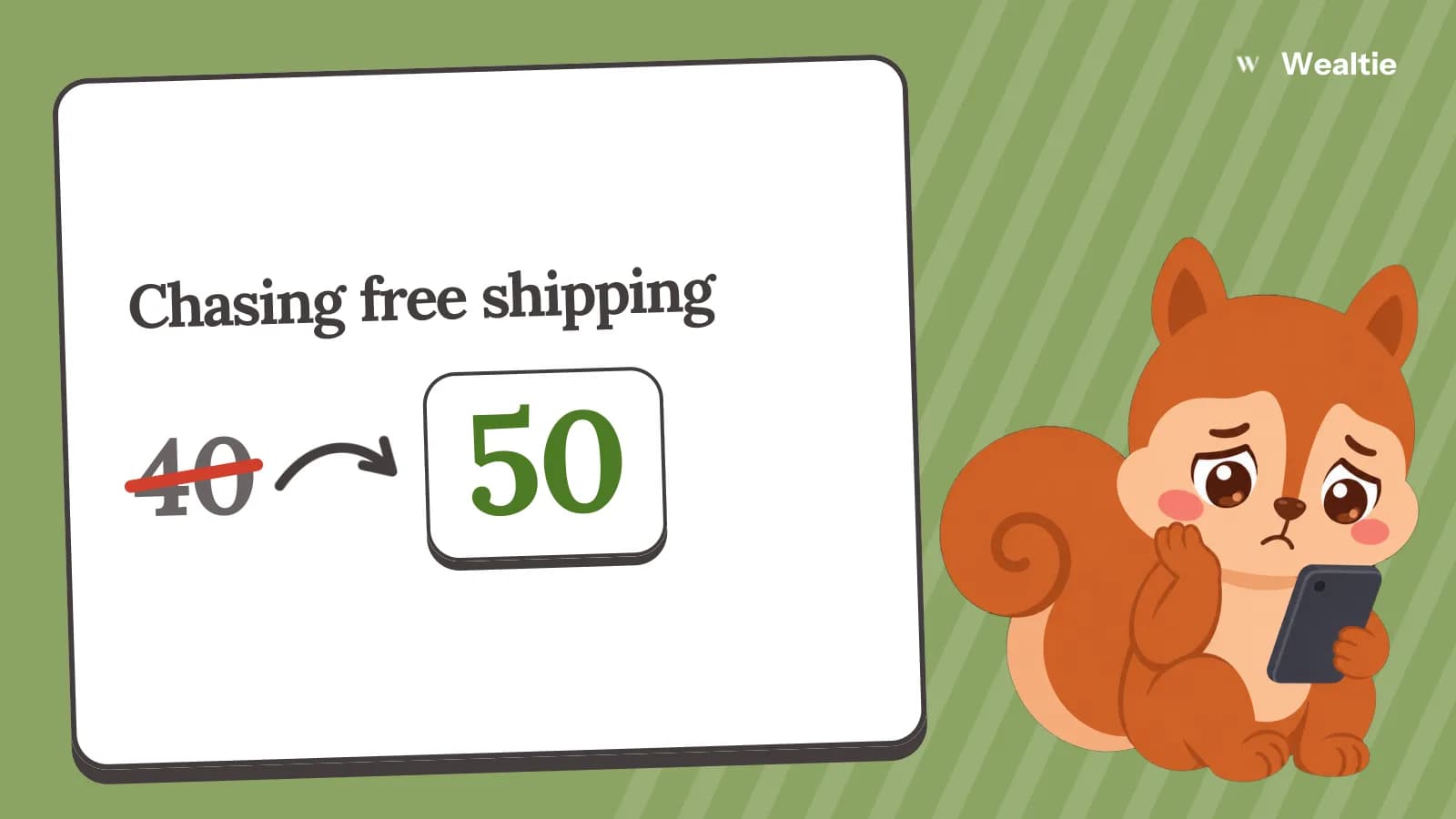
Here's a worked example in round numbers that work in any currency. Your basket comes to 35, and shipping costs 5. The shop offers free shipping on orders over 50. You can pay 40 for what you came for, or add 15 of extra items to reach the threshold.
| Option | You pay |
|---|---|
| Basket plus 5 shipping | 40 |
| Basket topped up for free shipping | 50 |
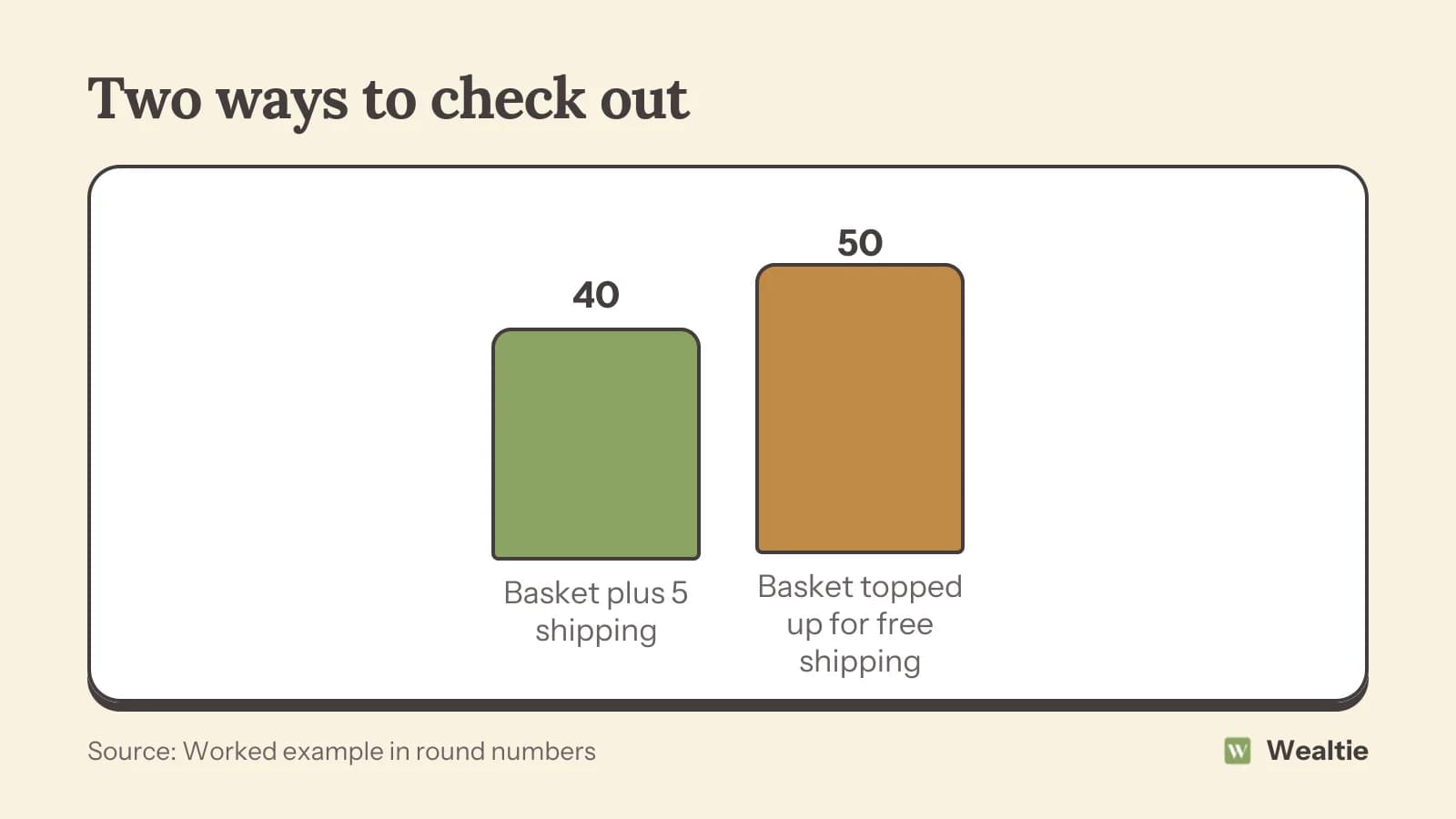
Topping up saves 5 on shipping but costs 15 in extra items, so you spend 10 more overall. It only makes sense if those extra items were things you'd buy soon anyway. Most of the time, they're bought to avoid paying for shipping, which is the zero price effect in action.
Where else does free cost you?
Free trials
A free month feels like no risk, but many trials turn into paid subscriptions you forget to cancel. How to cut subscription costs covers finding the ones you don't use.
Gifts with purchase
A free tote bag or sample set can tip you into buying something you weren't sure about, or choosing the pricier product that comes with the gift.
Buy one, get one free
Two for the price of one is good value only if you'd use both. A second item that goes off or sits unused is no saving.
Free upgrades and add-ons
A free extra might push you towards a plan, bundle or model that costs more than the one you needed.
Loyalty points and freebies
A free coffee after ten purchases can keep you buying from one shop when another is cheaper. Are loyalty programs worth it? covers when they pay off.
How do you judge a free offer calmly?
Compare totals
Ignore the word free and compare what you'll pay in total for each option. In the shipping example, 40 beats 50 every time unless you needed the extra items.
Ask if you'd buy it at full price
For gifts and buy-one-get-one deals, ask if you'd pay for the extra item on its own. If not, it isn't saving you money.
Put trial end dates in your calendar
When you start a free trial, set a reminder a few days before it ends, and decide then if it's worth paying for.
Keep a short list for shipping thresholds
If a shop you use often has a free shipping threshold, keep a running list of things you need from it. When the list reaches the threshold, place one order. That way the free shipping comes from planned purchases.
Watch for free during sales
Big sale events lean heavily on free gifts and free delivery. How to plan a Black Friday budget covers going in with a list.
Free can also cost you time and attention. Signing up for a free account often means marketing emails, tempting offers and notifications that pull you back to the shop. Unsubscribing from shop emails you don't need is one of the easiest ways to cut impulse spending, because fewer reminders mean fewer chances to be tempted by the next free gift or limited offer.
None of this means every free offer is a trap. Free samples, library books, community events and public parks are good value with no strings attached. The difference is whether the free part leads you to spend money you hadn't planned to. If it does, it's worth a second look.
How can Wealtie help you see what free costs?
Logging online orders in their own expense categories shows how often small top-ups and add-ons creep in. Add trials that turn into paid plans as recurring transactions, so you see the monthly cost straight away, and set a budget for online shopping to keep threshold-chasing in check.
Questions people ask
The zero price effect is our tendency to overvalue things that are free, so we choose them even when a paid option is better value.
Only if the extra items are things you'd buy soon anyway. Otherwise, paying for shipping usually costs less than topping up your basket.
Free trials often turn into paid subscriptions automatically, and many people forget to cancel. A reminder before the trial ends prevents that.
Compare the total you'd pay for each option, ignore the word free and ask if you'd buy any free extra at full price.
This article is general information, not financial, tax or legal advice. Your situation is your own; check the numbers that apply to you before you act on them.