Budgeting: How to budget on a zero-hours contract
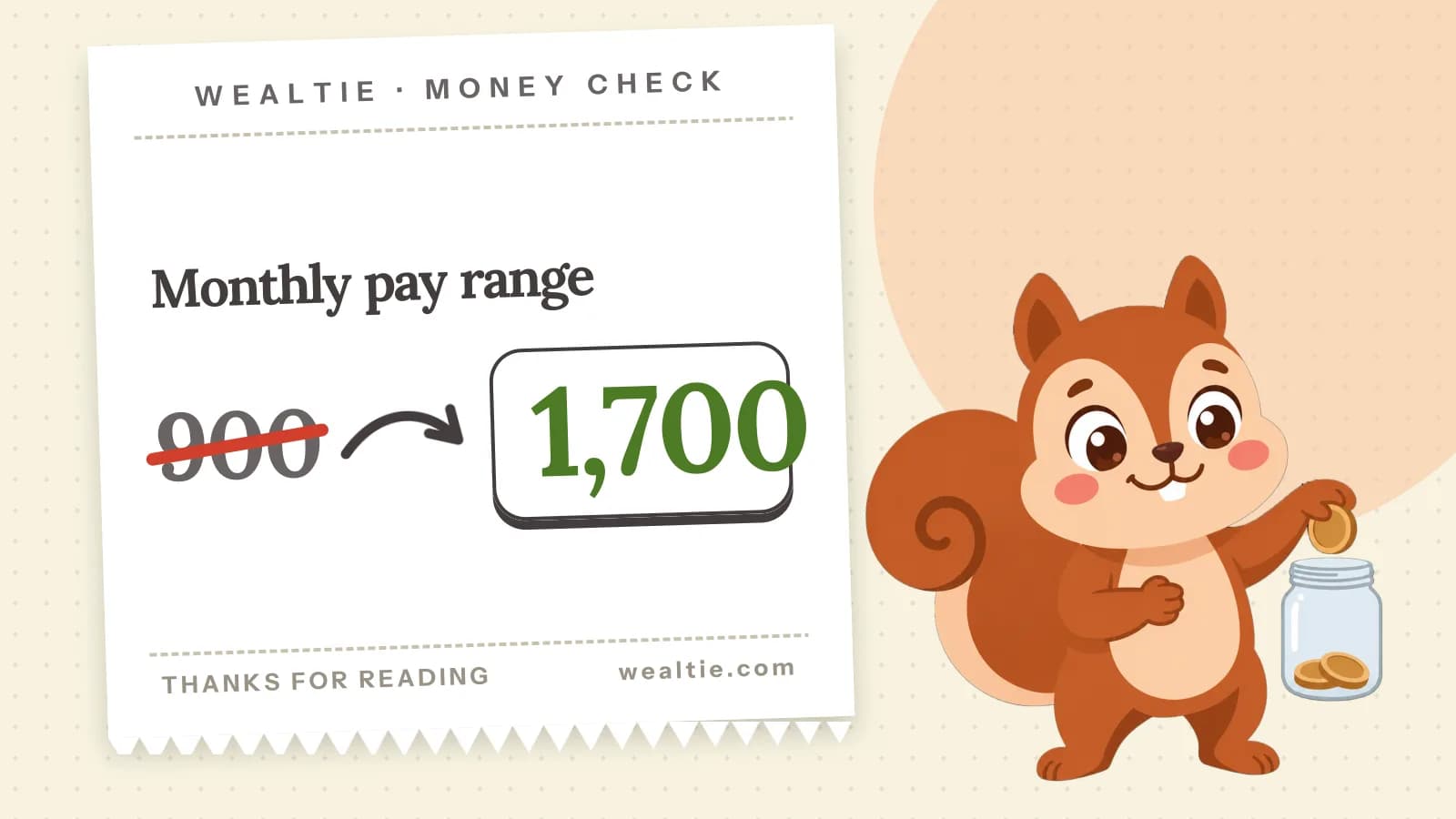
To budget on a zero-hours contract, plan around your lowest likely month and save the extra from busier weeks. In a worked example, pay swings from 900 to 1,700 a month, so the budget is built on 1,000.
 By Wealtie Team · 3 min read
Key takeaways
- On a zero-hours contract, build your budget on your lowest likely month.
- Save the extra from busy months into a buffer for quiet ones.
- Pay essential bills first, from a separate account if you can.
- Track hours and pay to spot patterns and plan ahead.
Why is budgeting on a zero-hours contract hard?
On a zero-hours contract, your employer doesn't guarantee a set number of hours, so your pay can change a lot from week to week and month to month. Some months you're offered plenty of shifts, other months very few. Rent, bills and food don't change with your hours, which makes it hard to plan.
The answer isn't to guess an average and hope. It's to build your budget on a figure you can count on, then use the extra from good months to cover the quiet ones. That turns uneven pay into something closer to a steady income.
How do you find your base income?
Look back at what you've earned over the last six months or more, if you have it. Here's a worked example, in round numbers that work in any currency:
| Month | Pay |
|---|---|
| January | 900 |
| February | 1,100 |
| March | 1,300 |
| April | 1,700 |
| May | 1,200 |
| June | 1,500 |
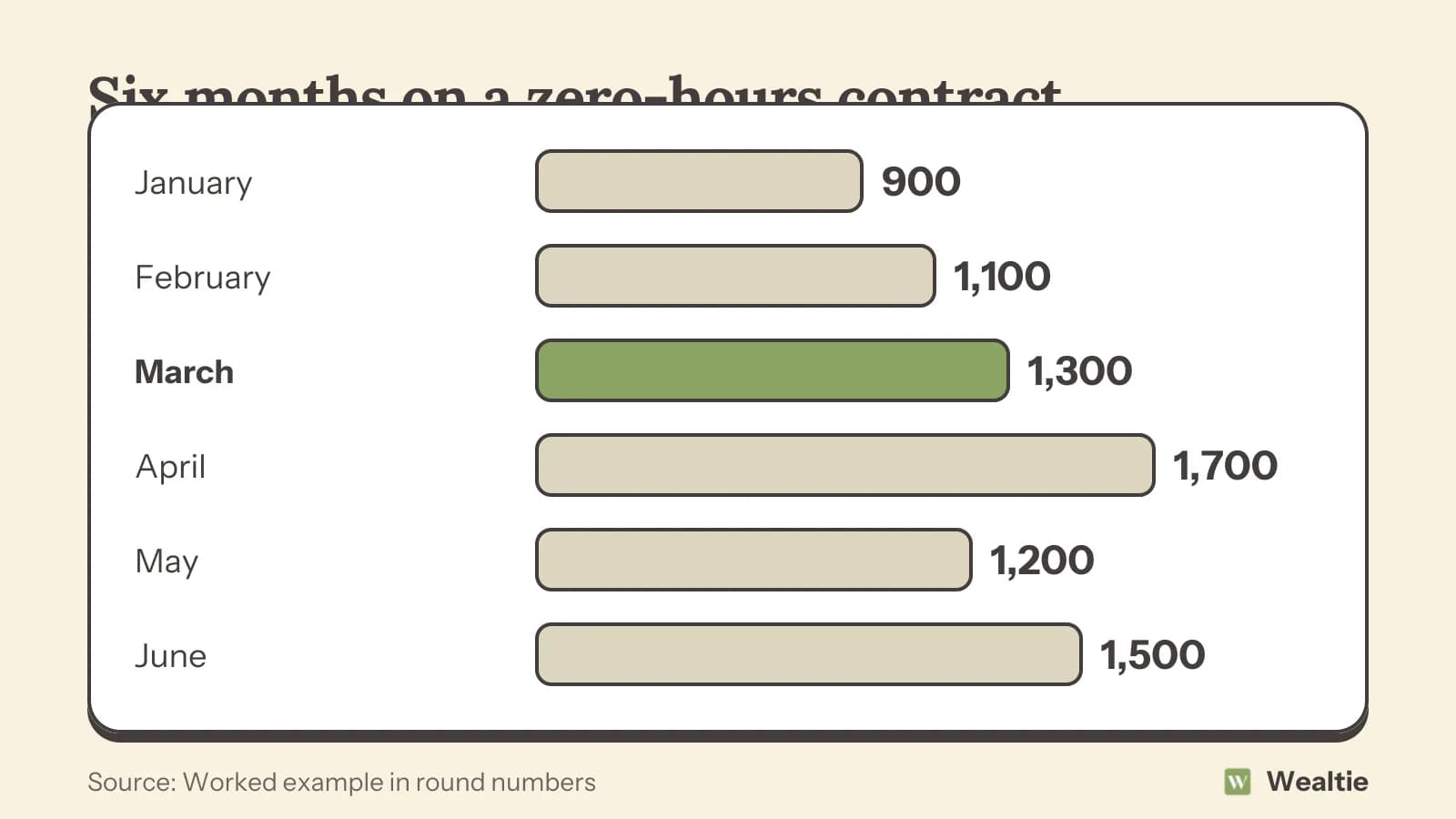
The average is about 1,280, but January was only 900. Building the budget on 1,000, close to the lowest month, means you can cover essentials even in a quiet month. Anything above 1,000 goes into a buffer. If you're new to the job, ask colleagues what a quiet month looks like, and start cautious.
How do you build the budget?
Cover essentials first
List your fixed costs, like rent, bills, phone, travel to work and basic food. In this example, they come to 800, which fits inside the 1,000 base. If your essentials are higher than your lowest month, that's a sign to look at cutting fixed costs or finding more stable work.
Plan flexible spending from the base
The remaining 200 covers flexible spending like clothes and going out. Keep this modest, since it's what you can always afford.
Put extra pay into a buffer
When you earn more than 1,000, move the extra into a separate savings pot straight away. In April, that's 700. That buffer tops up your pay in quiet months, so your spending stays steady.
Build to one month of essentials
Aim for a buffer of at least one month of essentials, 800 here, then keep going towards a fuller emergency fund.
The irregular income budget guide walks through this method step by step.
How do you handle a very quiet month?
Use the buffer first
That's what it's for. Top up your account to your base income from the buffer.
Cut flexible spending
Pause non-essentials until hours pick up.
Talk to providers early
If you can't pay a bill, contact the company before the due date. Many offer payment plans or breathing space.
Look for other income
Some people take a second zero-hours job or flexible gig work to fill gaps. Check your contract allows it.
How do you make pay more predictable?
Track hours and pay
Record your shifts and pay each week. After a few months, you'll see patterns, like busy summers or quiet Januaries, and can plan ahead. How to measure income stability covers reading those patterns.
Plan for seasonal swings
If you know some months are always quiet, save more in the busy ones before them. How to budget with seasonal income covers this in more detail.
Ask about guaranteed hours
In some places, workers can request more predictable hours after a period. Check your rights where you live.
Separate bills from spending
Paying essential bills from a separate account means they're always covered, and what's left in your spending account is yours to use.
It helps to give yourself a regular payday, even if your employer pays weekly or at different times. Move your base amount from your buffer account into your main account on the same day each month, as if it were a salary. That makes it easier to plan bills and spending, and stops a big week of pay from feeling like extra money to spend straight away.
Be careful with credit in quiet months. Overdrafts, credit cards and buy now, pay later can feel like an easy way to fill a gap, but repayments come out of future months that may also be quiet. Building the buffer first, even slowly, is a safer way to smooth your income over time.
Finally, keep your records tidy. Payslips, hours worked and any tax paid are useful if you need to apply for support, rent a home or check that you've been paid correctly.
How can Wealtie help with variable pay?
Log each payment as income in Wealtie, so you can see how your pay changes over the months. Set your monthly budget on your base income, and add rent and bills as recurring transactions so they're always planned. Watching your spending in expense categories shows how much is left before payday, even when pay is uneven.
Questions people ask
Build your budget on your lowest likely monthly pay, cover essentials first and save extra pay from busy months into a buffer.
Use a figure close to your lowest month over the past six months or more. In a worked example, pay ranged from 900 to 1,700, so the base was 1,000.
Aim for at least one month of essential costs, then keep building towards a fuller emergency fund.
That's a sign to cut fixed costs, build a bigger buffer or look for more stable or additional work.
This article is general information, not financial, tax or legal advice. Your situation is your own; check the numbers that apply to you before you act on them.