Budgeting: How to budget for work clothes without a big shopping trip
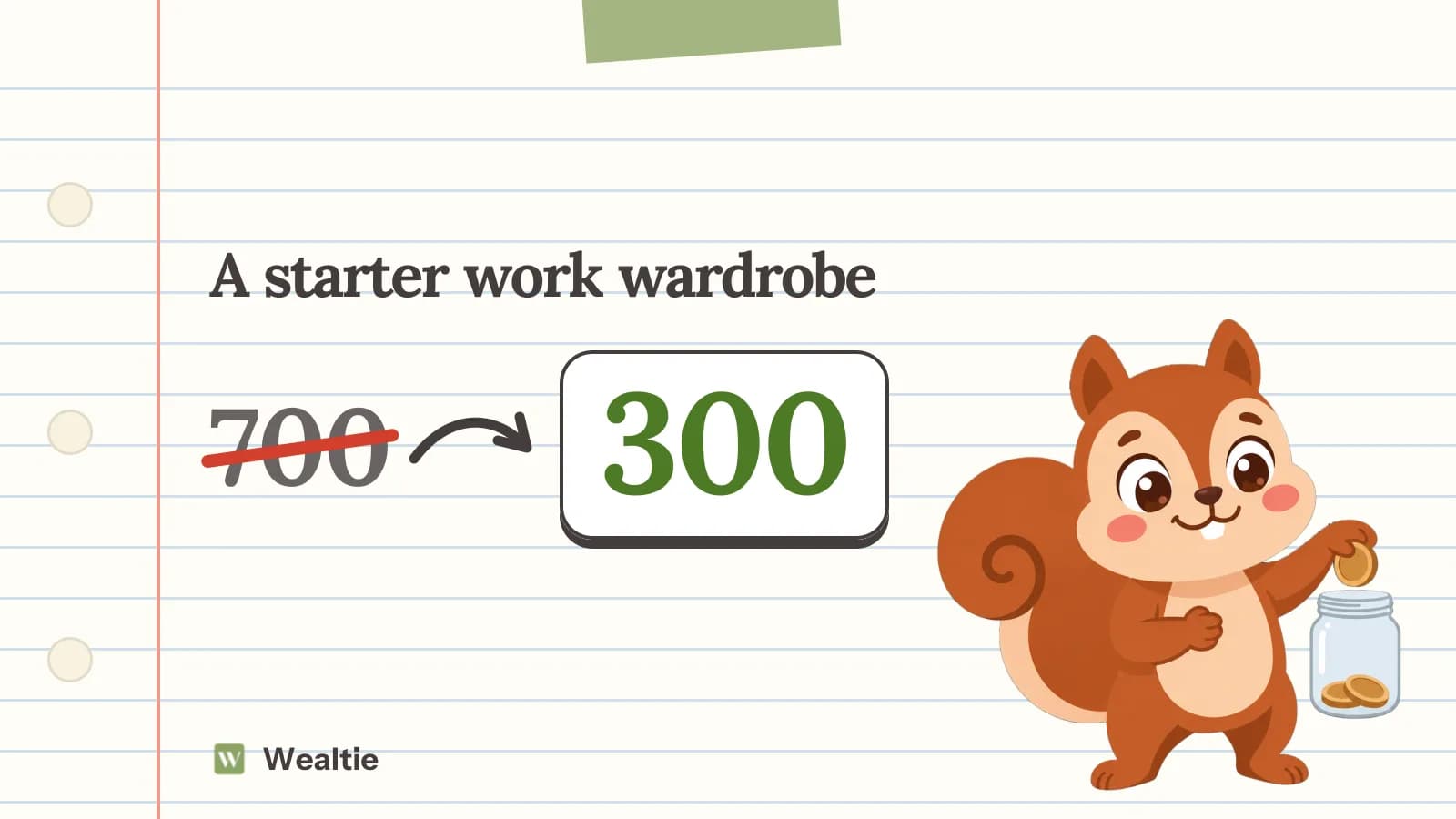
A work clothes budget works best as a small, mix-and-match wardrobe built over time, rather than one big shopping trip. In a worked example, a starter work wardrobe costs about 300 bought carefully, against 700 bought new in one go.
 By Wealtie Team · 3 min read
Key takeaways
- Build a small mix-and-match work wardrobe over time, rather than buying everything at once.
- In a worked example, a starter work wardrobe costs about 300 bought carefully, against 700 all new in one go.
- Second-hand and sales are good sources for work clothes, especially classic pieces.
- Check what your workplace expects before buying, since many are more relaxed than you'd think.
How do you budget for work clothes?
Find out what's expected, build a small wardrobe of pieces that go together, and add to it gradually. Starting a new job, or a job with a dress code, can feel like it needs a whole new wardrobe. In practice, a handful of well-chosen pieces cover most weeks, and they don't need to be bought new or all at once.
What does a work wardrobe cost?
Here's a worked example in round numbers that work in any currency:
| Approach | Cost |
|---|---|
| Everything new, bought in one trip | 700 |
| Mix-and-match pieces, second-hand and sales | 300 |
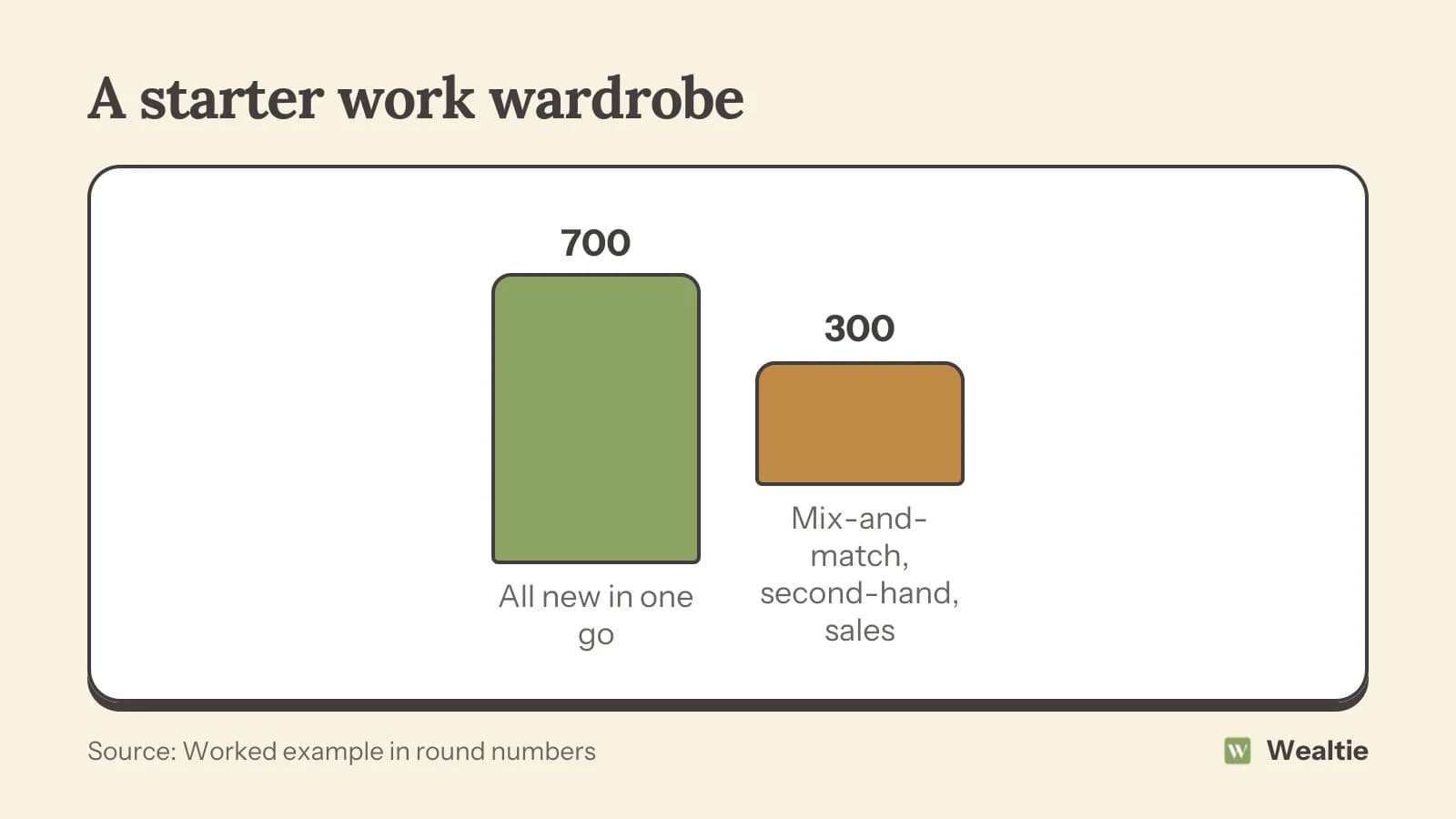
The cheaper approach uses fewer items that combine in many ways, and buys most of them second-hand or in sales.
What do you need?
Fewer pieces than you might think. Check what your workplace expects first: watch what colleagues wear, or ask. Many workplaces are more relaxed than people assume. For a smart-casual office, a starter wardrobe might be:
- Two or three pairs of trousers or skirts in neutral colours
- Four or five tops or shirts that go with all of them
- One jacket or smart layer
- One pair of comfortable smart shoes
- One warm coat suitable for the commute
Choosing neutral colours that all go together means many combinations from few items. If you need a uniform or protective clothing, check whether your employer provides it.
What if you're starting a job with no budget for clothes?
Start with what you already own. Many people have more suitable pieces than they think, like plain trousers, a shirt or a jumper that works for the first week. Wear those, watch what colleagues wear, and buy only what's missing once you're paid. Plain, clean and well-fitting matters more than new. If a uniform is required, ask whether the employer provides it before buying anything yourself. Some employers also give a clothing allowance for roles that need specific items, so it's worth asking during onboarding.
Where can you buy work clothes cheaply?
Second-hand shops and online marketplaces often have barely worn work clothes, since people change jobs and sizes. Classic pieces, like plain trousers and jackets, don't go out of style, so second-hand works well. End-of-season sales are another good source. Buying second-hand covers where to look.
Some charities provide free interview and work clothes for people returning to work, so check if that applies to you. Swapping with friends who've changed jobs or sizes can also turn up good pieces for free.
Is it worth paying more for some items?
For pieces you'll wear often, yes. A pair of shoes you'll wear every day, or a coat you'll wear all winter, is worth buying well. Cost per wear helps here: trousers that cost 60 and get worn 100 times cost 0.60 a wear. Cost per use explains the method.
Items you'll wear rarely, like a formal outfit for one event, are better bought cheaply, borrowed or second-hand.
How do you build the wardrobe over time?
Start with the basics for the first week, then add a piece or two each month as you see what you need. After a month in the job, you'll know which items get worn most and what's missing. A small monthly amount for work clothes spreads the cost. Avoid buying a new outfit for every occasion at work, since colleagues rarely notice repeats, and a good jacket can change the look of the same trousers and tops.
How do you make work clothes last?
Follow care labels, wash less often where possible, hang clothes properly and repair small problems early, like loose buttons or hems. Changing out of work clothes when you get home keeps them looking good for longer. Washing at lower temperatures and air-drying also keeps colours bright and fabrics in shape for longer.
Can you claim work clothes on tax?
Usually not for everyday clothes you could wear outside work. Uniforms, protective clothing and specialist items needed for the job may be different, depending on where you live and whether you're employed or self-employed. Check the rules. The self-employed expenses list covers what's usually allowed for the self-employed.
How do you track work clothes spending in Wealtie?
Give work clothes their own line in your expense categories, or include them in Clothes, so you can see what they cost over a year. A share of your monthly limit in the budget tracker keeps spending from creeping up when you start a new job.
Questions people ask
Whatever fits your budget for a small mix-and-match wardrobe. A worked example costs about 300 bought carefully, against 700 all new.
Check what colleagues wear first. A starter set is a few neutral trousers or skirts, several tops, a jacket, smart shoes and a coat.
Second-hand shops, online marketplaces and end-of-season sales, especially for classic pieces.
Usually not for everyday clothes. Uniforms and protective clothing may be different, so check the rules where you live.
This article is general information, not financial, tax or legal advice. Your situation is your own; check the numbers that apply to you before you act on them.