Budgeting: How to budget for inflation when prices rise 3.7% a year
To budget for inflation, update each category by what its prices actually did, not by the headline rate. US prices rose 3.7% overall in the year to September 2026, but gas rose far more while car insurance and eggs fell. Raise the categories that jumped, look for swaps in those, and recheck your budget every quarter.
 By Wealtie Team · 3 min read
Key takeaways
- US consumer prices rose 3.7% in the 12 months to September 2026, according to the Bureau of Labor Statistics.
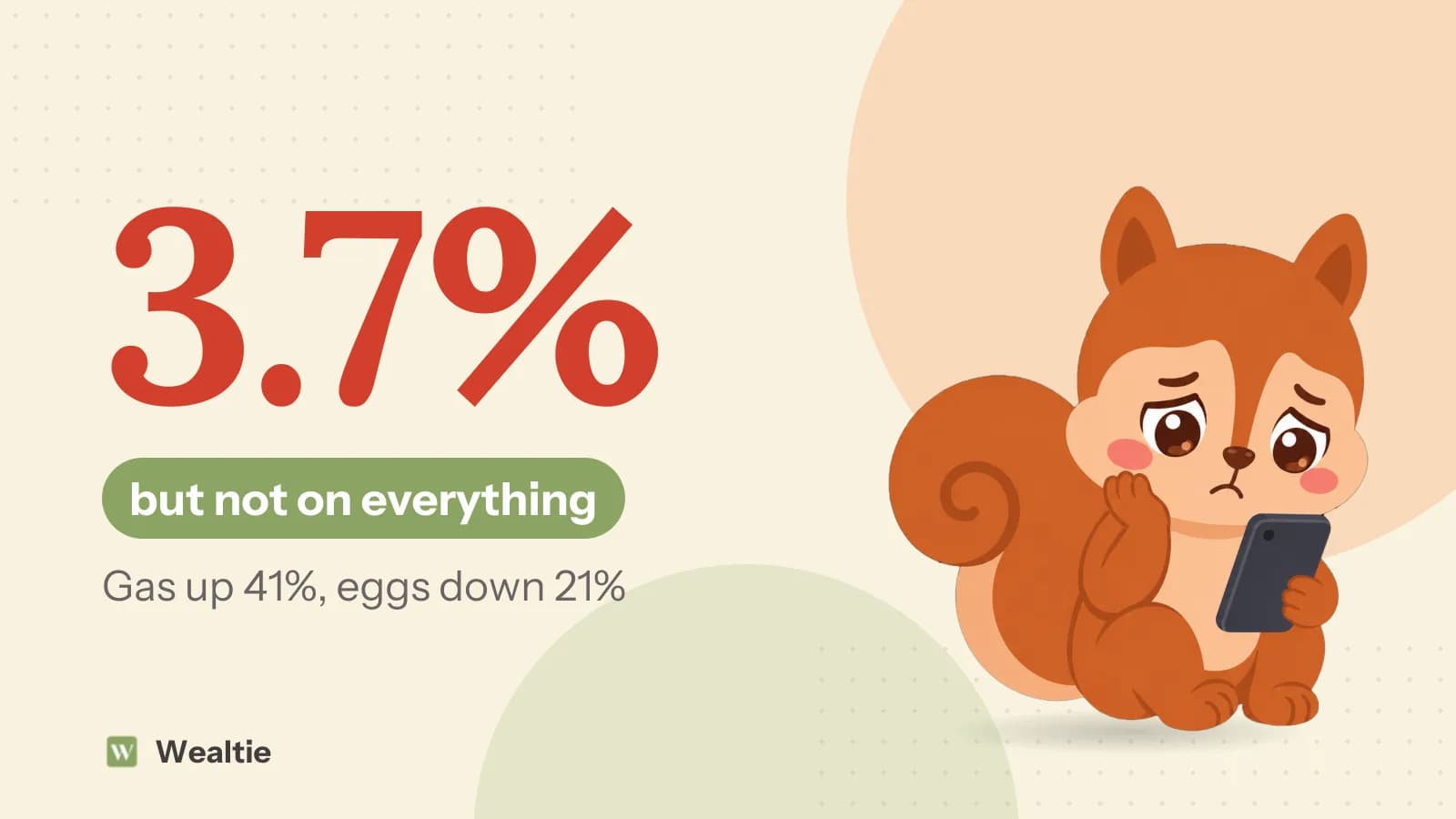
- Prices moved unevenly: regular gasoline was up $1.23 a gallon on a year earlier, while car insurance fell 5.0% and eggs 20.6%.
- In the Fed's 2025 survey, 58% of adults said price changes had made their finances worse, down from 65% in 2023.
- Update your budget category by category, using your own last three months, not one headline number.
- Savings lose value when they earn less than inflation, so emergency money belongs in an account that pays a competitive rate.
How do you budget for inflation?
Update each category by what its prices actually did, using your own spending, and recheck every quarter. One headline rate applied to everything gets most categories wrong.
US consumer prices rose 3.7% in the 12 months to September 2026, according to the Bureau of Labor Statistics' Consumer Price Index. It's not just a number in the news. In the Federal Reserve's 2025 household survey, 58% of adults said price changes had made their finances worse, and just above nine in ten named price increases as a concern.
Which prices rose the most?
They didn't move together. Here's how some everyday categories changed over the 12 months to September 2026:
| Category | Price change |
|---|---|
| Regular gasoline | about +41% |
| Car repairs and maintenance | +5.8% |
| Fruits and vegetables | +3.7% |
| Eating out | +3.5% |
| Beef | +3.5% |
| Shelter (rent and housing) | +3.2% |
| Rent | +2.8% |
| Groceries overall | +1.8% |
| Used cars | −1.5% |
| Car insurance | −5.0% |
| Eggs | −20.6% |
Gasoline is from the EIA: regular averaged $4.27 a gallon in the week of 26 October 2026, $1.23 more than a year earlier. The rest are from the BLS.
The point of the table is that your inflation depends on what you buy. Someone who drives a lot felt this year far more than someone who cycles to work and cooks at home.
How do you update your budget for rising prices?
Compare each category's last three months with the same three months a year ago, and set the new amount from what you actually spent.
- Pull last year's numbers for the same months, so seasonal costs like heating compare fairly.
- Find the categories that grew by more than a little. Those are where your inflation is.
- Decide for each: raise the budget, find a swap, or both.
- Rebalance: if one category goes up, another comes down, or savings shrink. Say which, out loud.
- Recheck every quarter. Prices aren't waiting for January.
Here's a worked example in round numbers, the same in any currency. Fuel was 150 a month last year and is 210 now. Groceries went from 450 to 460. Eating out from 200 to 207. Car insurance fell from 150 to 143. The total moved by 70, but almost all of it was fuel, and that's where the fix has to be.
Where do you look for swaps?
In the categories that rose most, not the ones that rose least.
- Fuel: combine trips into one, drive more smoothly, slow down on the highway, and compare station prices before you fill up. Fuel rose more than anything else this year, so each habit is worth more than it was.
- Groceries: shift towards what got cheaper. Eggs fell by a fifth while beef rose.
- Car insurance: prices fell over the year, so this is a good year to compare quotes at renewal.
- Eating out: prices rose faster than groceries, so each meal cooked at home saves more than it did.
- Subscriptions: they creep up quietly. A yearly check on what you pay for, and what you use, often finds the money for one of the categories above.
What about your income?
If your pay rose less than 3.7%, your real income fell. A 3% raise against 3.7% inflation is a small cut in what your pay buys.
That's a fair point to raise at a pay review, with the numbers. And when pay does rise, decide what the extra is for before it disappears into higher prices.
How do you protect savings from inflation?
Keep emergency savings in an insured account that pays a competitive rate, close to inflation if you can find one.
Money in a current account paying nothing loses about 3.7% of its buying power a year at today's rate. On a 5,000 emergency fund, that's about 185 a year. Where to keep your emergency fund compares the options.
How do you see where inflation hits your budget?
Compare months, category by category, and let the numbers show which costs moved.
In Wealtie, every purchase you log lands in a category, and your monthly budget shows each category against its amount, with Budget Health warning you mid-month if spending is running ahead. On Pro, spending analytics compare month against month over any period, so this year's fuel bill sits next to last year's. How to stop overspending covers the categories that tend to leak when prices rise.
Questions people ask
US consumer prices rose 3.7% in the 12 months to September 2026, before seasonal adjustment, according to the BLS Consumer Price Index released on 14 October 2026.
Compare each category's last three months with the same months a year ago, raise the ones that rose, and look for swaps in those categories. Recheck every quarter rather than once a year.
In the year to September 2026, gasoline rose sharply, by $1.23 a gallon, and fruits, vegetables, beef, eating out and car repairs rose faster than the 3.7% average. Car insurance, eggs and used cars fell.
If your pay rose less than prices, your real income fell, and that's a fair point to make. A 3% rise against 3.7% inflation is a small real-terms cut.
Keep emergency savings in an insured account paying a competitive rate, close to inflation if you can find one. Money in a current account paying nothing loses about 3.7% of its buying power a year at today's rate.
Sources
- Consumer Price Index – September 2026 · U.S. Bureau of Labor Statistics · checked 1 November 2026
- Gasoline and Diesel Fuel Update (week of 26 October 2026) · U.S. Energy Information Administration · checked 1 November 2026
- Economic Well-Being of U.S. Households in 2025: Fact Sheet · Board of Governors of the Federal Reserve System · checked 1 November 2026
- Private rent and house prices, UK: October 2026 · Office for National Statistics · checked 1 November 2026
This article is general information, not financial, tax or legal advice. Your situation is your own; check the numbers that apply to you before you act on them.