Budgeting: Van conversion cost: building a campervan on a budget
Van conversion cost depends mostly on the van itself and whether you build it yourself, with electrics and the kitchen as the biggest extras. In a worked example, a DIY conversion costs 14,000 including an 8,000 van.
 By Wealtie Team · 3 min read

Key takeaways
- Van conversion cost depends mostly on the van and whether you build it yourself.
- Electrics, insulation and the kitchen are the biggest build costs.
- A professional build can cost several times more than DIY.
- Insurance, servicing and storage are ongoing costs to plan for.
How much does a van conversion cost?
Turning a van into a campervan gives you a home on wheels for weekends, holidays or even full-time travel. Van conversion cost depends on two big choices: the van you start with, and whether you build it yourself or pay a professional. A simple DIY build in an older van can be done relatively cheaply, while a professional conversion in a new van can cost as much as a small house deposit.
Here's a worked example of a DIY conversion in a used van, in round numbers that work in any currency:
| Item | Cost |
|---|---|
| Used van | 8,000 |
| Electrics and solar | 2,000 |
| Insulation, walls and floor | 1,200 |
| Kitchen and water | 1,200 |
| Bed, storage and finishing | 1,600 |
| Total | 14,000 |
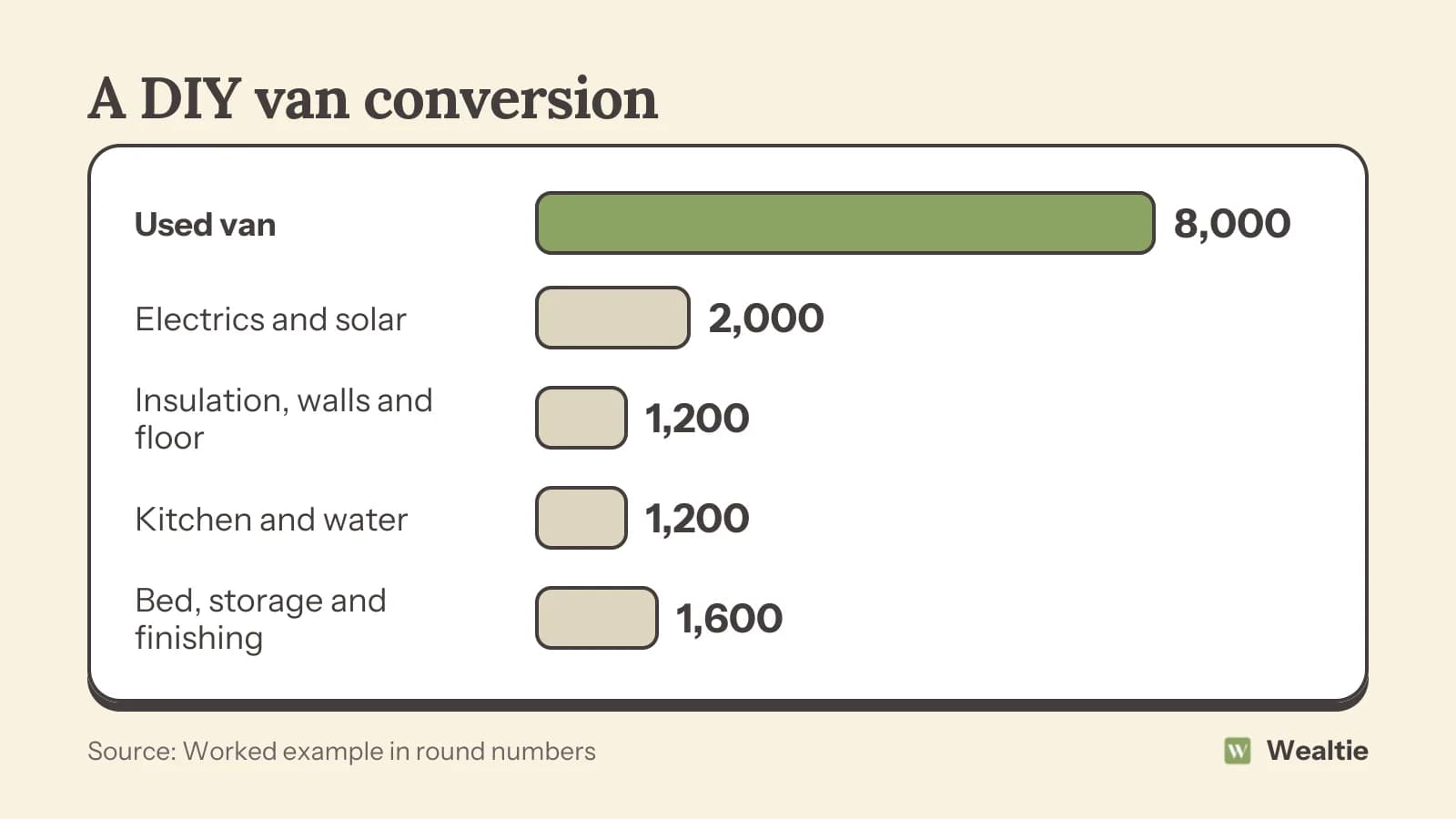
The van is more than half the cost. The build itself comes to 6,000 here. A professional conversion might cost 30,000 or more on top of the van, depending on the layout and finish. Prices vary a lot by country, so research local costs.
What are the main build costs?
The van
Choose a van with a reliable engine, little rust and enough height and length for your layout. Paying more for a sound van often saves money on repairs later.
Insulation
Good insulation keeps the van warm in winter and cool in summer, and reduces condensation. It's one of the most important parts of the build.
Electrics
A leisure battery, solar panels, wiring, lights and sockets let you power devices off-grid. Electrics are often the most expensive part of a DIY build, and safety matters, so get help if you're unsure.
Kitchen and water
A hob, sink, water tanks and a small fridge make the van liveable. Simple setups with a portable stove cost much less.
Bed and storage
A fixed or fold-out bed, cupboards and storage take up a big part of the budget and the space.
Extras
Heating, a toilet, a shower, windows and a roof vent all add cost. Decide which you need.
Should you build it yourself?
DIY
Building yourself saves a lot on labour and lets you design the van around your needs. It takes time, skills and tools, and mistakes can be costly. Many people take months of weekends to finish.
Professional
A professional build is faster and usually finished to a higher standard, with warranties. It costs much more.
Partial help
Some people do most of the work themselves and pay professionals for electrics, gas or windows, which balances cost and safety.
What does a campervan cost to run?
Once built, a campervan has ongoing costs. In the example, insurance might cost around 600 a year, servicing 400 and storage 600 if you can't park it at home, so about 1,600 a year before fuel. Converted vans can cost more to insure, and some insurers need the conversion to meet certain standards. How to plan a road trip budget covers fuel and travel costs on the road.
Is converting a van worth it?
If you'll use it often
Weekends away, long holidays or living on the road can make a van good value compared with hotels or rentals.
Compared with renting
If renting a campervan costs around 100 a night, a few trips a year may cost less than owning. Owning makes more sense the more you travel. How to plan a camping trip budget covers cheaper ways to try life outdoors first.
Resale value
A well-built conversion can hold its value, and some owners sell for close to what they spent. A poor build may be hard to sell.
How do you keep the cost down?
Buy second-hand materials and appliances, choose a simple layout, do as much as you safely can yourself and avoid adding every gadget. Setting a budget for each part of the build, with a buffer of about a tenth for surprises, keeps the project on track. How to use a sinking fund covers saving for the build and future repairs.
Plan the layout carefully before you buy anything. Measuring the van, sketching the layout and even marking it out with tape on the floor helps you avoid buying furniture or appliances that don't fit. Many first-time builders spend money twice because they changed their minds halfway through. Looking at other people's builds online, or visiting a campervan show, gives you ideas for what works and what doesn't in a small space.
Keep receipts for everything, too. They help with insurance, any registration changes and resale, since buyers like to see what went into the build.
How can Wealtie help you manage the build?
Set a budget for the conversion and log each purchase in its own expense category, like electrics, insulation and kitchen. You'll see where the money goes and spot early if one part of the build is running over.
Questions people ask
In a worked example, a DIY conversion cost 14,000 including an 8,000 used van. Professional builds can cost much more.
The van itself is usually the biggest cost. In the build, electrics and solar are often the most expensive part.
Yes, much cheaper, but it takes time, skills and tools. Many people pay professionals for electrics or gas and do the rest themselves.
In a worked example, insurance, servicing and storage came to about 1,600 a year before fuel.
This article is general information, not financial, tax or legal advice. Your situation is your own; check the numbers that apply to you before you act on them.